The Threat of The Robots by David H. Keller
5 min read | Free PDF Included

Title: The Threat of The Robot
Author: David H. Keller
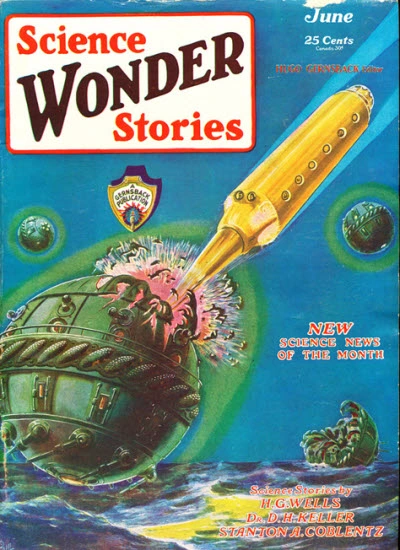
Original Publication: Science Wonder Stories (Vol. 01, No. 1)
Release Date: June 1929
Publisher / Editor: Hugo Gernsback (Stellar Publishing Corporation)
Illustration: Frank R. Paul
Genre / Subgenres: Pulp Science Fiction / Alternative History
Copyright Status: Public Domain (Free Download Available)
Format & Availability: Article Review + Complete PDF Edition
The complete text of “The Threat of The Robot” and its free PDF version are available at the bottom of this article. Click here to skip to the download section.
“The Threat of the Robot”, a short story by David H. Keller, first appeared in Science Wonder Stories in June 1929. This early work of science fiction presents a prominent vision of a world dominated by automation and mass media. Keller, a psychiatrist by profession, uses this speculative scenario to examine pressing concerns of his era. For example, the rise of factory automation threatened traditional jobs, radio had already transformed entertainment, and experimental television hinted at even greater changes ahead.
Plot Summary of "The Threat of The Robot"
Ed Ball, a celebrated football player turned explorer, returns to New York after twenty years abroad only to discover a world utterly transformed by technology. Football is now played by robots controlled from keyboards, while millions watch on television screens at home. Stadiums stand empty, human labour faces obsolescence, and society has retreated into isolated entertainment.
Spoilers Ahead!!!
Beware the Robot
“The Threat of the Robot” is a kind of cautionary fable. It uses the framework of science fiction to explore very real tensions of the 1920s regarding automation, lack of jobs, mass media, and the changing relationship between labour and capital. Moreover, the narrative structure follows a classic pattern: the returning hero discovers his homeland transformed, struggles to understand the changes, and takes action to restore what he perceives as the natural order. His journey from confusion to understanding to intervention is a conservative fantasy of turning back the clock on modernity.
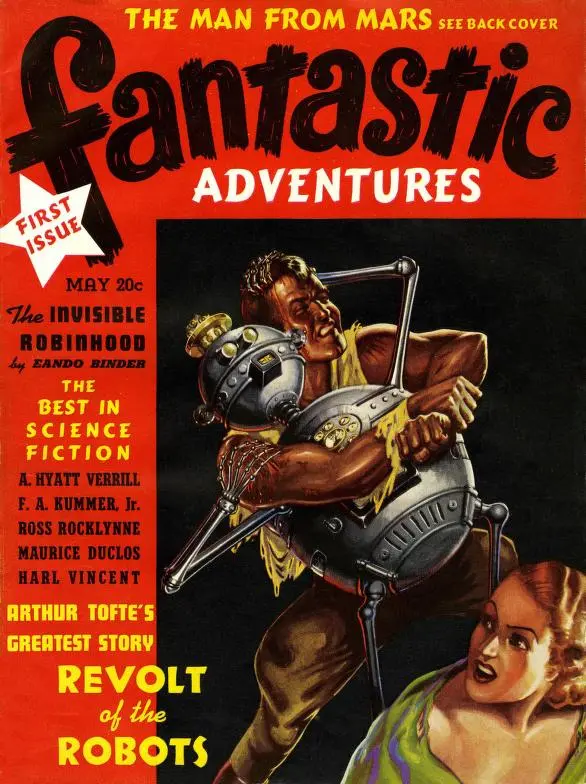
Keller’s portrayal of the future is remarkably prescient in some ways, yet it reveals period limitations in others. For example, the detailed description of television broadcasting—millions watching sports at home, pay-per-view pricing, the death of live attendance—is particularly impressive. However, the story’s vision of robots reveals the conceptual limitations of 1920s science fiction. Keller imagines machines that look and move like humans, controlled by wireless signals from operators at keyboards. This reflects the period’s understanding of automation as essentially remote control and not as an artificial intelligence. So, the robots have no autonomy or decision-making capacity—they’re purely mechanical extensions of human will. Look this way, they become less threatening than truly independent machines.
Didactical Story
“The Threat of the Robot” is didactic science fiction. It uses speculative extrapolation to teach a moral lesson about technology and society. In addition, it belongs to the subgenre of cautionary tales warning against unchecked technological progress—a tradition that includes Mary Shelley’s “Frankenstein”, E.M. Forster’s “The Machine Stops,” and later works like Kurt Vonnegut’s “Player Piano”.
Keller’s prose style is straightforward and expository, prioritising clarity of concept over literary elegance. Long passages of dialogue explain how the future world works, sometimes awkwardly as characters tell each other things they already know. Nevertheless, this pedagogical approach serves the story’s didactic purpose; Keller wants to ensure readers understand exactly what’s wrong with technological society. Dialogue carries much of the narrative work, with characters explaining the future world to Ball and thus to readers.
The resolution is very, very wish-fulfilment fantasy. Thus, it reflects a fundamentally authoritarian vision where the right person with enough power can fix social problems unilaterally.
Rise of Robots
The 1920s witnessed rapid technological change that disrupted traditional work patterns and social structures. Automation in factories, particularly Ford’s assembly line production, demonstrated how machines could replace skilled labour. Radio broadcasting, which began commercially in 1920, had by 1929 become a mass medium reaching millions of homes. Meanwhile, the first experimental television broadcasts were being conducted, though the technology would not become commercially viable for another decade. Keller’s vision of television replacing live attendance at events extrapolated from radio’s actual impact on society.
The labour movement faced intense pressure during the 1920s. The post-World War I Red Scare had weakened radical unions, while the prosperity of the decade’s middle years reduced labour militancy. However, automation threatened workers’ bargaining power, and the spectre of technological unemployment loomed large.
The concept of robots derives from Karel Čapek’s 1920 play R.U.R. (Rossum’s Universal Robots), which introduced the word “robot” to English. Čapek’s play similarly explored themes of manufactured workers replacing humans, ending in apocalyptic violence. Keller’s robots are less autonomous than Čapek’s, yet they serve a similar narrative function.
Author: David H. Keller
David H. Keller, as established earlier, was a psychiatrist who came to science fiction writing relatively late in life. His conservative social views permeate his fiction. Keller distrusted rapid change, preferred traditional social structures, and believed that human nature set limits on acceptable progress. His stories often feature protagonists who resist change, defend tradition, or reverse modernisation.
His prose is clinical and expository, prioritising clear explanation over literary elegance. He writes like someone accustomed to case reports and medical papers, where clarity and completeness matter more than artistry. This gives his work a documentary quality but sometimes makes it feel pedestrian compared to more stylistically ambitious contemporaries.
My Thoughts and Review
Keller’s predictions about television’s social impact proved remarkably accurate—we do watch sports at home rather than attending in person, remote viewing has largely replaced live audiences, and concerns about social isolation caused by electronic media are more urgent now than in 1929. Yet robots have not developed as he imagined, and the labour issues he identified have evolved in different ways.
Keller imagined the logical endpoint of remote viewing; completely empty stadiums, millions watching at home, sports becoming pure television content. While we have not quite reached this extreme, attendance at sporting events has declined relative to television viewership, and the economics of sports now centre on broadcast rights rather than ticket sales. The COVID-19 pandemic even provided a real-world test of Keller’s scenario, with sports played in empty stadiums for television audiences.
The rapid resolution feels like wish-fulfilment because real social conflicts don’t resolve so easily. Companies do not immediately capitulate to demands, workers do not simply get their jobs back at better wages, and technological changes do not reverse because someone demonstrates an alternative.
Wrapping Up
“The Threat of the Robot” is a significant early science fiction exploration of automation’s social consequences. Keller’s prescience about television’s impact on spectator sports and his understanding of technological unemployment as a genuine crisis demonstrate that even didactic, conservative science fiction can offer valuable insights. Yet the story’s limitations are equally instructive. Its reactionary politics, simplistic solutions, and inability to imagine adaptation rather than resistance reveal the dangers of nostalgia and pseudo wisdom. Keller fears not just that machines will replace workers but that modern life is feminising men, making them small, weak, cerebral rather than large, strong, physical.
His robots are tools, and not real agents, lacking the autonomy that makes current AI simultaneously powerful and potentially threatening. Perhaps the story’s most enduring contribution is its insistence that efficiency and functionality don’t exhaust human values. When Ball argues that human football players matter even if robots play better, he identifies something essential: the intrinsic worth of human achievement and communal experience beyond their utility.
"The Threat of The Robots" PDF Download Free
This work was originally published in 1929 and is in the public domain according to current legislation. However, the original authorship, magazine credits, and any associated illustrations remain the property of their respective creators, illustrators and publishers. This material is provided for informational and educational purposes only and may not be used for commercial sale.

More of Science Wonder Stories

The Making of The Misty Isle – Stanton A. Coblentz (Science Wonder Stories, Vol. 01, No. 1, 1929)
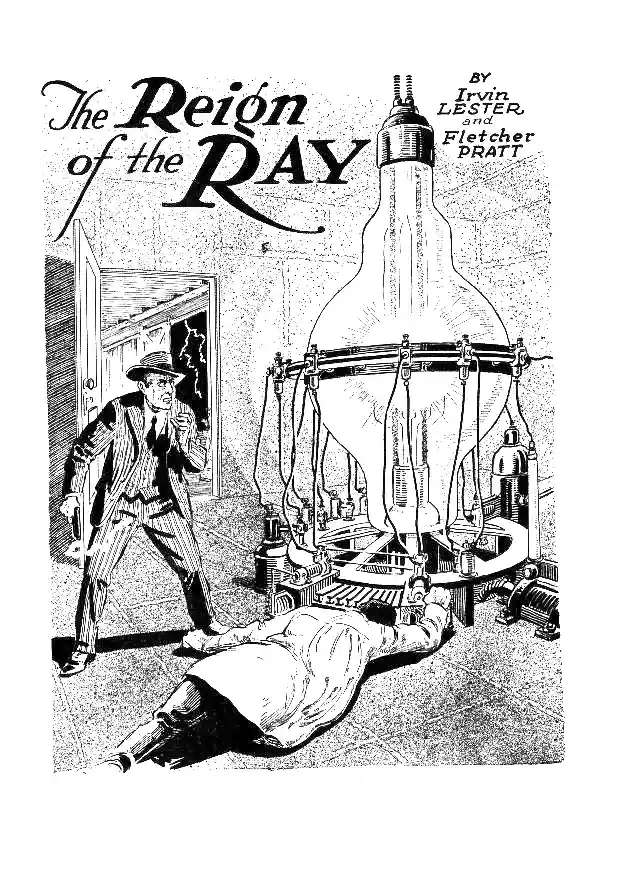
The Reign of the Ray (1929) – Irvin Lester and Fletcher Pratt | Science Wonder Stories
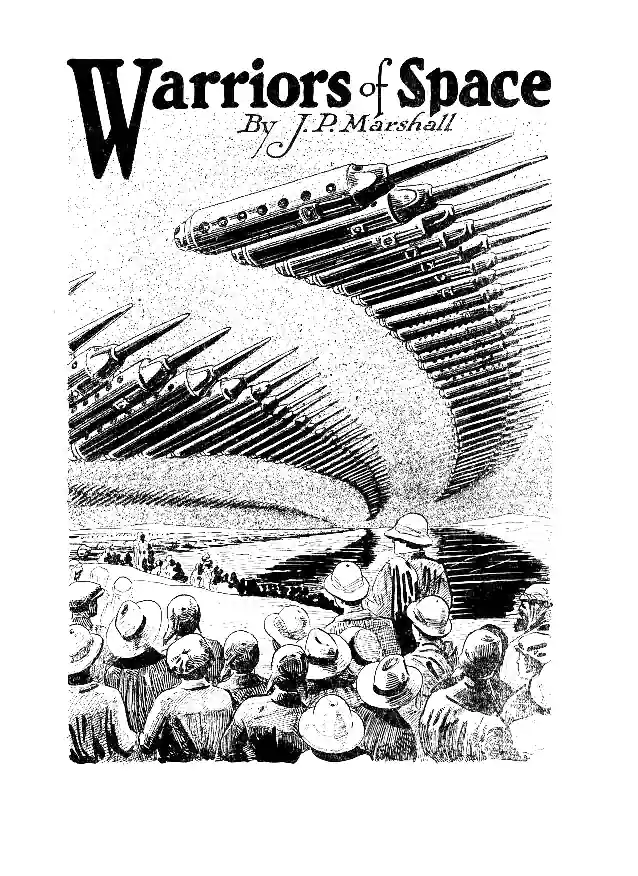
Warriors of Space – James P. Marshall (Science Wonder Stories, Vol. 01, No. 1, 1929)

The Marble Virgin – Kennie McDowd (Science Wonder Stories, Vol. 01, No. 1, 1929)
The Threat of the Robot – David H. Keller (Science Wonder Stories, Vol. 01, No. 1, 1929)