Introduction
“The Invisible Robinhood”, written by Eando Binder, inhabits the superhero origin story subgenre before “superhero” had fully crystallised as a category. Superman debuted in 1938, and Batman followed in 1939—the same year as this story. Binder was therefore helping to define tropes that would dominate popular culture for decades: the scientist granted powers by accident, the hero with a secret identity, and the crusader operating outside legal structures.
Plot Summary of "The Invisible Robinhood"
“The Invisible Robinhood” tells the story of Lyle Trent, a scientist who discovers the secret of invisibility through a laboratory accident. Rather than publish his discovery or use it for personal gain, Trent dedicates his life to fighting crime and corruption while invisible. Moreover, he works with reporter Ted Marne as his publicist, which allows Trent to become a legendary figure. His unseen presence strikes fear into criminals nationwide and eventually worldwide.
A Superhero Story
“The Invisible Robinhood” operates as a melancholic superhero origin story disguised as pulp adventure. While the surface narrative delivers the expected thrills—foiled robberies, exposed corruption, and some international intrigues—the core revolves around sacrifice and the unbearable cost of heroism. In addition, the story’s structure is unusual for pulp fiction. Rather than building toward Trent’s acquisition of powers, we begin with him already operating as a vigilante. This in medias res approach therefore allows Binder to focus on the consequences of invisibility.
However, the European war plot feels less developed than the domestic crime-fighting sequences, possibly because it attempts too much in too little space. Trent single-handedly preventing World War II by publishing secret military plans strains credibility even within the story’s fantastic premise.
Trent’s characterisation subverts typical pulp hero archetypes. He is not driven by revenge for a murdered loved one or desire for justice after personal victimisation. Instead, his motivation stems from ethical responsibility—he discovered something dangerous and feels morally obligated to be its sole wielder. This places him in the tradition of tragic heroes who sacrifice personal happiness for the greater good, but with a science fiction twist. Consequently, the story ends without resolution or hope. Unlike typical pulp heroes who triumph and find happiness, Trent faces a future of endless isolation.
Thematically, the story explores the price of power and responsibility. This moral framework—”great power requires great sacrifice”—would become superhero storytelling’s foundational principle.
Pulp Vigilant
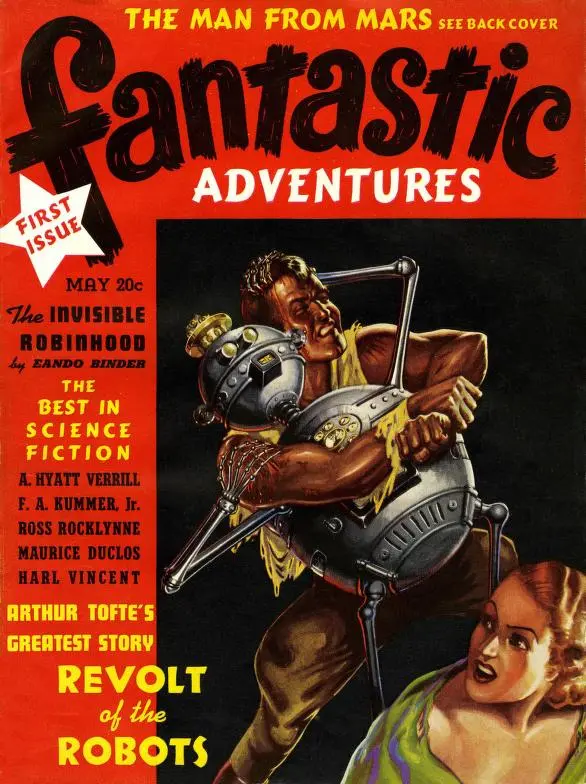
Published in the inaugural issue of Fantastic Adventures in 1939, “The Invisible Robinhood” appeared during a tumultuous period. World War II had just begun in Europe (September 1939), though America remained neutral. For instance, the story’s European sequence—where Trent prevents war gives us a hint of those tensions.
The 1930s pulp era valued action and ingenuity over literary sophistication, but the decade also saw science fiction maturing as a genre. The Binder brothers were prominent contributors to this development. Their Adam Link robot stories (beginning in 1939) pioneered sympathetic artificial intelligence narratives, for example.
Furthermore, the story’s emphasis on using science responsibly reflects the period’s concerns about technological advancement. The 1930s witnessed rapid development in physics, chemistry, and engineering, which raised questions about whether humanity could wisely manage its own inventions.
Meanwhile, the vigilante hero fighting corruption tapped into Depression-era frustration. Police, politicians, business leaders, and others were widely seen as corrupt or incompetent. As a result, the fantasy of an incorruptible outsider cleaning up society appealed to readers feeling powerless against systemic problems. Trent’s invisibility makes him literally above the law; he operates outside normal channels to achieve justice.
Author: Eando Binder
Eando Binder was the pen name used by brothers Earl Andrew Binder (1904–1966) and Otto Binder (1911–1974), derived from their first initials. Earl was born in Austria-Hungary and came to the US in 1910. After approximately 1934, when Earl became inactive as a writer, Otto continued to sign himself Eando Binder. Therefore, works after that date are by Otto alone.
Otto Binder became far better known for his comic book work. He was the co-creator of Supergirl and primary writer for Captain Marvel Adventures, credited with over 4,400 comic book stories. In addition, he worked for DC Comics on Superman-related titles and was posthumously inducted into the Jack Kirby Hall of Fame (1999) and Will Eisner Hall of Fame (2004).
The Binders’ most significant science fiction work was the Adam Link series, featuring a sympathetic robot character. Their 1939 story “I, Robot” predated Isaac Asimov’s famous collection of the same name (1950), which Asimov did not choose—his publisher selected the title against his wishes.
My Thoughts
The pulp adventure elements—the foiled robberies, the corrupt politicians, even the war-prevention plot—feel dated and somewhat naïve. Modern readers are accustomed to more complex villains and morally ambiguous heroes. On the other hand, Trent’s crusade operates in black-and-white terms that seem simplistic.
The most obvious comparison is H.G. Wells’s “The Invisible Man” (1897). Both feature scientists who discover invisibility, but Wells’s Griffin becomes increasingly mad and malevolent while Trent remains heroic. Wells explored how power corrupts and isolation drives insanity; Binder shows how the same conditions can inspire nobility and sacrifice.
Wrapping Up
“The Invisible Robinhood” is a significant early entry in superhero fiction, published the same year Batman debuted and one year after Superman. The story operates on multiple levels: as adventure, as psychological thriller, as romance, and as tragedy. Not all elements work equally well—the European war plot feels rushed, and some solutions arrive too conveniently—but the ambition is admirable.
Trent saves countless lives, prevents wars, and reforms society—yet he dies (or will die) alone, unloved except by someone who has never seen his face and never will. That is a bleaker ending than most pulp fiction dared attempt, and it lingers long after the adventure elements fade from memory.
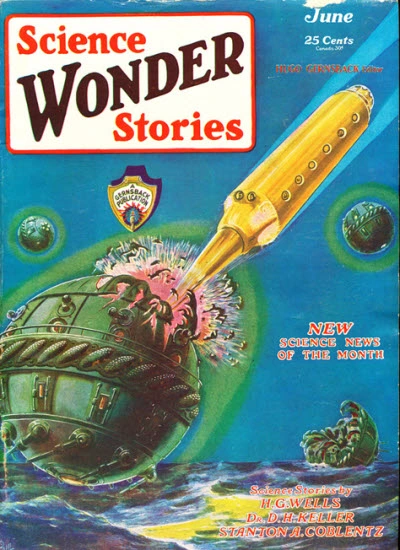
Another vintage pulp magazine:
Science Wonder Stories, Vol. 1, No. 2
Astounding Stories of Super-Science, Vol. 1, No. 1
Original Fantastic Adventures issue at the Internet Archive.
Disclaimer: The story featured on this page is in the public domain. However, the original authorship, magazine credits, and any associated illustrations remain the property of their respective creators, illustrators and publishers. This material is provided for informational and educational purposes only and may not be used for commercial sale.