Atomic New Age

Introduction

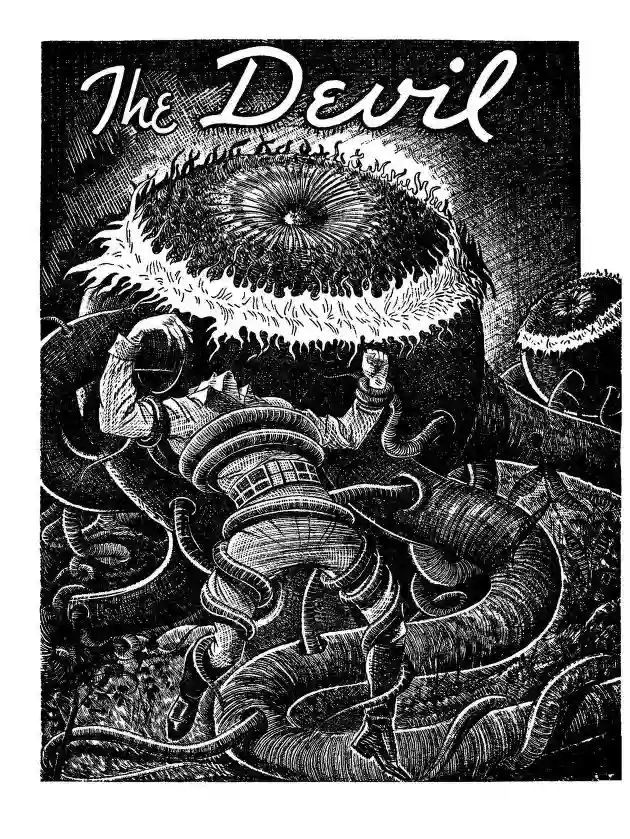
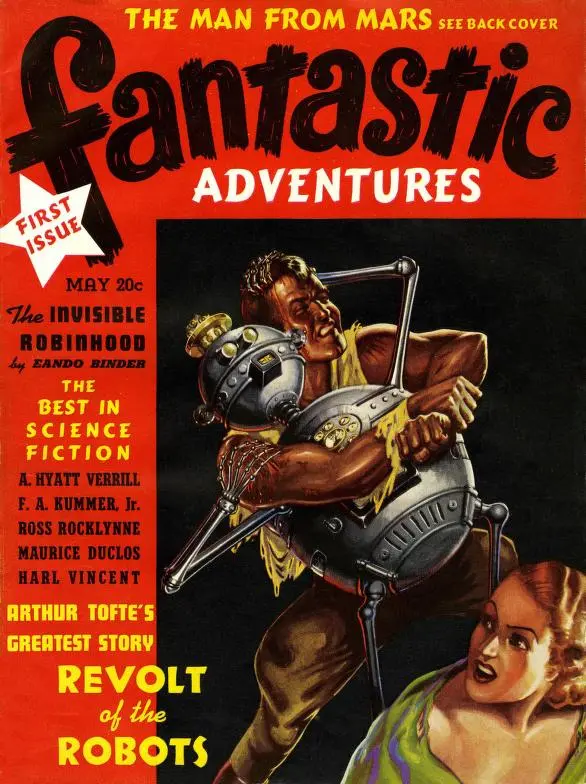
“The Devil Flower” is well worth a look, written by Harl Vincent and published in Fantastic Adventures, we have here an example of the sort of storytelling that kept readers hooked back in the day. It’s a proper old-school weird tale that swaps the usual heroics for a chilling trip into the strangeness, not so strange at all, but… take a look for yourself.

Plot Summary of "The Devil Flower"

A New York surgeon drives through mountain wilderness to visit a patient recuperating at a remote sanitarium, but something about the place unsettles him. His unease grows when his patient seems inexplicably worse than he should be. What starts as a professional visit turns into an investigation into something that defies the boundaries of medicine and natural science alike.

The Thriller Pulp

Vincent hands over a bit of a pulp thriller here with some horror bits thrown in. Normally, you’d spot this kind of story in Weird Tales; seeing it here is a bit of a curveball and adds quite a lot to the mix. As things move along, the lead character goes through a string of events that ramp up our suspicion that something is brewing, even if we aren’t quite sure what yet. Showing the hospital as a normal spot makes the horror hit harder because of the contrast—it looks like a standard building but has a grim vibe hanging over it.

Vincent’s writing is very “pulp” style, to be honest, with short, snappy sentences and paragraphs that get straight to the action, without much fuss over other bits. Everything else is laid out so the reader can easily suss out the motivations and feelings at play.

As for the villain, well, he’s a laugh but not that different from most pulp baddies. Usually a scientist—lonely, a bit unsociable, and full of obsessions—who’s going to finish his research no matter the cost. And, obviously, he gets munched by his own creation in the end.

Pulp Market

Looking back at the 30s, the pulp market was bursting at the seams and properly competitive. By then, dozens of titles were already fighting for space, with new ones popping up and most kicking the bucket after six issues or so. Fantastic Adventures was launched to go head-to-head with Amazing Stories and the rest. Their strategy for this go was to bet on adventure tales mixed with horror and fantasy. And let’s be honest, horror usually draws a crowd.

Now, monster plants are a funny one. I reckon the discovery of carnivorous plants really rattled people. It moves them from being just “plants” to being more like predators, and a plant that eats living things is arguably scarier than, say, a lion—though I’m not 100% sure if that’s actually true.

Even though it’s a familiar idea, Vincent—who was paid by the word—manages to make his story pop because he puts a bit of energy and spark into something he could have easily phoned in.

Author: Harl Vincent

Harl Vincent was the pen name of Harold Vincent Schoepflin (1893–1968), an American mechanical engineer who wrote science fiction and fantasy on the side throughout the 1920s and 30s. He was a busy contributor to the pulps, with stories in Amazing Stories, Astounding Stories, and Weird Tales, among others. He wrote over a hundred stories in the genre, though his work is mostly unknown today unless you’re a pulp fiction scholar or a proper fan (we’re counting ourselves in that group!).

My Thoughts

What makes this tale have a bit more class for me—like I said, it really stands out—is that Vincent has only a few pages and uses them brilliantly to build his brand of horror. Beyond that, I just plain like this sort of story. It’s classic pulp: a bloke in an asylum with a mystery, a monster, and some barmy scientists. Basically, it feels like an episode of something like The Twilight Zone. This story has a lot in common with “The Flowering of the Strange Orchid”—specifically the nasty plants. It’s quite funny to think any pulp story can be compared to something by H.G. Wells.

As mentioned, this story fits right into the Weird Tales tradition, feeling a bit like Seabury Quinn’s Dr. Jules de Grandin stories, while also having hints of Lovecraftian monsters (well, a slightly lighter version).

Wrapping Up

“The Devil Flower” is a solid story. It gets the job done without overdoing it, creating a suspense that’s fun, interesting, and a very well-made piece of pulp. I think it’s written well enough that there isn’t much to argue about; no need to go over the top with praise, but nothing to complain about or nitpick regarding the quality. And carnivorous plants? They’re… creepy, I suppose.

Disclaimer: The story featured on this page is in the public domain. However, the original authorship, magazine credits, and any associated illustrations remain the property of their respective creators, illustrators and publishers. This material is provided for informational and educational purposes only and may not be used for commercial sale.

Scroll to Top