Atomic New Age

Introduction

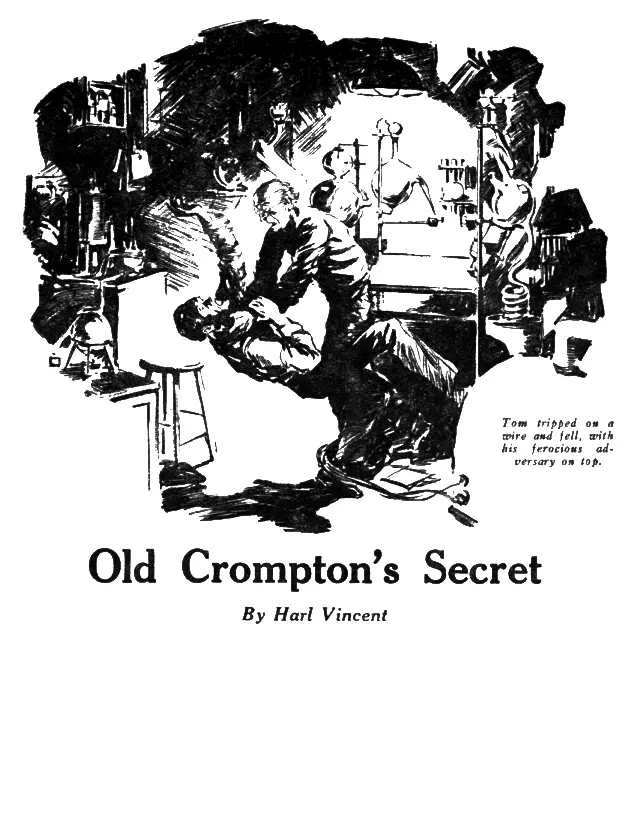
“Old Crompton’s Secret” is a short story written by Harl Vincent and published in Astounding Stories of Super Science. Here, Vincent returns with a more moral-driven narrative involving scientific experiments, naturally, while also touching on ageing and consciousness. It becomes even more interesting thanks to its protagonist, who feels more grounded than the usual leads in stories like this.

Plot Summary of "Old Crompton's Secret"

A bitter old hermit named Crompton lives in isolation near a village in Pennsylvania, avoided by the superstitious locals. When a young and brilliant scientist builds a private laboratory just across the road, an uneasy sort of friendship begins to grow between the two men. Crompton becomes fascinated by the scientist’s work, sensing that it may offer him a chance to change his own fate.

A Bitter Protagonist

Vincent builds the story almost like a moral fable, using science fiction as the framework for that. What I mean by moral fable is that the story follows a familiar structure: a sin is committed, punishment arrives internally through guilt and externally through the failure of the rejuvenation, and redemption only comes through mercy. There is no courtroom drama here; what could have ended in legal consequences instead turns into reconciliation, which makes the ending far more interesting.

The protagonist fits a type we often see in pulp fiction, especially in old horror magazines: bitter, flawed men driven by envy, cruelty, ambition, and a willingness to cross moral lines. We often think of pulp protagonists as heroic adventurers or brilliant researchers, and those are everywhere too, but tragic figures like Crompton were clearly favourites in older short fiction.

The character’s backstory appears at exactly the right moment, and it is surprising how much sympathy Vincent manages to create for someone introduced as bitter and calculating. Crompton is not likeable in the usual sense; he is cunning and violent, but because the story stays close to his point of view, by the end we understand enough of his loneliness and the grief he has carried from a lost love to feel something close to tenderness for him. That is careful character work, especially within the tight limits of pulp fiction.

Restoring Youth

Themes of immortality, rejuvenation, and the ethics of playing God were already popular at the time, helped along by real-world developments in endocrinology and early gland-based “youth restoring” treatments. The idea that ageing could be reversed through some kind of electromagnetic or biological process felt believable to readers back then in a way it no longer quite does.

The machine itself, with its coloured rays and humming motors, is classic pulp imagery, but it carries real symbolic weight. It promises what religion has always promised: victory over death. The fact that it fails Crompton on a psychological level is where the story makes its sharpest point. The body may be made young again, but the mind, with all its regret and memory, cannot.

This theme of youth and immortality also appears in The Picture of Dorian Gray, but in reverse. While Dorian remains young as his portrait ages, Crompton’s renewal is only physical and temporary, with his real age returning in front of witnesses. Stories like this often connect the desire for eternal youth with moral corruption, or even with defiance against God, as if immortality belongs only to the divine. Any attempt to reach it through human means becomes a kind of transgression.

Author: Harl Vincent

Harl Vincent was the pen name of Harold Vincent Schoepflin, an American mechanical engineer who wrote science fiction extensively during the late 1920s and 1930s. He was one of the most frequently published writers in the early pulp magazines, contributing dozens of stories to Amazing Stories and Astounding Stories of Super Science. He became known for writing adventure stories that remained accessible without losing all sense of character. By the mid-1930s, he had mostly stepped away from fiction and returned to engineering.

My Thoughts

I really enjoy stories where writers like Harl Vincent use science fiction or horror to explore ideas and, more importantly, characters. You take a concept — simple or absurd — and use it to explore the conflicts that grow around it, usually through the choices the characters make. Honestly, that is one of the things that attracts me most to science fiction and short stories in general. And when there is a well-written character in the middle of it, that is the best of all.

I think this story gives us that, at least to some extent. We have a bitter man suddenly faced with an impossible opportunity. In stories like this, the protagonist is often the most interesting part: what he chooses to do, how he deals with the consequences, and how the central problem changes him. Character-focused stories are always my favourites. I would not say this story goes all the way in that direction, but it gives Crompton enough personality to make me care about what happens to him.

Wrapping Up

“Old Crompton’s Secret” is not a literary masterpiece, but it is a genuinely solid story with an ending that feels earned. It uses the conventions of early pulp fiction with enough thought and precision to work in a meaningful philosophical idea about ageing, identity, memory, and what makes a life well lived or badly lived.

The emotional journey feels honest, the protagonist is more layered than expected, and the final image — two men, one ancient and one middle-aged, shaking hands — quietly hints that forgiveness and cooperation may be the only kinds of immortality that really matter.

More of Harl Vincent

Old Crompton's Secret

Old Crompton’s Secret – Harl Vincent (Astounding Stories of Super Science, Vol.01, N.02, 1930)

Introduction “Old Crompton’s Secret” is a short story written by Harl Vincent and published in Astounding Stories of Super Science ...
/
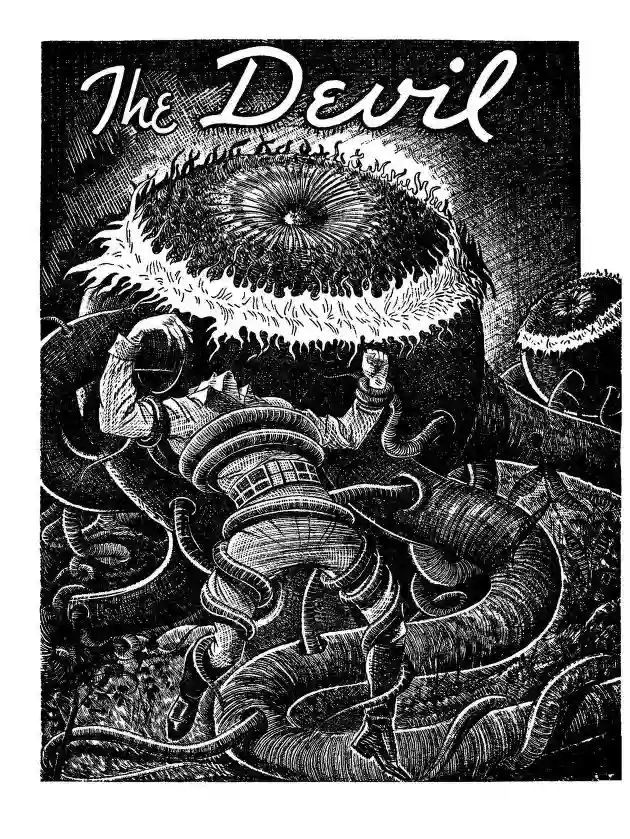
The Devil Flower

The Devil Flower – Harl Vincent (Fantastic Adventures, Vol. 01, No. 1, 1939)

Introduction “The Devil Flower” is well worth a look, written by Harl Vincent and published in Fantastic Adventures, we have ...
/
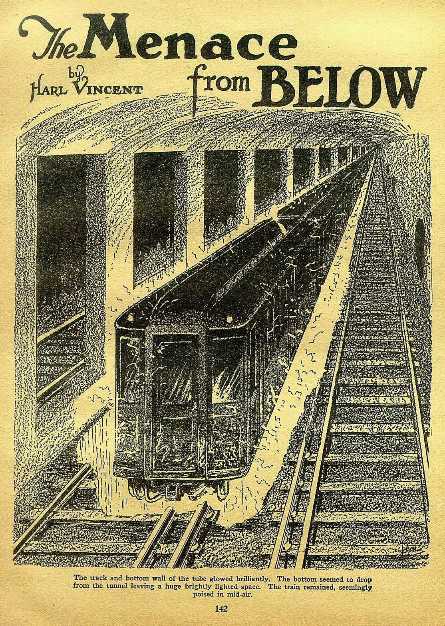
The Menace From Below

The Menace From Below – Harl Vincent | Science Wonder Stories, Vol 1, N° 2 (1929)

Dive into Harl Vincent’s 1929 pulp sci-fi tale The Menace From Below—vanishing trains, underground horrors & retro-futurism in this vintage ...
/
Scroll to Top