Silver Pines: Story and Review
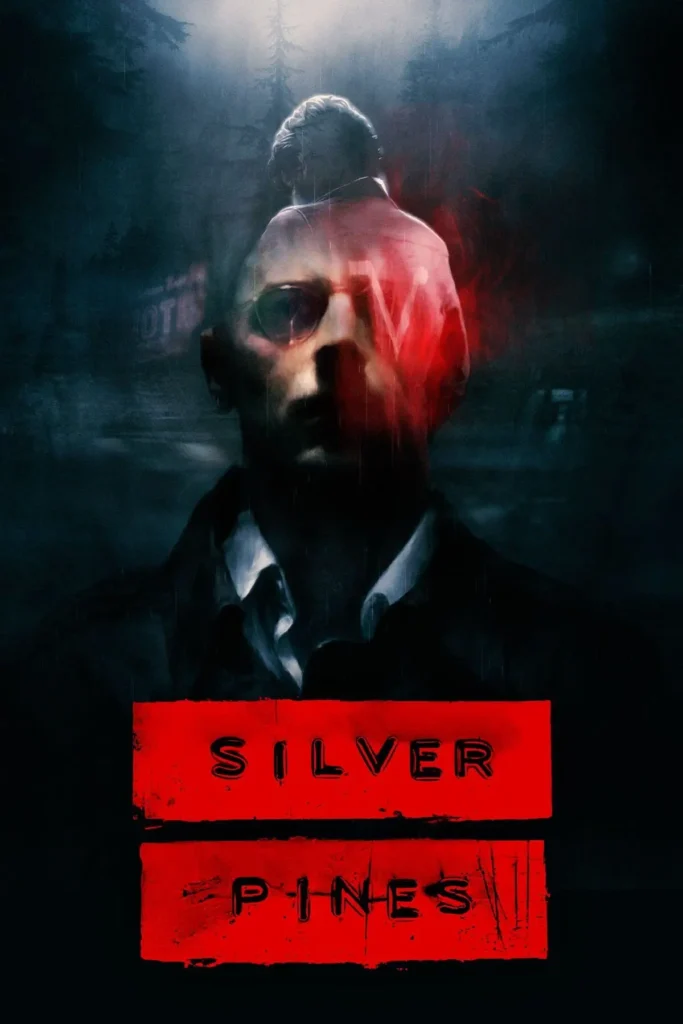
Title: Silver Pines
Developer: Wych Elm Games
Publisher: Team17
Release Date: October, 2026
Genre: Survival Horror / Metroidvania
Engine: Unity 6
Platforms: Playstation 5 / Windows / Xbox Series X/S / Switch 1 & 2
Silver Pines is a game by Wych Elm Games, published by Team17 and released on 8 October 2026. The game can basically be described as a 2D Survival Horror title, and it’s already being compared to the atmosphere of the classic Silent Hill. I’d also throw in Alan Wake, Twin Peaks and a true crime here. I’d say there’s a chain of inspirations connecting all these works. I believe the most eye-catching aspect of this game is its art style and its Survival Horror 2D format, which hasn’t been seen very often in the industry. I also believe this game will open the door to similar projects in the future. So, congratulations to Wych Elm Games. You’ve probably started a new wave in the gaming world.
In the game, we follow Red Walker, a private investigator who wakes up in a diner without really understanding how he ended up there. Walker soon receives a phone call from a mysterious man who tells him that his objective is to find a musician called Eddie Velvet. And, of course, to do that, our character will have to wander around the entire town of Silver Pines.
As you can imagine from its inspirations, the game has a rather confusing narrative, with few easy answers, and a gameplay system that can test your combat skills, intelligence and patience as you navigate this puzzle. Just as you’d expect from a good Survival Horror game, Silver Pines delivers on that promise very well.
Silver Pines Story
Silver Pines has a confusing story that leaves plenty of room for interpretation, so events can be understood in different ways.
Awakening in Silver Pines
The story begins with a man called Red Walker waking up at the Miner Diner, which is completely empty. It’s October 1993. Walker tries to work out who he is and, of course, what he’s doing there. Outside, he discovers that he’s in Silver Pines, a small coastal town in the north-western United States. Walker soon receives a phone call, something that will happen repeatedly throughout the game, from an unknown man who calls himself Mr Jackman and explains his mission. Apparently, Walker came to Silver Pines to find a missing musician called Eddie Velvet. To make things even more intriguing, the musician is connected to the disappearance of a local girl.
Later on, Walker receives information from an officer at the Ferry Station about a storm hitting the town. Many residents have already evacuated, and the officer advises Walker to do the same. Walker ignores his advice and heads to the Crimson Bear Motel, where Eddie previously stayed in the Grizzly Suite. The musician’s whereabouts remain unknown, but clues scattered throughout the town connect him to Alice Baker, a young woman who disappeared some time ago. Newspaper reports and police documents reveal that Alice was last seen heading towards Mount Siah Kopa with Eddie. The subsequent search was abandoned due to the dangerous weather.
Throughout all this, Walker must fight a series of strange, deformed humanoid creatures as the town gradually shifts into a surreal state marked by a red colour scheme.
After visiting the Ferry Station and heading into Downtown, Walker eventually enters The Rabbit Hole, a bar and music venue he’d previously seen in a vision. Eddie was performing on stage when a woman approached him, marking what was probably the first time the two met. Walker also encounters a strange man who claims to adore Eddie Velvet and his music.
He’s not the only unusual character Walker encounters in town. Several others speak in mysterious ways and seem to be hiding something from our protagonist. These include an old man who insists that Walker should turn back and abandon his mission, or find another way to resolve the situation; a mysterious woman dressed in black who claims someone left her there; a man digging a hole in his courtyard; a man washing his burnt hands by the shore; a cowboy bartender at The Rabbit Hole; and even the town’s sheriff, who is anything but friendly towards Walker. What these characters represent, or who they really are within the story, is never made explicit. It’s difficult to tell whether they’re figures from the characters’ pasts or simply residents of the town with no greater significance.
The investigation soon centres on Eddie’s relationship with Alice. A recording of his police interview reveals that the authorities suspected him of being involved in her disappearance. The game seems to imply that Eddie killed Alice in some way, but he refuses to reveal where her body might be. Walker initially approaches the case as a professional assignment, reporting his findings to Jackman over the telephone. His client, however, becomes increasingly insistent that Eddie must not escape. The local authorities seem unreliable, and Deputy Sheriff Roberts eventually reveals that Eddie was never held at the police station, contradicting the impression Walker had been given.
We then begin to realise that Walker’s own past is also tied to the story, and that he’s mixing his memories with the case.
Alice Baker and the Little Man
Eventually, Walker reaches the Cable Station, which will take him to Mount Siah Kopa. However, to get it working, Walker learns from the Little Man, the same figure who appeared in his vision at The Rabbit Hole, that he must find several bells and bring them back to the station. This forces Walker to visit various locations, including the church, the police station, the cinema, the town hall, the Union Apartments and the sewers.
The diary entries we find, addressed to Eddie, suggest that Alice was terrified and felt unable to escape someone she called the “Little Man”. This character appears to be some kind of demonic entity, which may or may not have been inspired by someone Alice or Eddie knew. The game offers no definitive explanation as to whether he’s a supernatural being, a manifestation of guilt or something else entirely. Alice makes it clear that he won’t let her leave and that something terrible is about to happen.
Other clues make the accusations against Eddie even more complicated. The notes we find suggest that Alice was already experiencing problems before her final encounter with the musician, whilst the police investigation never establishes his guilt. A priest’s diary also mentions Alice suffering recurring injuries.
Jackman also orders Walker to kill the musician, making it clear that this is no longer a simple missing-person case. Walker protests, arguing that he’s a private investigator, not a murderer. Jackman’s response, however, suggests that he knows far more about Walker than we initially thought.
The Thelend Broadcasting
Walker manages to gather the bells and activate the cable car, which takes him up the mountain. By this point, Walker has reluctantly accepted that he’s there to kill Eddie Velvet, not capture him, and that this is his only way out of Silver Pines for reasons that remain unclear.
At the top of the mountain stands the Thelend Broadcasting facility, responsible for filming episodes of a TV show called “Terminal Drive”, which can be watched on televisions throughout the town. The episodes appear to tell an alternative version of events from the past.
Another detail becomes apparent here: Mr Jackman is probably the Little Man, who assigned Walker the mission of killing Eddie as revenge for the musician’s role in Alice’s death. Jackman and the Little Man both want Eddie dead, although their motivations seem to differ. Jackman sees it as fulfilling a contract, whilst the Little Man presents it as justice for Alice.
We then receive another piece of the puzzle. There was a road accident in which a vehicle lost control and plunged down a steep embankment into the water. The game leaves room for debate about what exactly happened in the crash. This is also foreshadowed in the TV series. The storm ravaging the town may even be a reflection of that moment on the road.
Walker finally finds Eddie, and the musician is emotionally shattered. He no longer comes across as an innocent man caught up in a misunderstanding. Eddie speaks in riddles, offering few concrete clues about what happened. By this point, players should have pieced together at least some of the events, as this is where the game’s final decision takes place.
Walker can either kill Eddie Velvet or spare his life. This decision determines which of the game’s three endings becomes available, although players must also have completed certain tasks throughout the game to unlock them.
My Interpretation and the Endings
From what we can gather by putting together the clues scattered throughout the game, Red Walker is probably a version of Eddie Velvet. At some point in the past, Eddie met a woman called Alice while performing at The Rabbit Hole, or perhaps they had arranged to meet there. The two began a relationship that carried some risk, represented by the Little Man. The story never makes it clear whether he’s a real person, an actual supernatural entity or a form of hatred and remorse that Walker carries with him.
At some point, Eddie and Alice were driving along the road when an argument caused their car to plunge into the water. This MAY have been the moment Alice died by drowning, especially since her body was found in the water. Even so, the game never confirms this outright.
The town throughout the game could be a trap orchestrated by the Little Man to kill Eddie, one from which Walker could never escape. It’s as if Eddie is the living person and the Little Man cannot kill him directly, meaning he needs Walker to do it for him. This would make the town a sort of purgatory. Eddie is in this near-death state, unconscious.
Leave Ending
In this ending, Walker shoots Eddie, putting an end to the musician’s torment. He then receives congratulations from Mr Jackman for completing his contract, along with the beach holiday he was promised as part of the deal. Walker tries to leave Silver Pines, but he can’t escape and becomes trapped in an endless loop. This ending appears to represent Walker’s denial and his descent further into guilt, symbolised by the cycle of events the player has experienced throughout the game.
Live Ending
In this ending, Walker must burn all the Mementos he’s collected throughout the game. This acts as a form of erasure or overcoming of the past that’s kept him trapped in this nightmare of guilt. Walker escapes the cycle by confronting his past and defeating it, finally waking up in the real world. The figure of the man washing his burned hands seems to foreshadow this ending, given that you burn the objects in the cabin near him.
Rest Ending
Walker refuses to shoot Eddie. He must also collect five stars to open a box containing a ring. He then retrieves the other ring from Alice’s drowned body. The Little Man is far from pleased with Walker’s decision. He confronts him, angry and heartbroken, telling Walker to look at what Eddie did to his girl, referring to Alice’s body. The Little Man transforms into a monstrous creature and chases Walker, who eventually manages to stop him.
Walker leaves the diner and heads towards the horizon on the ferry, where he speaks with Alice. This appears to indicate that Walker has come to terms with his own death and Alice’s, finding peace at last. Now, the two of them can rest together
True Crime and Other Inspirations
Taking a broader look at the game, we can find several elements that help us better understand the inspirations behind it. Silver Pines benefits greatly from the true crime feel of its narrative, which acts as a bit of bait, since these kinds of stories have always been appealing. The concept revolves around a crime where the clues point towards a fairly obvious suspect who had a connection to the victim. The case is then pieced together through fragments such as tapes, recordings, diaries, newspapers and reports. In other words, it’s that familiar format of reconstructing a real crime. The girl’s disappearance also carries that cold case feeling, a mystery that remains unsolved.
The game’s structure also has a lot in common with Silent Hill, focusing on a troubled character haunted by his past who, through sheer bad luck, ends up in the most haunted town of all. I like how, much like in Silent Hill, the game offers players fragments of its real story but leaves enough gaps for them to piece everything together themselves. The exposition gives you just enough information to keep moving forward, without explaining what’s really going on behind the scenes. Of course, this leads the game into a few clichés, such as being trapped in some sort of limbo or purgatory, and the idea that the protagonist with a mysterious past has blood on his hands.
The town itself and the environments on display, along with the series playing on televisions throughout the game, are very reminiscent of Alan Wake and its Night Springs TV show, which can be watched in-game. It’s nice to see this kind of attention to detail, something you often find in Remedy’s games, being put into practice here. And speaking of Alan Wake, we can’t leave out the father of these kinds of narratives, David Lynch and Mark Frost‘s masterpiece, the TV series Twin Peaks. The town’s aesthetic and the surreal elements found throughout these stories are heavily inspired by Twin Peaks, too.
Graphics and Art Direction
Silver Pines‘ visuals are perhaps its biggest selling point at first glance. The game features 2D progression, or more accurately, 2.5D, which is very reminiscent of a traditional Metroidvania. The character can move left and right, go up and down, and enter paths that transition into the next areas. However, the main animation technique used here is rotoscoping.
Rotoscoping
Rotoscoping is a traditional technique in which animators draw the outlines of a character or object frame by frame, using live-action footage as a reference. The director films the scene with a camera, then the animator projects the footage onto a light table or into software and draws over each frame. This allows the final animation to retain some of the realism and weight of actual human movement. The technique was invented by Max Fleischer in 1915, who was famous for creating characters such as Betty Boop and Popeye. To put the technique into practice, Fleischer patented a machine called the Rotoscope. Today, the entire process is done digitally.
The characters are presented in a minimalist style, with far fewer details than their surroundings. This creates an interesting visual relationship between the characters and the environments. Each character has a base colour with a dark patch representing their shadow. As the shadow moves, it gives the character a sense of depth without requiring a 3D model or a more elaborate figure on screen. The environments, meanwhile, are far more realistic and detailed, which is possible precisely because they’re static. It’s a great way for an indie studio to manage production costs and development time.
Environment and Atmosphere
The game’s atmosphere does the rest. Every environment feels like a place with a history, shaped by disaster and melancholy. Indeed, everything seems to tell a story, whether it’s connected to the plot or simply there to give the world some life and background. It’s a typical north-western American town, complete with police stations, churches and diners, surrounded by pine-covered mountains.
The game’s sound design also does a great job of building the atmosphere. Let’s get the voice acting out of the way first, because it’s excellent. There’s plenty of dialogue in the game, with several characters having a considerable number of lines. The gunshots sound convincing, and the sound of reloading also helps, especially during the more tense moments. The soundtrack, meanwhile, captures some of the melancholy of a tragic and lonely story. The audio does a great deal to reinforce the protagonist’s sense of lonely.
Gameplay
Silver Pines has a combat system that’s difficult in a simple way. At first, the encounters seem as though they’ll become a bit monotonous, since you can take down enemies with a few hits. The game features melee attacks and firearms, but things become increasingly punishing as you progress. Melee weapons can be found throughout the game and have limited durability, which decreases whenever you hit an enemy. They remain in your inventory after breaking, but you’ll need to repair them to make them deal decent damage again. The problem is that your character has a stamina bar, which gets depleted with every swing. You can probably imagine how much trouble this can cause in the worst possible places. One downside is how useless these weapons can be against bosses.
On the other hand, we have firearms, whose effectiveness is limited by the amount of ammunition available. After all, this is a Survival Horror game. The game makes these resources difficult to obtain and also features a reloading system that temporarily immobilises your character, using a Quick Time Event to replenish your ammunition. This is a nice touch because, even when you have enough bullets, you still need to be clever about your reload timing, keeping that sense of vulnerability intact.
The enemies, meanwhile, leave a little to be desired, as there’s not much variety, and the ones available aren’t all that different from one another. You’ll encounter basic zombie-like enemies, a larger and tougher version, and a faster, slimmer variant. Some crawl along the floor, making them difficult to deal with without taking damage. There are also some insects and creatures that float down towards your character. And, of course, there are the bosses.
Progression combines the Survival Horror formula with the Metroidvania model. You’ll gradually unlock more of the map as you find keys and passwords for doors and solve puzzles. Eventually, you’ll acquire items that allow you to revisit previous locations and access areas that were previously blocked off. Most of the time, these paths lead to collectibles such as Mementos, resources for your journey and weapon upgrades. Players must also collect coins, which can be spent on supplies in the safe rooms.
There’s plenty of optional exploration, so players need to stay alert and solve puzzles that might otherwise go unnoticed during the main campaign. In fact, several puzzles appear to be part of the main progression when they’re actually optional, rewarding you with an extra item instead. It’s worth remembering that one of the endings requires you to collect the Mementos.
With all this in mind, the game can take more than 10 hours to complete if you’re trying to collect as much as possible. For someone who has little idea of what to do, it could take considerably longer. The difficulty also scales in an uncomfortable way, and you’ll always return to your last save point, which means you’ll need to approach the game with patience.
Cons
Despite being well designed, the combat in Silver Pines can also get very repetitive. To be fair, this is fairly common in Survival Horror games. Some encounters are an absolute nightmare because your character gets tired, you run out of bullets and need to reload, but there’s no time to do so because enemies are busy beating the living daylights out of you. Before you know it, you’re trapped, and a single mistake can be fatal. The dodge mechanic also has rather awkward timing and can feel almost impossible to use when things get chaotic.
Is Silver Pines Worth Playing?
I reckon Silver Pines has a good chance of starting a new wave of 2D games with Survival Horror elements, as it has shown how well this combination can work. Of course, the indie scene already has some excellent 2D games, but I feel Silver Pines stands out because of its comparisons to giants such as Silent Hill and Resident Evil. The game does a good job of delivering on what it sets out to do, whilst carrying that old-school spirit throughout. I can see future games trying to capture this same experience, much like what happened with mascot horror games. The difference is that Silver Pines is a polished, complete gem, and it has already left the door open for a possible Silver Pines 2 at some point in the future.