
Horror Anthology Series
If there’s one thing I’ve always had a soft spot for, it’s anthology stories. In a medium historically built around routine, repetition, and the audience’s attachment to recurring characters, the television anthology has always flirted with risk. Presenting viewers with a completely new universe every week, complete with new rules, casts, and endings, feels almost counterintuitive for television as a format.
Yet it was precisely in that apparent weakness that the format found its greatest strength. Free from the restraints of the status quo and the corporate need to keep the protagonist alive for next week’s episode, anthology series became some of the boldest creative playgrounds in audiovisual fiction, which is exactly what I love most about them.
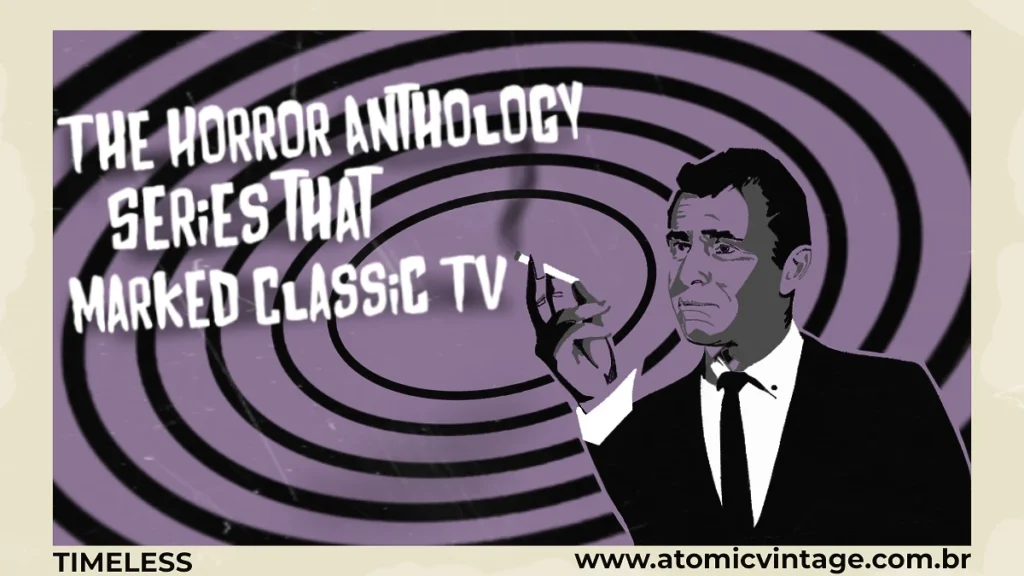
Anthologies didn’t begin with television, of course. Radio had already embraced the format long before TV arrived in the late 1940s. Still, it was around the turn of the 1960s, with works such as The Twilight Zone and The Outer Limits, that the format reached what I’d call its cultural peak. Through science fiction, horror, and fantasy, creators like Rod Serling, perhaps one of the most famous figures tied to this movement, realised that distancing stories from reality was the perfect way to dodge sponsor censorship. It opened the door for sharp criticism of Cold War paranoia, racism, social structures, technological dehumanisation, and all the themes you’d expect from this kind of fiction.
Over the following decades, the format moved from the visual excess and dark humour of the 1980s, seen in Tales from the Crypt, to the psychological experimentation of the late 1990s, adapting itself to the style of each new generation.
Below is a list of anthology series spanning from 1949 to the 1990s. The list doesn’t include radio productions and focuses on suspense, sci-fi, horror, and fantasy series, so no dramas or westerns for now. It also doesn’t include every anthology series from the period because there are simply too many—and by too many, I mean hundreds of anthology series produced during those decades. Naturally, the list only covers the shows I’ve personally seen, which still doesn’t come close to a quarter of this vast sea of anthologies.
1. The Golden Age of Television and Theatre on Screen (1940s–1950s)
The Philco Television Playhouse (1948)
One of the earliest television anthologies, with more than 200 episodes, it was sponsored by the electronics giant Philco, which used the programme to promote its televisions and radios. I said there wouldn’t be any dramas here, but this series is such a relic that it deserved a place on the list. Most episodes are adaptations of Broadway plays and classic literature, ranging from famous works to stories by lesser-known authors. In the end, that’s really what the series is: a wide range of stories adapted for television from other mediums, including Pride and Prejudice, Romeo and Juliet, and A Christmas Carol.
As time went on, the production started commissioning original scripts written specifically for television, leaning into what became known as kitchen sink realism; intimate, grounded stories centred on everyday life and the struggles of the working class.
Suspense (1949)
Suspense is an American television series, also running for more than 200 episodes, with scripts largely adapted from its earlier 1942 radio version. Many episodes are based on stories by well-known writers, including Roald Dahl. As the title suggests, the series focuses on suspense and mystery stories of every kind. Unlike the radio version, which occasionally flirted with the supernatural, the television adaptation leaned more towards realistic suspense and noir-style storytelling.
Hands of Mystery (1949)
Also known as Hands of Murder and Hands of Destiny, this was another American series originally broadcast on the now-defunct DuMont network. Being a late-1940s production, the programme relied on a few inventive tricks to work around the limited sets and technical restrictions of the period. Another issue is that most of the episodes have been lost, since the broadcasts were performed live.
The series itself focused on noir and low-budget crime suspense, featuring plots involving murders, conspiracies, investigations, and some surprisingly clever crime-solving elements. Honestly, they were practically magicians at times.
Danger (1950)
Despite the completely unimaginative title, Danger became a successful series with more than 200 episodes, produced by CBS. The episodes revolve around mystery and suspense scenarios, such as someone discovering the exact date of their own death, or a woman haunted by the ghost of her husband seeking revenge. There are countless episodes, so the ideas vary wildly.
This is actually one of my favourite kinds of anthology series, where every plot introduces a dilemma for the characters to experience and for the audience to sit with. Like many of its contemporaries, the programme was broadcast live. Instead of relying on a traditional orchestra or the dramatic organ music common on television at the time, the series featured jazz guitarist Tony Mottola improvising tense, shadowy chords live on air, which is honestly kind of insane.
2. The Golden Age of Science Fiction and Mystery (1950s–1960s)
Alfred Hitchcock Presents (1955)
The master of suspense himself could hardly be left out, especially with a series created, produced, and hosted by the man himself. Running for 361 episodes, this show is a feast for anyone who enjoys Hitchcock’s work. The series opens with the classic introduction where Alfred Hitchcock appears with a monologue setting the tone for what’s to come, something fairly common in classic anthology television.
The episodes revolve around crime, paranoia, betrayal, and occasional touches of horror. Most stories focus on ordinary people planning or carrying out crimes, only to be undone by one fatal mistake or simple bad luck.
Science Fiction Theatre (1955)
At last we arrive at a series fully centred on science fiction. It was also one of the earliest television programmes filmed in colour, even though many broadcasts at the time were still shown in black and white. Also known as Beyond the Limits, the series ran for 78 episodes exploring scientific possibilities through a more cerebral, semi-documentary approach.
Each episode tackled a scientific concept or technological advancement which, while fictional at the time, drew inspiration from real theories and research in physics, biology, astronomy, medicine, and whatever else caught their interest. The host was Truman Bradley, acting as a sort of “laboratory presenter”.
Behind Closed Doors (1958)
With only 26 episodes, this might be the shortest series on the list. Behind Closed Doors was also fairly one-note in terms of subject matter. Set during the height of the Cold War, the series dramatised secret counter-espionage operations, infiltration missions, and international security affairs.
The scripts were directly inspired by the real files and experiences of Rear Admiral Ellis M. Zacharias, who served in American naval intelligence for twenty-five years. Although the original material came from earlier periods, including the Second World War, the stories were fully updated to fit the geopolitical tensions of the 1950s, focusing on the ideological and technological conflict between the West and the Soviet bloc.
It’s an interesting series with scripts that aim for a certain level of realism, especially in their depiction of espionage techniques, even with a bit of dramatic licence.
The Twilight Zone (1959)
Of course everyone was waiting for this one. One of the greatest masterpieces in television history and practically the darling of anthology television, The Twilight Zone also happens to be my favourite series of all time. Created by writer Rod Serling, the original run aired between 1959 and 1964, breathing new life into science fiction and psychological suspense.
The series places ordinary people into extraordinary, inexplicable, or supernatural situations (supernatural more often than not) usually built around some kind of lesson or thematic idea, almost like a parable. Nearly every story builds towards a shocking final twist that completely reshapes the meaning of everything that came before it.
Rod Serling famously used science fiction and the supernatural as a kind of Trojan horse to bypass the heavy censorship and sponsor pressure of television at the time. Beneath stories about aliens and time travel, he explored racism, war, American politics, and, naturally, human nature itself. The opening sequences and Serling’s introductions and closing narrations, cigarette in hand while speaking directly to the audience, still feel iconic today.
One Step Beyond (1959)
Alcoa Presents: One Step Beyond, usually shortened to One Step Beyond, is an American anthology series created by Merwin Gerard and centred entirely on the paranormal. Originally broadcast between 1959 and 1961, the show ran for three seasons and 97 episodes.
For anyone who loves that very specific early-1960s style of horror, this series is fantastic. Every episode focused on paranormal or supernatural events supposedly based on real cases—which, naturally, they weren’t. The show recreated historical or contemporary accounts of experiences that “conventional science” supposedly could not explain, presenting them through dramatic and mysterious retellings.
Instead of taking a sceptical or purely fictional approach, John Newland presented the programme almost like an occult investigator guiding viewers through strange cases.
Thriller (1960)
Boris Karloff’s Thriller is a highly acclaimed American anthology series focused on suspense and horror, broadcast by NBC across 67 episodes. Its host is none other than Boris Karloff himself, one of the greatest horror actors ever and also one of my personal favourites.
The show split into two distinct styles during its run. The earlier episodes focused on realistic crime thrillers, gothic murders, and psychological mysteries, very much in line with the 1950s suspense style popularised by Hitchcock. Later on, the series fully embraced supernatural horror and classic gothic terror, adapting stories by renowned genre writers such as August Derleth and Robert Bloch.
The Outer Limits (1963)
The Outer Limits is one of the most celebrated and influential science fiction anthology series ever produced for television. Created by Leslie Stevens, the original run aired between 1963 and 1965 across two seasons and 49 episodes. The series left such a strong mark that it later received a well-loved revival during the 1990s.
While its older sibling The Twilight Zone leaned more into fantasy and ironic twists of fate, The Outer Limits was pure science fiction with strong elements of horror and cosmic mystery. Episodes dealt with scientific experiments spiralling out of control, terrifying encounters with extraterrestrial life, and humanity’s biological or technological evolution — or perhaps devolution.
Another major highlight was the creature design. The series featured fantastic practical effects and makeup work that helped shape the visual identity of television aliens for decades afterwards.
Night Gallery (1969/1970)
Night Gallery, also known as Rod Serling’s Night Gallery, is an American anthology series centred on horror, the supernatural, and dark fantasy. It first appeared as a television film pilot in 1969. And yes, it was created by Rod Serling once again. The man simply returned to do it all over again.
The structure is exactly what you’d expect from a series called Night Gallery. Each episode, depending on the season, featured either thirty or sixty-minute segments functioning as a kind of “gallery”, presenting two or three independent short stories. The tone shifted wildly between segments. While the main story was usually gothic horror or psychological suspense, the smaller pieces could go in almost any direction.
The original 1969 pilot film also marked the television directing debut of Steven Spielberg, who directed the segment Eyes, starring the actress Joan Crawford.
Fantasy Island (1977)
Fantasy Island is an iconic American fantasy and drama anthology series with more than 150 episodes. It later received a revival in 1998, a horror-thriller film adaptation in 2020—not a very good one—and another television reboot in 2021.
The series takes place at a mysterious luxury resort located on a remote island in the Pacific Ocean. Wealthy or determined guests pay a fixed fee, fifty thousand dollars at the time, to fulfil their deepest fantasies, whether that means reliving a lost romance, becoming a hero, or even travelling through time. Naturally, things rarely unfold the way they expect.
The island’s hosts are the elegant and mysterious Mr Roarke, played by Ricardo Montalbán, who seems to possess near-divine control over time and space, alongside his loyal assistant Tattoo, played by Hervé Villechaize. While the island and its hosts remained constant, every episode introduced entirely new guests and self-contained stories that began and ended within the same runtime—an anthology series through and through.
It’s not exactly suspense or mystery like I originally promised, but it definitely earns its place here through its fantasy elements alone, not to mention how iconic the series became.
3. The Horror Anthologies (1980s)
Tales from the Darkside (1983)
Tales from the Darkside is an American anthology series centred on horror, fantasy, and dark humour, created by the legendary filmmaker George A. Romero, and running for a total of 92 episodes.
The episodes mixed horror, slightly unhinged science fiction, supernatural elements, and plenty of adaptations from genre authors such as Stephen King and Clive Barker. The stories usually followed the classic structure of 1950s horror comics, where greedy, selfish, or cruel characters would end up facing some awful and grotesque punishment by the end.
The Ray Bradbury Theater (1985)
If there’s one author who deserved an anthology series based on his work, it was Ray Bradbury, considering the sheer number of short stories he wrote. And, conveniently enough, one actually exists.
The series was entirely created and written by Bradbury himself, with every episode adapting one of his own short stories or novellas. The tone changed dramatically from week to week. One episode could be a lyrical and melancholic science fiction story set in space, while the next might turn into a claustrophobic psychological thriller on Earth or even a dark fantasy with touches of horror.
What makes the programme even better is that Bradbury personally introduced the episodes and spoke about the inspirations behind them from inside his office. Honestly, what more could you ask for? He was the perfect host for this kind of series.
Amazing Stories (1985)
Amazing Stories is a prestigious American anthology series focused on fantasy, science fiction, and adventure, originally broadcast by NBC across two seasons and 45 episodes.
The defining feature of Amazing Stories is the fact that it was created by Steven Spielberg, born from his desire to bring the same sense of wonder, magic, and escapism from his blockbuster films to television. Unlike many anthology series of the period that leaned heavily into horror or cynicism, Amazing Stories embraced the playful and extraordinary spirit people usually associate with Spielberg’s work, with a few obvious exceptions such as Schindler’s List.
Another major difference was the series’ cinematic budget and the calibre of talent involved. Spielberg used his influence to attract some of the biggest names in film to direct individual episodes, including Martin Scorsese, Clint Eastwood, Robert Zemeckis, Joe Dante, and Spielberg himself.
Freddy's Nightmares (1988)
Freddy’s Nightmares, originally subtitled A Nightmare on Elm Street: The Series, is an American horror anthology series broadcast between 1988 and 1990, totalling two seasons and 44 episodes.
The production arrived during the peak popularity of the A Nightmare on Elm Street franchise, home to what is obviously the greatest slasher character of all time: Freddy Krueger. Each 45-minute episode was divided into two separate stories, though they were often loosely connected in some way.
The series takes place in the fictional and cursed town of Springwood, Ohio. Even though Freddy’s name is in the title, he only appears in a handful of episodes, while the rest function more like a traditional urban horror anthology. Robert Englund returned to his cinematic role as Freddy Krueger and also acted as the programme’s host.
The very first episode, No More Mr. Nice Guy, was directed by Tobe Hooper, director of The Texas Chainsaw Massacre. It works as an official prelude to the films, showing Freddy’s trial while he was still human, his release due to a technicality, and the moment the town’s parents burn him alive.
Monsters (1988)
Monsters is an American horror and fantasy anthology series created by Richard P. Rubinstein, who also worked on Tales from the Darkside, alongside Mitchell Galin. The series ran for 72 episodes in total.
And honestly, this programme lives entirely inside the uncanny valley. It starts with a bizarre framing device involving a family of creatures watching a television programme called Monsters. As the title already gives away, every episode was expected to feature a different creature at the centre of the story, although not every plot was strictly horror-focused.
One of the biggest highlights was the practical effects and creature makeup. Even with a typical 1980s television budget, the series delivered wonderfully exaggerated monster designs that feel unmistakably tied to the 80s.
Tales from the Crypt (1989)
Bringing in yet another classic, Tales from the Crypt is one of the most famous and influential horror anthology series ever made. Originally broadcast by HBO, the production ran for seven seasons and 93 episodes, becoming a major part of 1990s pop culture.
The series has an absurd number of famous people attached to it, so there’s hardly any point listing them all. Practically every major actor or director from that period seemed to pass through the show at some point.
Its host is the Crypt Keeper, a decaying puppet corpse emerging from his crypt to introduce each episode with terrible jokes and puns. And, as most people already know, HBO has never exactly been shy about pushing boundaries, so the series contains plenty of gore and material aimed squarely at adults(you know what I mean).
Perversions of Science (1997)
Perversions of Science is essentially a spin-off of Tales from the Crypt, also produced by HBO. The show only lasted ten episodes, making it technically the shortest series on the list, and it was largely based on the comic magazines Weird Fantasy and Weird Science.
The format worked almost exactly like its predecessor, focusing on how scientific progress or alien contact could go horribly wrong because of human weakness, obsession, or greed. The series featured a virtual host named Chrome, a cybernetic robot with a stylised design that was honestly pretty cool.
And, much like most HBO productions, the series came packed with violence and adult content as well.
Wrapping Up
Very well, I think that’s about it. Of course, there are still countless other series that didn’t make it onto the list because, well, time is limited and it’s impossible to experience everything. On top of that, watching every single episode from each of these shows is practically unthinkable.
Unfortunately, most anthology series from the 1940s and early 1950s have had the majority of their episodes lost, and the surviving material is nowhere near easy to find. From around 1955 onwards, though, access becomes much easier.
And who knows, maybe I’ll keep adding more entries to this list as I discover new series, or perhaps even write a full article dedicated to a specific show someday.
Well, until then.
More Articles
Cthulhu and Beyond: Lovecraftian Gods and Monster Explained
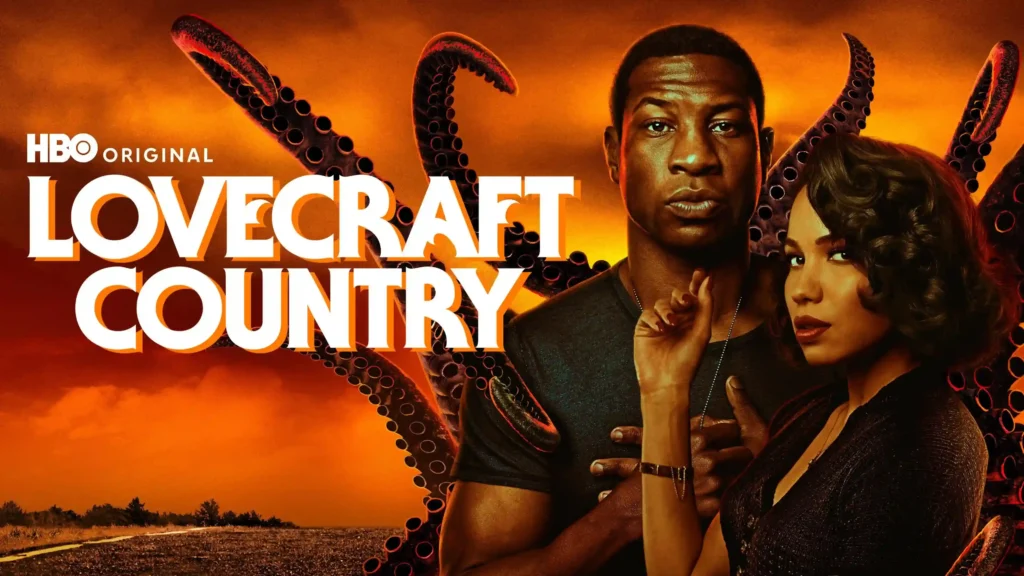
Why Lovecraft Country is a Modern Horror Masterpiece
Complete H.P. Lovecraft Stories List & Reading Order
Roots of Fear: Contemporary Authors of Lovecraft You Need to Know
The Lore of Yu-Gi-Oh!: The Tragic Story of the “Duel Terminal” Part II
