Seven Samurai: Akira' Kurosawa's Masterpiece
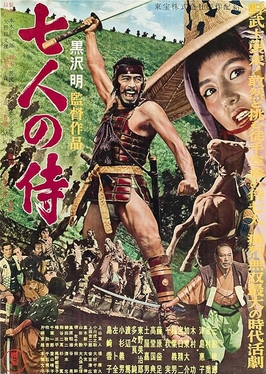
Released in 1954, Seven Samurai, directed by Akira Kurosawa, is one of the greatest classics of Japanese cinema and one of the most influential films ever made, alongside Kurosawa’s wider body of work. Even today, filmmakers continue to borrow from its visual style and storytelling, sometimes with excellent results and sometimes… not so much. (You’ve probably already thought of a few examples.)
It’s difficult to find a contemporary director who doesn’t acknowledge Kurosawa’s influence, especially when it comes to Seven Samurai. The narrative structure of assembling a group of specialists to complete a mission, now common across action, adventure and superhero films, reached its defining form here. It goes even further than that. Kurosawa’s framing, editing, camera movement and direction of actors are still studied in film schools across the world. The man was unbelievable.
Even so, reducing Seven Samurai to simply being an “influential film” would be unfair. It has earned its place in history for far more than its technical achievements. The film explores themes such as fear, solidarity, social inequality, courage, leadership, pride, violence and sacrifice, you know, the list goes on and goes.
What makes someone a hero? Can duty exist without reward? Is it possible to win a war without losing an essential part of yourself? Who truly benefits from victories won on the battlefield? That’s quite a few questions to answer.
Seven Samurai Plot Overview
Set in sixteenth-century Japan during a period of civil war and political instability, the film follows a small farming village living under the constant threat of a gang of bandits. With no money to hire soldiers, the villagers manage to gather seven samurai willing to protect them in exchange for nothing more than food and shelter.
Spoilers Ahead!
The Japan Depicted in the Film
The story takes place during the turbulent Sengoku period, around the sixteenth century, when Japan was divided by conflicts between feudal lords. It was an era known for constant warfare, shifting political power, instability and, of course, the famous samurai.
At that time, small farming villages regularly fell victim to armed gangs who raided their crops, stole their food and kept the peasants living in permanent fear. Without military protection and unable to face experienced warriors, many farmers had little choice except to endure their situation.
Kurosawa establishes this reality almost immediately. A group of bandits watches a small village and decides to leave it alone for the moment, planning to return after the harvest. The raiders simply wait until the farmers have done all the hard work before taking everything for themselves.
That opening scene introduces what is probably the film’s strongest theme: the exploitation of those with the least power.
With no money and no means to defend themselves, the villagers make a desperate yet courageous decision. They decide to hire samurai despite having almost nothing to offer. By the standards associated with samurai, it is an almost humiliating proposal, yet it also shows just how desperate those farmers have become.
The samurai themselves belong to a class that has lost its place in society. With no official wars to fight and no lords left to serve, they have become wandering warriors, caught between the honour of their past and the uncertainty of their future.
Akira Kurosawa Before His Masterpiece
By the time he began making Seven Samurai, Akira Kurosawa was already a respected director, although he had not yet reached the international reputation that would come later. Born in Tokyo in 1910, Kurosawa originally dreamed of becoming a painter. That artistic background almost certainly shaped the cinematic language he would later develop. Every frame in his films shows an almost painterly concern for composition and visual balance, along with his famous use of layered compositions.
He entered the film industry during the 1930s as an assistant director. That gave him plenty of time to observe almost every stage of filmmaking before taking the director’s chair himself. His first feature, Sanshiro Sugata (1943), already showed his interest in character-driven stories centred on self-discovery and moral dilemmas that mattered more than the physical confrontations themselves.
Over the following years he directed several important films, yet it was Rashomon (1950) that changed his career. The film won the Golden Lion at the Venice Film Festival and introduced Japanese cinema to Western audiences. For many European and American viewers, it was their first experience of just how exceptional Japanese filmmaking could be.
That level of international recognition often gives directors far greater creative freedom.
Instead of repeating the formula that had made Rashomon famous, Kurosawa chose a far more ambitious project.
A Difficult Production
Seven Samurai looked like a production destined to fail simply because of its scale. The screenplay was enormous by the standards of any era, or at least I think so. The number of important characters demanded months of preparation. The production also required an entire village to be built specifically for the film.
The costumes needed to look genuinely worn. The village houses could not resemble freshly built sets. The horses had to behave naturally in front of the cameras. The rain had to transform the ground completely. Just imagine what the production looked like during that final battle in the rain.
Those decisions increased the budget considerably and extended the filming schedule. Looking at the finished film today, it becomes obvious that Kurosawa’s determination made all the difference to its visual authenticity.
An Epic About People
Although the title focuses on the seven warriors, Kurosawa never turns them into mythical figures. In fact, I don’t think he does that with the samurai in any of his films. These characters are proud. Some are greedy. A few are slightly mad. Some simply want to prove themselves, while one feels a powerful duty to become the samurai he believes he should be. In general, Kurosawa’s cowboys and samurai share many of the same archetypes.
That sense of humanity allows the audience to connect with the characters in a way that feels unusual for an epic. Besides, it makes them a lot cooler, doesn’t it?
The villagers receive the same level of attention.
They are a frightened group who have accepted their circumstances, whether by choice or because they have no other option. Many of them resist the decision to look for a way out of their problems. When survival is at stake, selfishness often takes over.
This refusal to divide the world into simple heroes and villains may be one of the screenplay’s greatest strengths. The villagers are not innocent saints, and the samurai are far from flawless symbols of honour.
For Kurosawa, the real struggle was never between heroes and villains. It exists within each samurai and the reasons he discovers inside himself to keep fighting.
The Birth of a Classic
When Seven Samurai premiered in April 1954, audiences and critics were amazed by its enormous scale. Its original running time of around 207 minutes was unusual for any period in cinema. Even so, the story never loses its momentum thanks to the careful development of its characters and the charisma each one brings to the screen.
The film would no longer be viewed simply as a Japanese classic. It became a universal reference point for cinematic language.
Screenplay
If Seven Samurai is remembered today as one of the greatest achievements in film history, at least in my view, it’s worth understanding that its greatness did not happen by chance. The shots Kurosawa chooses, the battle scenes, the quiet moments and the conversations are outstanding. The characters came from a careful creative process led by a director who viewed cinema as the meeting point of every art form. You can see painting, theatre, literature, music and photography working together to create an emotional experience.
The film’s premise can be summed up in just a few lines: a village threatened by bandits hires seven samurai to defend it. In less capable hands, that story could easily have become a forgettable adventure, something proved by later attempts from other filmmakers.
The screenplay, written with Shinobu Hashimoto and Hideo Oguni, went through an extensive research period. The writers studied the Sengoku period, consulted historical records and worked to understand the daily lives of the samurai as well as the farmers. One of the screenplay’s finest qualities is its structure, which has been copied countless times.
Before a single battle takes place, the audience becomes familiar with the village, understands the fears of its people and follows the recruitment of the warriors. That decision gives the action far greater emotional weight during the final act. By the time the fighting begins, the audience already understands what is at stake and why these characters matter. Every samurai has a distinct personality, unique skills and a specific dramatic purpose. None of them could simply swap places with another. Their different temperaments create internal conflict, enrich the story and stop the group from feeling too uniform.
The Seven Samurai and the Farmers
Kikuchiyo
If there’s one character who captures the spirit of Seven Samurai, it’s Kikuchiyo. Played by Toshiro Mifune, he breaks away from the traditional image of the disciplined, quiet samurai. He’s a character who shares the spotlight throughout the film. Kikuchiyo is impulsive, loud, clumsy and frequently hilarious. At first, he appears to exist purely as comic relief. Little by little, though, he proves to be a far more tragic and layered character whose personal conflict gives the story extra weight.
His humble origins place him between two worlds. He doesn’t truly belong with the samurai, yet he cannot fully identify with the farmers either. That position between the two groups allows him to understand the strengths and contradictions of each side better than anyone else.
His exaggerated gestures, emotional outbursts and almost animal-like energy contrast sharply with Kambei’s calm nature, creating a dramatic balance that pushes the story beyond the obvious. His determination to prove himself to the group, despite not being accepted as a true samurai by his companions, adds another layer for the screenplay to explore.
One of the film’s finest scenes comes when Kikuchiyo explodes with anger at the samurai who look down on the farmers. He exposes the warriors’ hypocrisy, reminding them that many of the faults they blame on the villagers were created through centuries of exploitation.
Kambei
The first samurai to be recruited is Kambei Shimada. From his very first appearance, Kurosawa makes it clear that this is no ordinary leader. Instead of being introduced in battle, Kambei first appears performing an act of compassion. To rescue a child being held hostage, he gives up his traditional appearance by shaving part of his head and disguising himself as a monk.
The scene immediately establishes his priorities. Kambei isn’t searching for personal glory. His greatest concern is protecting lives. Naturally, all of this happens in front of Kikuchiyo. Throughout the film, Kambei displays strategic intelligence, sound judgement, keen observation and remarkable self-control. Unlike many cinematic leaders, he doesn’t lead through force or reputation as a samurai. He earns respect through his actions.
Kambei isn’t presented as a triumphant hero. At times, he feels more like a cheerful old man. At others, he can be slightly grumpy, yet he’s always charismatic. He carries the weight of past defeats and understands that every victory demands sacrifice. His experience gives him a quiet melancholy, fully aware of his own limitations and of the situation facing the group.
Katsushiro
Katsushiro represents the group’s youthful optimism. Born into a samurai family, he greatly admires Kambei and hopes to become his disciple, although he is never formally accepted. Through him, the audience discovers this world, sharing his learning process along with his belief that fighting for what is right will naturally lead to victory.
Katsushiro is an idealist. He still believes in romantic ideas of honour and heroism. As the story unfolds, however, he comes face to face with a much harsher reality, often through Kambei’s own guidance.
His relationship with Shino, the daughter of one of the farmers, also explores the social divisions of the time. Although the attraction between them is obvious, the difference in class makes the relationship difficult. The farmers certainly don’t hold an idealised view of the samurai. Through Katsushiro, Kurosawa explores the journey from innocence to maturity. The young warrior learns that the world rarely matches the expectations of youth.
Gorobei
Observant and practical, Gorobei quickly recognises Kambei’s qualities and chooses to follow him. His intelligence plays an important part in planning the village’s defence, while his balanced personality helps maintain unity among the group.
Although he doesn’t receive as much attention as some of the others, Gorobei possesses a quiet competence. He’s one of those people who rarely look for recognition, yet no organisation functions properly without someone like him.
Shichiroji
As Kambei’s former companion in battle, Shichiroji gives the film a sense of shared history. His arrival immediately hints at a past filled with experiences the audience never witnesses directly. Even so, it’s obvious that complete trust exists between the two men.
Their friendship reinforces one of the film’s central ideas: the strongest bonds are often built through hardships faced together. It also mirrors the relationship that gradually develops among all seven samurai.
Shichiroji also acts as a living reminder that this generation of samurai has been shaped by years of war and loss.
Heihachi
In a story filled with fear, violence, oppression and death, Heihachi Hayashida plays an important part in easing tension, raising a smile and keeping the group’s spirits alive during its darkest moments. Heihachi openly admits that he isn’t a great swordsman, and he says so more than once.
He proves that humour can become a form of resistance when life grows difficult.
While others face danger through discipline or physical courage, Heihachi fights despair by keeping everyone’s ability to smile alive. That willingness to step forward despite knowing his own limits becomes an act of courage in itself. In many ways, that quality is every bit as valuable as military skill.
Kyuzo
Among the seven, Kyuzo comes closest to the classic image of the legendary swordsman. Calm, disciplined, stoic and exceptionally skilled, he leaves a lasting impression through his refined technique and the composure with which he faces danger.
One of the film’s most memorable scenes centres on one of Kyuzo’s duels. The encounter is brief and almost silent, exactly as a samurai duel should be, yet it carries extraordinary intensity. Kurosawa avoids flashy choreography. Instead, he focuses on the concentration of the two fighters and their understanding that a single mistake could end the fight.
Kyuzo represents the pursuit of excellence. Even so, his skill never turns him into an arrogant man. If anything, the more capable he proves to be, the more humble he appears.
The Farmers
Although the title celebrates the seven warriors, the real story also belongs to the farmers as they struggle to solve their own problems. Instead of simply sitting back and accepting the disaster ahead, some of them choose to stand against the doubts of their neighbours and search for help. It isn’t an easy task, especially when they have almost nothing to offer a class as proud as the samurai.
The farmers aren’t innocent figures. They’re defenceless, yet they can also be arrogant and selfish, sometimes treating the very people trying to save them with little gratitude.
Kurosawa understands that survival often brings out contradictions in people. Those forced to live with constant violence cannot always behave heroically. Even so, choosing to act under those circumstances is heroic.
The social conflict between warriors and farmers forms one of the screenplay’s strongest elements. Although united against a common enemy, the two groups carry centuries of resentment. The farmers fear the samurai, while the samurai often look down on the farmers because they have so little to offer.
As the story progresses, however, that distance slowly begins to disappear. Working together, facing danger and sharing sacrifice gradually create mutual understanding. That imperfect respect becomes the foundation of the cooperation needed to defeat the bandits.
The Philosophy of Seven Samurai
Great films can be appreciated on many levels. Some win audiences over through their cinematography, others through their performances or narrative pace. Seven Samurai, however, contains another layer that helps explain why it continues to captivate audiences. It has an extraordinary ability to turn what appears to be a simple story into a conflict that stays in the minds and hearts of those who watch it.
Akira Kurosawa was never interested in easy answers. His characters inhabit a complicated world where courage and fear, selflessness and selfishness, honour and survival exist side by side.
The word “honour” is almost automatically associated with the samurai. Popular culture has firmly established the image of the flawless warrior, guided by an unbreakable moral code and willing to die for his principles. Kurosawa offers a far more human interpretation. The seven protagonists live in a period when many samurai had lost their masters and wandered across the country searching for work. Some struggle financially, while others carry physical and emotional scars from earlier conflicts. These are men who understand failure.
Kambei, for example, agrees to defend the village without receiving any payment. His honour appears through his sense of responsibility towards people who are suffering.
Heroes Without a Reward
Unlike many epics that celebrate combat as spectacle, Seven Samurai approaches war with quiet pessimism. You might expect the opposite from a samurai story, yet Kurosawa prefers a grounded approach with carefully restrained heroism. The battles are intense, but they are never celebrated. Every confrontation brings suffering and painful loss. Even when the protagonists gain the upper hand, exhaustion remains the strongest feeling.
The magnificent final battle, fought beneath relentless rain, captures that vision of conflict stripped of glamour. The mud and rain turn everything into confusion and chaos, much closer to what a fight for survival would actually feel like.
Kambei’s final words leave the audience with an ending that feels deliberately bittersweet.
“Again we are defeated. The farmers have won. Not us.”
The samurai complete their mission, yet they pay an enormous price. Many of them die, while those who survive have nowhere left to go. They remain without land, without stability and without a clear place in a changing society. The farmers, meanwhile, return to planting their crops. Life carries on. Children will grow up. New harvests will come.
The victory belongs to the continuation of life, not to military triumph.
In doing so, Kurosawa turns the traditional heroic narrative on its head. His protagonists gain neither wealth nor prestige, nor lasting happiness. Their greatest achievement is giving other people the chance to rebuild their lives.
Heroism becomes a path towards sacrifice. Protecting others means accepting personal loss. That’s why these men are heroes even though the film never treats them as larger-than-life figures. They choose to be present when adversity arrives. They fight because they believe it is the right thing to do. That decision gives every one of them tremendous dignity.
Cinematography
People often describe Kurosawa as “an excellent storyteller”. That’s true, although it doesn’t tell the whole story. Plenty of directors tell compelling stories. What makes Kurosawa different is his celebrated ability to organise visual space through layered compositions while controlling movement and narrative rhythm with remarkable clarity. Watching Seven Samurai, every frame feels carefully considered and beautifully composed. The placement of the actors, the camera, the scenery and every object inside the frame all contribute to that effect.
In many scenes, for example, the characters are arranged in triangular groupings. Once the seven samurai have assembled, they rarely appear scattered without purpose. Kurosawa prefers distributing visual information across different planes of the image. While Kambei speaks in the foreground, other characters remain active in the distance. While one character stands perfectly still, another moves across the frame.
These subtle details make every scene feel more alive.
That quality places Kurosawa alongside directors such as Orson Welles and William Wyler, who also used visual depth to enrich their storytelling.
In 1960, The Magnificent Seven transferred almost the same narrative structure to the American West. The premise remained almost untouched: a vulnerable community recruits seven warriors to defend it from a group of raiders. The change in setting demonstrated how well Kurosawa’s story could cross cultural boundaries. Over the following decades, the idea of assembling a team to complete a mission became one of cinema’s most familiar story structures, continuing all the way to the recent and disastrous Rebel Moon.
Many viewers instantly recognise the structure of Seven Samurai without ever having seen the film itself. In the same way that we rarely think about the origins of classical film editing while watching a modern production, we also seldom realise just how many current conventions were established by Kurosawa.
That is often the fate of great artistic revolutions. They become so fundamental that they no longer appear revolutionary.
Wrapping Up
Over the past several decades, Seven Samurai has received an extraordinary amount of praise. It regularly appears on lists of the greatest films ever made, influenced filmmakers across every continent and became a standard reference for directing, screenwriting, character writing, composition and editing.
With so much recognition comes the risk of turning the film into an untouchable monument, admired out of obligation instead of being properly understood. Perhaps the best way to watch Seven Samurai is to set that reverence aside.
Kurosawa’s real interest lies in the relationships that develop before the first sword is drawn and continue long after the violence has ended. The recruitment of the samurai, the conversations, the distrust between farmers and warriors and the understanding they gradually build together matter just as much as any battle.
Once the fighting is over, the surviving samurai watch the farmers return to their fields. There is no grand celebration, no triumphant speeches and no reward waiting for the heroes. Ordinary life simply begins again. Nearby, four swords planted beside the graves quietly honour those who never returned.
The samurai belong to a world that is disappearing.
Their existence depends upon war, yet war destroys the very things that give life its meaning: villages, families, harvests and the chance for life to continue. Kurosawa never diminishes the importance of the warriors. He simply acknowledges their limits. No society can survive by relying only on heroes. Once the battle has ended, someone still has to return to the fields and sow the land.
Even viewers who struggle with the film’s pace or its lengthy running time will probably recognise the precision of its storytelling and the humanity of its characters.