
The Things at The Doorstep by H.P. Lovecraft: Review & PDF
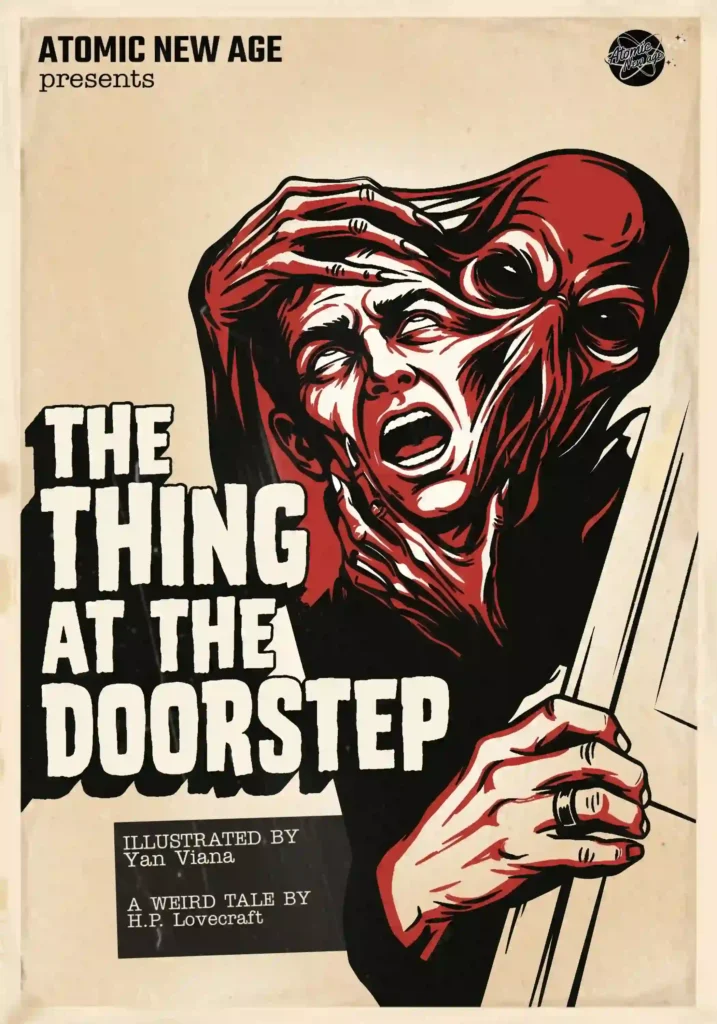
Title: The Thing at The Doorstep
Author: H.P. Lovecraft
Original Publication: Weird Tales (Vol. 29, No. 1)
Release Date: January, 1937
Editor: Farnsworth Wright
Publisher: (Popular Fiction Publishing)
Illustration: Yan Viana
Genre / Subgenres: Horror / Thriller / Weird Fiction
Copyright Status: Public Domain (Free Download Available)
Format & Availability: Article Review + Complete PDF Edition
The complete text of “The Thing at The Doorstep” and its free PDF version are available at the bottom of this article. Click here to skip to the download section.
The Thing at The Doorstep is a short story written by H.P. Lovecraft and published in 1937 by Weird Tales magazine. The text was written during the Great Depression, when writers tried to write in a hungrier, more intense way to, obviously, pay the bills. Many stories from that period therefore followed a few clichés that helped those tales sell easily to the pulp audience, and Lovecraft was no different, with his own merits and myths, in spite of everything. This might be one of the author’s stories with the most action and the pulp feel readers expected. The Thing at The Doorstep belongs to Lovecraft’s late cycle, the one with the great narratives set in Arkham and Innsmouth and those of the Mythos, such as The Shadow over Innsmouth and The Shadow out of Time, along with At the Mountains of Madness. Even so, funnily enough, this story was published by “accident”.
Keep reading if you want a more detailed review with spoilers, or skip to the bottom of the page to download the full text and read it yourself.
Plot of "The Thing at The Doorstep"
Daniel Upton tells, in a confessional tone, why he fired six bullets into the head of his best friend, Edward Derby, inside an Arkham sanatorium, and yet insists it was not murder. Edward was a child prodigy and an early poet, forever sheltered by his parents. At 38, however, he falls in love with Asenath Waite, a magnetic young woman with bulging eyes and a sinister background, and things change in strange ways.
Why Lovecraft’s Pulp Tale Falls Short
The Thing at The Doorstep is one of the stories most typical of the pulp magazine Weird Tales. It still has the subtlety and the reading between the lines the author usually brings to his texts, but it’s weaker next to his other work. At this point, we have an author who needs to publish his stories. Lovecraft already had a history of rejection by Weird Tales itself, for not fitting the “standard” the magazine prioritised for its catalogue. Remember that At the Mountains of Madness had been turned down. This story comes as an easier, more commercial pitch, in which the author seems to make heavy use of Mythos elements to drum up interest in the publication: the Necronomicon, Shub-Niggurath, shoggoths, Innsmouth, all of it name-dropped.
The Ultimate Guide to Lovecraftian Gods and Cosmic Creatures
S. T. Joshi, the author’s leading scholar, calls it “one of Lovecraft’s worst stories”, which does not mean it is outright bad, but it’s weak given what the author has to offer. Most critics agree that it ranks among the weakest tales of the late period, because of the “obvious and melodramatic” plot and the “rather formulaic” Arkham setting. Personally, I lean towards agreeing.
Lovecraft seems to have gathered here everything he imagined, in his own world, could make a text sellable to Weird Tales, using elements such as ancient ruins, zombies, the Arkham asylum, a cemetery, the character Cthulhu and a woman. In other words, he created a possession tale mixed with occultism and dropped a psychological thriller into the middle and involved a female character, which was a gift for pulp content. Of course, these are only assumptions her, but they are plausible when we look at the final result of the work.
Character and Setting
Daniel Upton: The narrator of the story and Edward Derby’s best friend. Daniel spends the whole text explaining to us why he shot his friend.
Edward Pickman Derby: The protagonist. A brilliant, reclusive poet with a sensitive nature, who gets involved with the occult by marrying Asenath.
Asenath Waite (Asenath Waite Derby): Edward’s wife, from the gloomy town of Innsmouth. She has vast knowledge of black magic and the ability to swap bodies.
Ephraim Waite: Asenath’s father. A powerful, ancient sorcerer who takes control of his own daughter’s body and later “surfs”, or possesses, Edward Derby’s body through black magic.
Arkham: The main setting of the story. It is the famous fictional city of Lovecraft’s universe where some characters live and study, and where most of the evil, domestic everyday events unfold. It is also home to Miskatonic University.
Innsmouth: Another iconic decaying, cursed port town of Lovecraftian mythology, mentioned here. It is the homeland of the Waite family (Asenath and Ephraim) and the centre of the macabre cult that sets off the possession and the sorcery.
Arkham Sanatorium: One of the most famous institutions in horror literature (which inspired DC Comics’ Arkham Asylum). In the story, Edward Derby spends his final days locked in one of its cells after being deemed completely insane.
Lovecraft’s Unwanted Story and Its Strange Path to Weird Tales
Now, one more thing about this story and its writing process: the author doesn’t seem to have been very pleased with the result either, since he shelved the story himself, discouraged from sending it to an editor. It’s hard to say whether the story alone put him off trying to publish it or whether the repeated rejections he suffered weighed on him. Lovecraft kept the story put away until, by accident, he sent it along with a letter to Bernard Austin Dwyer, who took it further. Unfortunately, the story was written in August 1933 and only published in January 1937 in Weird Tales (vol. 29, no. 1), a few months before the author’s death in March of the same year. It is one of the last stories he saw published in his lifetime.
Here Lovecraft shows his view of the impostor woman, or of a woman who shouldn’t have certain traits unless she were an intruder in the male sphere. The strong woman is, literally, an old man in disguise, and therefore an impostor. Of course, to some extent there’s not much in the story to work this angle, as the character does not even appear as herself from the start, being just a body taken over by someone else. Honestly, I doubt the author was interested in subtexts about domestic relationships.
The theme, interestingly, isn’t unique in his work, and it closely recalls, or matches, The Case of Charles Dexter Ward, where one person takes another’s place. It’s worth remembering that The Case of Charles Dexter Ward was written around 1927 and only published after his death, in 1941. The author was not satisfied with the result of that story either. I suppose he was trying out a few things in his writing that kept falling short of his personal expectations. Some point to possible inspirations in Barry Pain’s An Exchange of Souls (1911) and H. B. Drake’s The Remedy (1925).
Contemporary Authors of Lovecraft You Need to Know
Trivia
An interesting detail that might go unnoticed in this short story concerns the characters’ names. We have the character Daniel Upton and the character Edward Pickman Derby. The first, obvious reference is to the name “Pickman”—alluding to the character Richard Pickman from “Pickman’s Model.” However, the painter Richard Pickman’s surname is also Upton; his full name is Richard Upton Pickman.
The Thing at The Doorstep PDF and Download
This work was originally published in 1937 and is in the public domain according to current legislation. However, the original authorship, magazine credits, and any associated illustrations remain the property of their respective creators, illustrators and publishers. This material is provided for informational and educational purposes only and may not be used for commercial sale.
The Thing at The Doorstep by H.P. Lovecraft
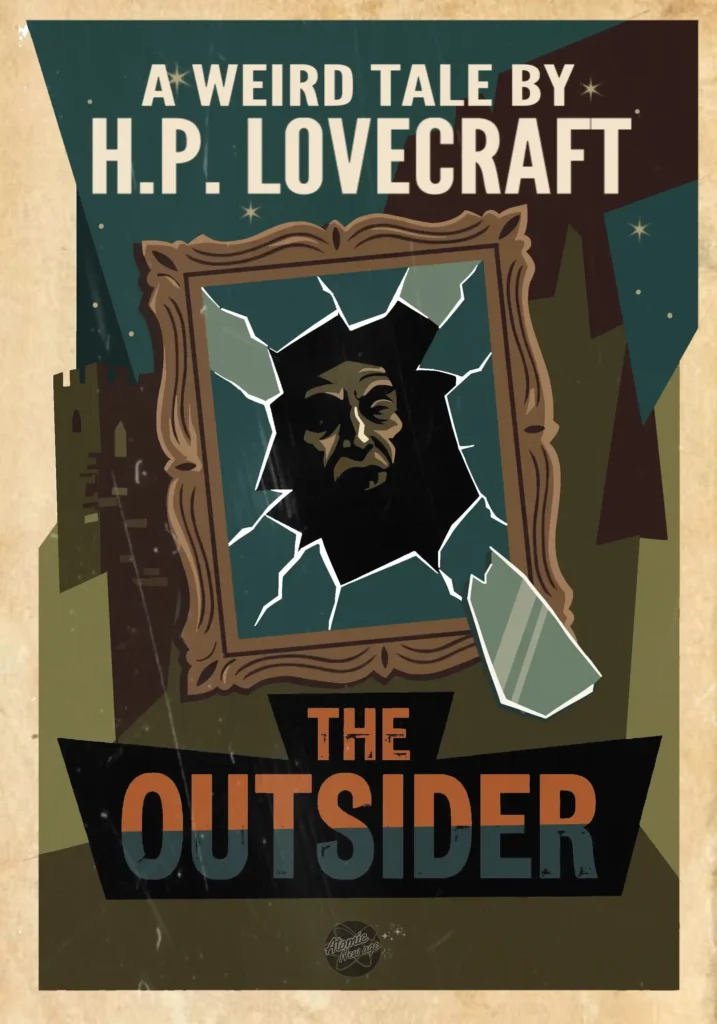
The Outsider by H.P. Lovecraft: Review and PDF

Cool Air – H.P. Lovecraft | Review & PDF
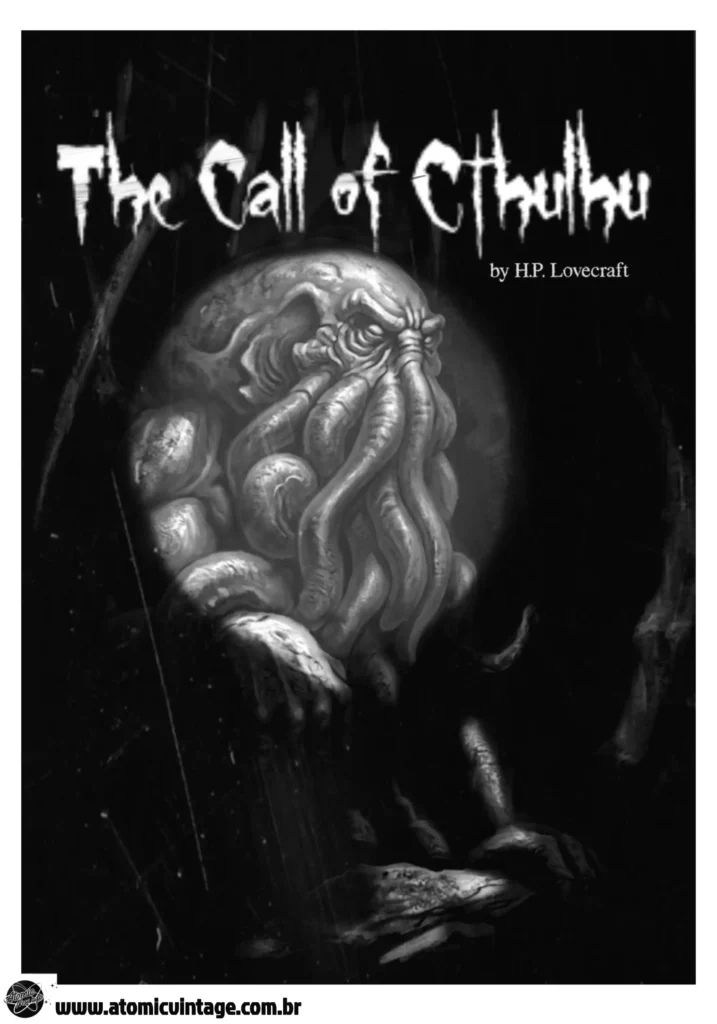
The Call of Cthulhu – H.P. Lovecraft | Review & PDF

The Body Snatcher – Robert Louis Stevenson

