
The Ultimate Trading Card Games List: All TCGs & CCGs (Continuously Updated)
Right, so you like card games, yeah? Me too. A lot. And if you’ve ever fallen down the rabbit hole of trying to find a new TCG to get into, you already know the problem: there’s a lot of them out there. And I mean a lot.
So I started putting this list together. Nothing too fancy; just a growing collection of TCGs I’ve come across, played, or at least found interesting enough to write about. They’re in release order, from the old classics all the way to the shiny new stuff hitting the scene. And because this list is going to keep growing over time, expect to see more added as I find them, new TCGs being released or remember old ones.
It’s not meant to be the most complete, definitive guide ever written (sorry for the title). It’s just a casual, no‑nonsense look at some cool card games, what makes them tick, and why you might want to give them a go. No boring “in-depth exploration”, no overthinking it, just the good stuff.
So have a browse, see what catches your eye, and maybe you’ll find your next obsession. I know I did.
TCG List
Magic: The Gathering (1993)

Wizards of the Coast
Magic doesn’t need much of an intro—it’s the grandad of the format and the one that’s stuck around the longest. Dreamed up by Richard Garfield, who is a bit of a legend in the tabletop world, Magic is his masterclass. Even though it’s been going for years, it still has more players across the globe than any other TCG.
The game happens in a multiverse made of different “planes.” People usually move between them using portals called Omenpaths, but a few lucky individuals called Planeswalkers have a “Spark” that lets them hop around whenever they fancy.
During a match, a player puts down land cards and taps them for mana to pay for spells, with each card having its own colour. The clever bit that influenced every game after it was the Colour Pie. It’s a system that splits cards into colour groups, each with its own vibe, strengths, and flaws. The game also gave us stuff we take for granted now, like those famous Keywords, specific mana types, and “summoning sickness.”
Status: Ongoing
Spellfire: Master the Magic (1994)
TSR
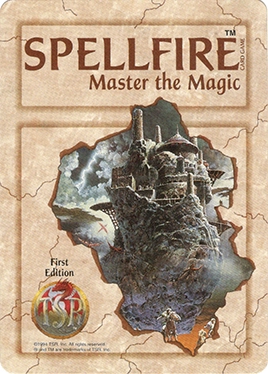
Spellfire took its cues from Dungeons & Dragons, arriving right as the trading card game craze was picking up steam. It had the massive perk of using characters and spots straight from the D&D world, though that’s actually what caused some people to moan about it.
To win, a player has to get six “Realm” cards onto the table, though only one can be played per turn. Everything else in the hand is there to protect those patches or bash the opponent’s ones. The realms are laid out in a pyramid—three at the bottom, then two, then one. If a creature hits a Realm, that card gets flipped over and stays shut down.
Status: Discontinued
Pokémon (1996)

Pokémon Company
The Pokémon franchise is probably the most profitable one ever, with hundreds of different products, and with the guarantee that every single one of them will sell, no matter what. Same goes for the Pokémon TCG, the official card game of the brand, where you get to battle with dozens of Pokémon in a duel. Fun fact: Pokémon was originally published by Wizards of the Coast in the US, and only in 2003 did Nintendo take it over.
In Pokémon, the player, or Pokémon trainer, has to put their Pokémon on the bench and one in the active spot, with the goal of knocking out the opponent’s Pokémon. For each Pokémon you knock out, you take a prize card; you need six to win the game.
Another big thing about the game is its energy system, which has types (ten types) and you have to attach them to your Pokémon so they can attack or use abilities. You also have to follow the Pokémon evolution line, always starting with the basic, then stage 1, then stage 2.
Pokémon is one of the big three in the market and one of the most focused on collecting—after all, Pokémon are still the most fun little creatures in this whole animal-catching genre.
Status: Ongoing
Yu-Gi-Oh! (1999)

Konami
Yu-Gi-Oh is the face of card games. Probably one of the most popular ones thanks to its anime and manga, especially because of its main character, Yami Yugi, and famous cards like the Blue-Eyes White Dragon. Plus, it’s the favourite game of the person talking to you right now. The game is also known worldwide as the fastest and most explosive card game out there. Beoynd that, Yu-Gi-Oh definitely has the steepest learning curve among the big three.
Yu-Gi-Oh started as a horror-themed manga by Kazuki Takahashi before becoming a story about battles through cards — which is what it’s known for today.
The goal is to reduce your opponent’s life points to 0. Unlike other games, Yu-Gi-Oh doesn’t have an energy or resource system: if you have the card in your hand and you meet its requirements, you can play it. Another unique thing is the extra deck, where your special summon monsters live (Fusion, Synchro, Xyz and Link); you can bring them out whenever you want if you have the right materials. Another thing Yu-Gi-Oh made really popular is the Trap Card, which lets you interact during your opponent’s turn.
Status: Ongoing
Cardfight!! Vanguard (2011)
Bushiroad
Vanguard is another big TCG based on a Japanese series, already with loads of anime series and manga. The game steps away from what we usually expect from card games, with different ways of playing cards and a focus on “luck and risk” mechanics.
Vanguard is set on the planet Cray, a place full of different races, magic and technology. The planet is split into different nations, and within those nations, different clans; you pick one to build your deck around.
Cardfight!! Vanguard is pretty different from most TCGs. You take control of a Vanguard, if your Vanguard gets defeated (takes 6 damage), you lose. Around your Vanguard, there are other circle zones where you place your ally units, which protect you. As the game goes on, you increase your Vanguard’s Grade, which lets you play cards that are the same Grade or lower. Another famous thing about the game is the Drive Check: when your Vanguard attacks, you flip the top card of your deck, and if it has a Trigger, something good happens. Also, you can defend by using cards with Guard. So yeah, it’s a TCG with a bunch of different mechanics that come together to make a game full of risk and fun.
Status: Ongoing
Force Of Will (2012)

Eye Spy Productions Pte., Ltd.
Force of Will is one of those games that stands out almost instantly because of its art and setting. The game mixes fairy tales, mythology, Lovecraftian horror, and anime aesthetics together, creating a Japanese-style fantasy world that pretty much everyone thinks looks amazing. Robots, demons, angels, aliens, magical girls, and basically anything else you can imagine all thrown together.
The game’s story revolves around different worlds and timelines connected through beings known as Rulers. These Rulers are the main characters you play as, and each one comes with its own abilities and mechanics, similar to a typical Hero Card. During the game, Rulers can evolve into another form called a J-Ruler, basically transforming into a unit that can attack and defend directly. The objective is exactly what you’d expect: reduce your opponent’s life to zero.
Gameplay-wise, Force of Will feels familiar if you’ve played other TCGs, though it has a few unique twists. First, it uses a separate resource deck called the Magic Stone deck, and each turn you can place a Magic Stone into play to generate resources. The second twist is the use of the Ruler as part of your strategy for generating energy from the Magic Stone deck. The attributes that divide the cards are Light, Fire, Water, Wind, Darkness, Moon, Time, and Void (no Attribute).
Status: Ongoing
Hearthstone (2014)
Blizzard Entertainment
Hearthstone was the big digital card game phenomenon, probably the most successful one on the market, and it set a certain trend for this niche. In fact, loads of games that were already around ended up getting official digital versions after Hearthstone blew up.
Hearthstone takes place in the same universe as World of Warcraft, with the same characters, the same lore, and other bits that fans can spot. You play as one of those Warcraft heroes, leading your army of minions against the opponent.
Hearthstone plays in a pretty simple way: you control a character with certain powers, and each turn your mana pool grows, so you can play more expensive cards. That gameplay loop became the standard for loads of digital games that came after it.
Status: Ongoing
Flesh and Blood (2019)

Legend Story Studio
Flesh and Blood is one of the most different card games to come out in recent years. Instead of chucking your minions onto the table like most games do, in Flesh and Blood you are a Hero, you belong to a class, and your cards are equipment, actions, reactions, etc.
Even though it’s not massively popular, Flesh and Blood does have lore, and you can find articles on the official site that dig into that world a bit more. The game is heavily inspired by fantasy—typical RPG stuff—but with a little bit of sci-fi too.
In the game, you are a character; an actual card with the character’s name and class. During gameplay, you only get one action, then it passes to the opponent. That loop gets broken by cards with the keyword “go again”, which let you take another action, and so on. Basically, the goal is to attack your opponent and bring their life points to zero before they do the same to you. But to play a card, you have to discard cards—that’s called pitching—from your hand to pay its cost.
Status: Ongoing
Digimon (2020)

Bandai
Digimon is a famous franchise that’s already had all sorts of games across different genres, including a TCG introduced in 1997, but the Digimon on this list is its “definitive” version, the Digimon Trading Card Game from 2020.
Digimon brings in the elements, characters and, of course, the Digimon you know from the franchise, usually releasing expansions based on seasons and other shows from the series. In the game, you basically need to bring your Digimon to the field, digivolve them, and attack the opponent’s life points (Security). The game uses a colour pie model with seven colours, each one focused on a different strategy. Another cool thing about the game is its resource system, the Memory Gauge. The memory gauge is a shared resource that works like a scale between the two players, going from zero to ten on each side. Every time you play a card, you move the gauge towards your opponent’s side and your turn ends when it passes zero.
And of course, the game also has digivolution on the field and hatching Digitama.
Status: Ongoing
Seven Galaxies (2020)

7G Universe
Seven Galaxies is a Brazilian card game that wants to be an expanding game but without the usual booster pack with random cards. So, you have to get your cards through starter decks, new expansion boxes, and stuff from the game’s crowdfunding campaigns.
The game is set in a universe that has — you guessed it — seven primordial galaxies, and each one has a creation stone that provides energy and vitality, needed for existence. But the desire to get and protect these stones makes these different tribes go to war with each other.
The game uses a faction system, where cards are split between the seven different galaxies, each with its own theme and strategies.
Stroj Galaxy: made of militarised robots
Gaia Galaxy: the Milky Way, ruled by Amazon warriors
Adroit Galaxy: an advanced alien civilisation
Majik Galaxy: made of fantasy‑like aliens with dragons, goblins and orcs
The other galaxies haven’t been released yet.
During the game, your goal is to destroy your opponent’s base while protecting your own. To do that, you’ve got two resources: level, which lets you play your cards onto the table, and energy, used to activate effects. You can also evolve your cards on the field into stronger versions. The game also has a different kind of play area, where cards have targeting limits in the same column or diagonal; so you have to think more strategically about how you manage your army.
Status: Ongoing
Alfa Clash (2022)
Rising Empire Studios
Alpha Clash is a hero‑themed game where you control a Contender to beat the opponent’s Contender. Alpha Clash has a story that goes beyond the card game, with its own comics set in that universe. In this world, some people started Awakening their superpowers; these humans are called Alphas. An unstoppable force, The Pull, starts consuming the Alphas, forcing them to fight each other.
The game uses a Hero Card (or leader) system, called the Contender. If your Contender’s life hits zero, you lose. The other cards are Clash cards, the unit cards. There are also Accessories to equip to your Clash cards, Actions that work like spell and Trap cards. The game also splits cards by colour. Resources are generated by putting cards from your hand into the resource zone; a card in the resource zone has no other feature except its colour, and you can use it to pay a cost of that colour, easy that way.
Status: Ongoing
Sorcery: Contested Realm (2022)
Erik’s Curiosa Limited
Sorcery is a card game that takes the word “tabletop” very seriously. Sorcery presents itself as an “old school” fantasy game with gorgeous hand‑painted artwork. The game puts a lot of focus on positioning and tactical movement around the field, that’s its main gimmick.
The whole game is all about that old tabletop game aesthetic, like Magic and Dungeons & Dragons themselves. You can see that in how the cards are hand‑drawn, stepping away from the current digital art standard, very Frank Frazetta. You also see it in how the gameplay works, which feels a bit like a traditional tactical RPG.
In the game, we’re the Avatars, each one represented by a card, and we fight on a 5×4 grid where the cards are placed. You’ve got two groups of cards: Atlas cards, lands you place to generate resources, and your Spellbook, which holds your spells, relics, and minions. The lands are based on elements (Fire, Water, Wind, and Earth), each with its own playstyle. The goal—you know it by now—is to bring the opponent’s Avatar down to zero life.
No doubt about it, the grid is what makes Sorcery special, along with the gorgeous artwork. The grid and the ability to move around open up loads of gameplay possibilities and some crazy ideas, like standing in a lake, making a canal out of water lands, going underground, and other stuff that can be really good fun.
Status: Ongoing
One Piece Card Game (2022)
Bandai
What can I say about One Piece; a massively successful story, and these days, one of the most explosive TCGs in terms of growth and collection value. The game has characters from the series, and cards that reference events and scenes from the manga, with expansions based on Arcs, movies, and so on.
One Piece tells the story of Monkey D. Luffy, captain of the Mugiwara pirates, on his search for the One Piece treasure announced by Gol D. Roger.
One Piece has a Hero Card (or leader) mechanic, where you pick one card to be your leader and build your deck around them. Each leader can have up to one colour—or a pair of them—out of six. And of course, each colour changes how you play, the key mechanics, and your strategies. Another well‑liked thing in One Piece is the Don!! Cards: you get your Don!! from your Don!! deck every turn, and you can use them to pay card costs or boost attack power by attaching them to your units. So, a double function.
To win, you just need to hit the opponent’s leader and take away their six life cards, then land the final blow. The other mechanics are familiar from this type of game, like Trigger cards and Blocker cards to protect your leader.
Status: Ongoing
Kards (2023)
1939 Games
Kards is a digital game set in World War II. In it, you use infantry, tanks, fighters, and other units to destroy your opponent’s headquarters.
Kards has some unique features that make it fun and help it stand out. First, the field area: you play cards into your own area and can move them to the Frontline, where they can attack units in the opponent’s area, as well as their HQ. Also, each unit has its own mechanics, for example: Artillery can attack from your own area without being hit back, Fighters that stop Bombers, and Tanks that can move to the Frontline on the same turn they come into play. The game’s resources are Kredits; points that grow as the turns go on, and you use them both to play cards and to move them around the field.
Status: Ongoing
Grand Archive (2023)
Weebs of the Shore LLC
Grand Archive is an anime-style TCG that mixes traditional fantasy RPG vibes with modern anime aesthetics, and one of its biggest strengths is how dynamic and cinematic the gameplay feels, if you ask me.
In Grand Archive, you play as a Champion, a character with a specific class and element. Throughout the game, your Champion levels up by “ascending” into stronger versions of themselves, almost like a character progression system from an RPG. Your deck is split into a Main Deck and a Material Deck, with the Material Deck holding cards like Champions and Regalias. The Main Deck consists of the cards you draw during the match and contains everything else, such as Allies, Actions, and Attacks.
One very specific thing about Grand Archive is how cards are played. Players must pay the cost of cards by placing cards from their hand into the Memory Zone, but during the Recollection Phase, those same cards return to the hand. To materialise cards from the Material Deck, the player must banish a random card from their Memory Zone.
The cards are divided into Elements, and players can only play and materialise cards that match their Champion’s element. The elements are Arcane, Astra, Crux, Exia, Fire, Luxem, Neos, Tera, Umbra, Water, Wind, and Norm (no Element).
Status: Ongoing
Disney Lorcana (2023)
Ravensburger
Lorcana is the famous Disney card game that was a big hit when it came out, bringing together in one card game a whole bunch of characters from their franchises and films; from the really famous ones like Mickey, to some more nostalgic figures, though certainly not well known to a lot of today’s audience.
Lorcana also has its own lore and is set in a world where there are beings called Illumineers, they have the power of Magical Ink, which lets them summon Glimmers—which are the Disney characters themselves.
The game isn’t won by fighting, after all, it’s Disney. Instead, players need to collect Lore points, and whoever collects a certain number (20) first, wins the match. The game’s resource is Ink, and to get Ink, you pick a card from your hand and put it into your Ink reserve to pay for the cards you’re going to play. The inks use a colour pie system named: Amber, Amethyst, Emerald, Ruby, Sapphire, and Steel.
Status: Ongoing
Altered (2024)
Equinox
Altered is a game that got a lot of attention for how successful its Kickstarter campaign was at the start. And for a while, it was the TCG that raised the most money in a single campaign. The game came with some pretty unusual ideas for the scene, both in terms of gameplay and card collecting.
The world of Altered is the result of something called the Confluence, which changed all of reality, mixing it with the world of imagination. But different groups of people and beings are working to rebuild civilisation, each in their own way and with their own philosophy.
The factions are:
Axion: focused on technology and invention
Bravos: adventurers who want to go beyond limits
Lyra: artists who care about freedom
Muna: protectors of nature, peace, and harmony
Ordis: sentinels of order and justice
Yzmir: mystics dedicated to mastering magic
Altered had two features that made it stand out from other card games. First, the match between two players was a race, not a fight. No one attacks anyone, the way to win was to get two characters together in this race against your opponent. The second feature was the QR code that let you scan the card, which allowed things like unique “one-off” cards and a print‑on‑demand system.
Status: discontinued
Star Wars: Unlimited (2024)
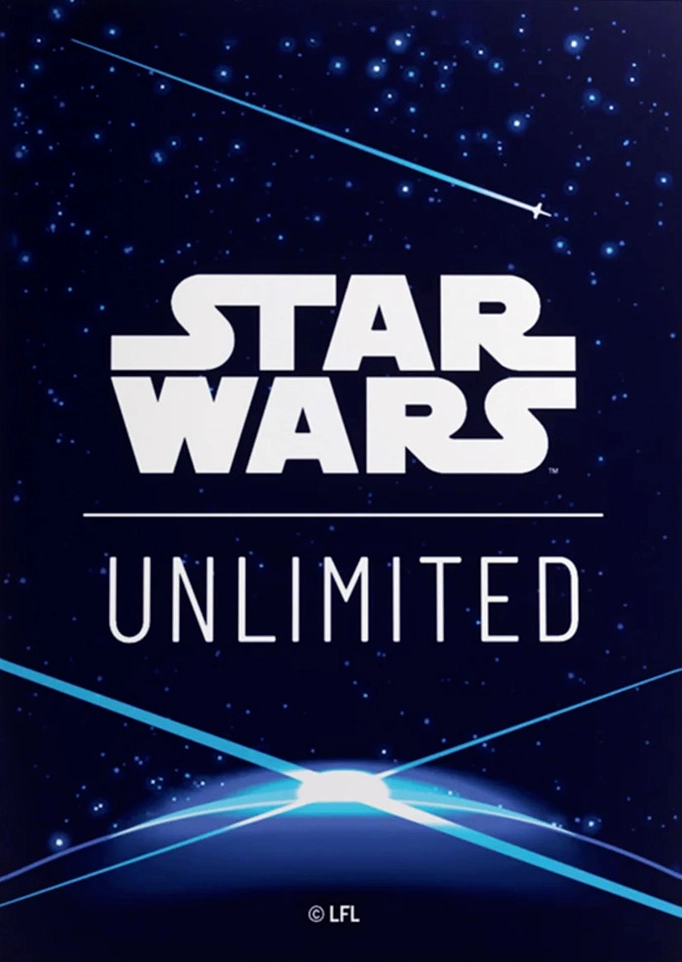
Fantasy Flight Games
Star Wars is another massive film franchise that already had a card game in the past, funnily enough, designed by Richard Garfield. Star Wars: Unlimited, though, came in with a lot of energy and became an international phenomenon. Unlike other games where one player does their whole turn and then waits, here the action is alternating, which keeps both players engaged the whole time.
Everyone knows the lore of Star Wars; Jedi, lightsabers, the Force, and Darth Vader, plus the never‑ending battle between the evil Empire and the rebels that rose up after the fall of the Old Republic. The goal of the game couldn’t be simpler: destroy the opponent’s base. But the game has some interesting features of its own, starting with the alternating actions between players. You do one action (play a card, attack), and then the opponent does one right after—back and forth like that. Another feature is that the battlefield is split into Ground and Space. Ground units can’t attack space units and vice versa, so you have to balance your forces on both fronts. Any card from your hand can be played face down as a “Resource”.
Status: ongoing
Gundam Card Game (2025)

Bandai
Gundam is a card game from Bandai, based on the famous franchise of awesome giant Japanese robots controlled by stylish pilots. The game is designed to be fast and visually impressive, with artwork that mixes the classic anime style with more “modern” illustrations.
Mobile Suit Gundam is one of the most influential sci‑fi franchises in Japan and popularised the “real robot” genre. The mechs, piloted robots, are used as weapons in a war between the Earth Federation and the space colonies called the Principality of Zeon.
In Gundam, you have a resource deck that grows as the turns go on. These resources let you play your cards, but there’s a difference between cost and level in the cards. Cost is the number of resources you have to spend to play the card, while level is how many resources you’ve already built up in your resource zone. Pilot cards have to be played underneath a Gundam unit card you control, which gives modifications to those units. To win, you attack your opponent and take out their Shields (represented by cards) a mechanic already pretty well known in TCGs. Gundam also uses a colour system, and your deck has to be built with only one or two colours.
Status: ongoing
Riftbound: League of Legends TCG (2025)

Riot Games
Riftbound is another entry from Riot Games into the competitive scene, which is no small thing. Riot had already put some chips into Legends of Runeterra, but this time they’ve made a game designed as a tabletop experience, focused on positioning strategy and controlling the Battleground.
League of Legends is very famous and has a long history in competitive gaming. In that story, you’ve got the champions of Runeterra; characters you pick, each with their own little bit of lore, and there are over 100 of them. So you can probably imagine, right?
Riftbound uses a Hero Card (or leader) mechanic: you pick one main card and build your deck around it. The cards also use a colour system, here called Domains.
Fury: focused on aggression and quick attacks
Calm: focused on defence and holding the Battleground
Mind: focused on long‑term strategies
Body: focused on ramp and buffs for combat
Chaos: focused on discarding, interacting with the trash, and effects
Order: focused on creating units and sacrificing them to generate value
In Riftbound, players have to position their cards on the Battleground and control them during the match. To do that, you need at least one of your units moved to a Battleground spot that isn’t already taken by your opponent’s units. You earn points by “Conquering” a Battleground (taking out the enemy units there) or by “Holding” control of it for several turns in a row. The first player to reach 8 points wins the match. The game’s resource is Runes, from the Rune deck. At the start of each turn, you “channel” the runes from the top of the deck; so you always have resources to play, without relying on lucky draws.
Status: Ongoing
Cyberpunk TCG (2026)
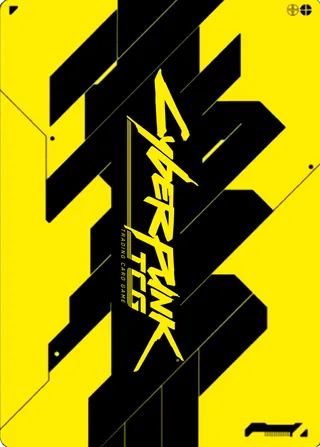
WeirdCo / CD PROJEKT RED
Cyberpunk TCG is a new trading card game based on the Cyberpunk RPG franchise, which has also had a previous card game. This new release is built around recreating the experience of surviving in Night City, climbing your way to the top through hardship, and becoming a legend.
During the game, your objective is to collect Gigs, represented by dice. However, your opponent can steal your Gigs, and you can do the same to them. During your Start Phase, you may take one of your Big Dice, roll it, and place it into your Gig area. If a player has at least seven Gig Dice in their Gig area at the start of their turn, they win the game.
To achieve this, players have access to several different card types: Legend, Unit, Program, and Gear. These cards can be used to attack, defend, disrupt your opponent, or even speed up your progress towards earning Gigs.
To play cards, you must use the game’s resource system, known as Eddies. Once per turn, you may place a card with a TAG into your Eddies area and use those cards to pay the cost of playing other cards.
When building a deck, you must include three Legend cards. Each Legend has a RAM value and a colour, and you may only include cards whose RAM requirement is equal to or lower than the RAM value of your Legend cards.
Status: Ongoing
Check For More Articles
Cthulhu and Beyond: Lovecraftian Gods and Monster Explained
Why Lovecraft Country is a Modern Horror Masterpiece
Complete H.P. Lovecraft Stories List & Reading Order
Roots of Fear: Contemporary Authors of Lovecraft You Need to Know
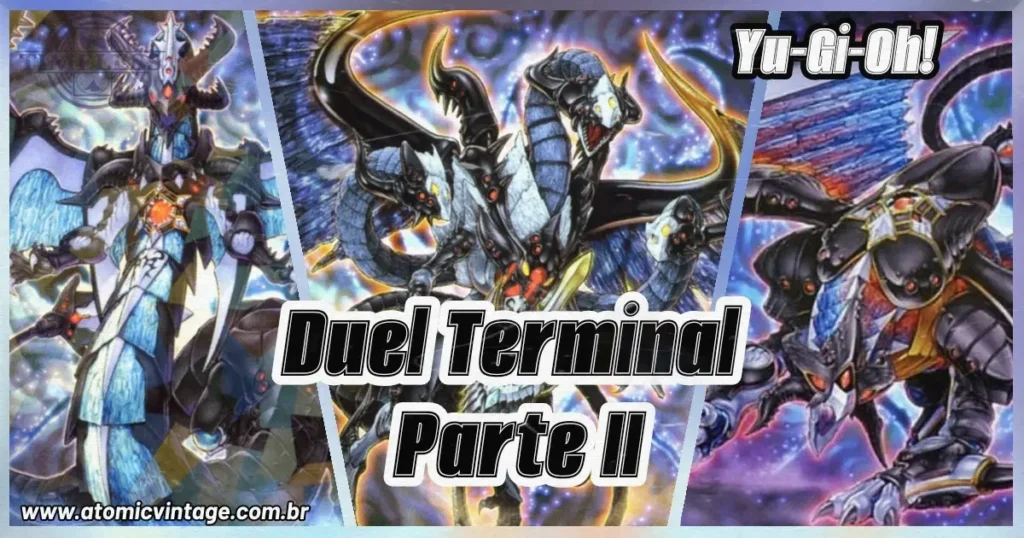
The Lore of Yu-Gi-Oh!: The Tragic Story of the “Duel Terminal” Part II
The Horror Anthology Series that Marked Classic TV
