British Sci-Fi Classic: The Quatermass Xperiment Reviewed
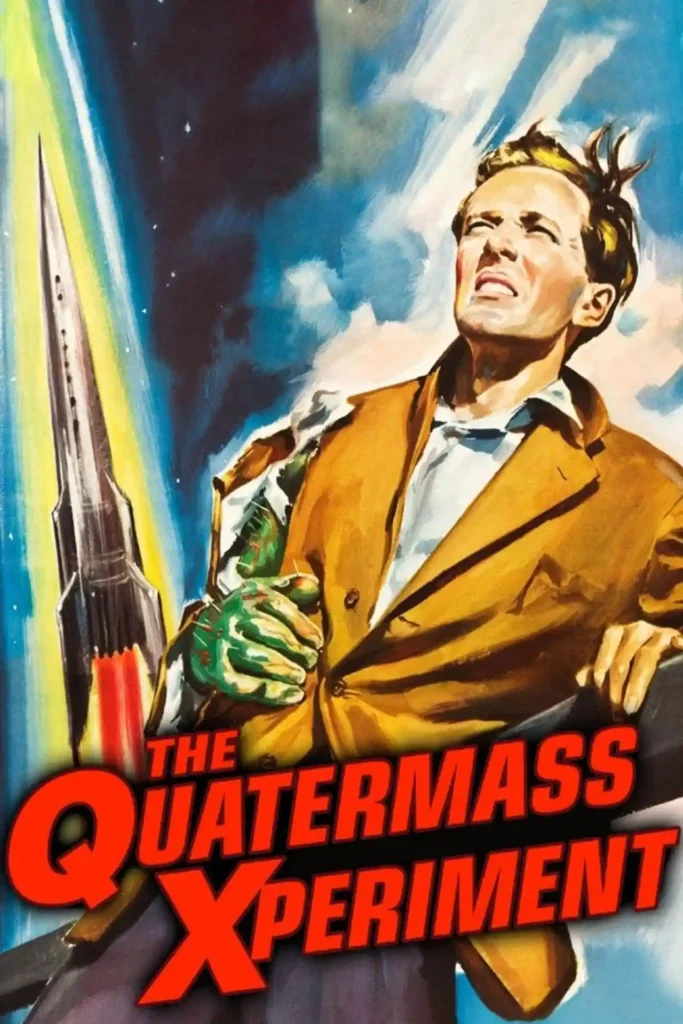
Title: The Quatermass Xperiment
Director: Val Guest
Screenplay: Richard Landau, Val Guest
Production: Anthony Hinds, Hammer Films Productions
Distribution: Exclusive Films
Release Date: September, 1955
Runtime: 82 minutes
Cast: Brian Donlevy, Richard Wordsworth, Jack Warner, David King-Wood, Marcia Dean, Maurice Kaufmann
Genre: Sci-Fi, Horror
Based On: “The Quatermass Experiment” Nigel Kneale
If you’re a fan of sci-fi, horror, or the famous British studio Hammer Film Productions, you’ve probably heard of “The Quatermass Xperiment” (also called “The Creeping Unknown”), and if not, you need to get to know it. Released in 1955 and directed by Val Guest, this feature film set off Hammer’s golden age of horror and sci-fi, and of course, helped give a nice push to this type of movie production. What type? I’m talking about the wonderful B-movie sci-fi productions that we love so much around here.
The film is based on a BBC series called “The Quatermass Experiment”, by Nigel Kneale. And, even if it’s not a cinematic masterpiece, the film was a massive hit, bringing Hammer straight into the spotlight for the general public. Now, let’s take a proper look at this space horror and what it brings down to Earth!
"The Quatermass Xperiment" Plot
The plot follows Professor Bernard Quatermass (played by Brian Donlevy), a stubborn head of the British Space Programme. Quatermass launches a manned rocket into space without proper authorisation. When the spacecraft loses contact and finally crashes in a village in England, only one of the three astronauts, Victor Carroon (Richard Wordsworth), remains on board. Carroon comes back in a catatonic state, unable to speak, but he brings a frightful alien threat along with him.
Minor Spoilers Ahead!
Why Was "The Quatermass Xperiment" Such a Hit?
From the BBC Success to the Cinema Screens
The film is a direct adaptation of the television miniseries “The Quatermass Experiment”, written by Nigel Kneale and broadcast by the BBC in 1953. In other words, the film had a head start before it even hit the screen. Kneale had already shown his knack for mixing a more realistic scientific suspense with creepy, unknown elements. The series was a winner with critics and audiences alike. Hammer bought the film rights, and Richard Landau and Val Guest tweaked the script to make it a bit more cinematic, I’d say.
The "X" Strategy in the Age Rating
Believe it or not, the “X” in the title had a marketing purpose and wasn’t just a cool gimmick for the film. It turns out the British censors (BBFC) had created the “X Certificate”, banning anyone under 16 due to adult and violent content. Something Hammer was already getting used to by that point. Even so, after a few edits, the film met the requirements by cutting out a bunch of graphic scenes. Hammer used the letter “X” right in the title of the film to highlight its shocking and scary nature—and to pull off a clever piece of marketing.
Critical Reception and Legacy in Horror Cinema
When it premiered in August 1955 at the Rialto cinema in London, the film became an instant box-office hit, saving Hammer Films from any financial trouble and making the studio a proper powerhouse in the horror genre.
The film was considered the scariest sci-fi up to that point (which gets said about pretty much every horror film that comes out) and boasted a production worth taking note of. Which it really is. The success led Hammer to produce two direct sequels: “Quatermass 2″ (1957) and the masterpiece “Quatermass and the Pit” (1967). Beyond that, the whole plot of an astronaut infected by an alien force became a big trend in the years to come.
Cinematography and Directing Style
A bit of a technical ace up the sleeve (if I can call it that) in “The Quatermass Xperiment” comes from the aesthetic choice of director Val Guest, who hadn’t directed any sci-fi up to then. With help from cinematographer Philip Grindrod, Guest went for a Cinéma vérité style, a cinematic language much closer to documentary footage; quite different from the theatrical, gothic tone that would mark Hammer’s later films. At times, you’ll feel like you’re watching an episode of “The X-Files”.
To pull this off, Guest filmed on real locations in the streets of London and around Bray Studios, complete with handheld camera work during several sequences. The opening, for instance, makes full use of ambient noise and the sirens of ambulances and fire engines, dropping a traditional musical score altogether.
The black-and-white photography uses moody shadows, especially in the night scenes, and since most of the characters wear suits, you get either a nice contrast in bright scenes or a mysterious, suspenseful look in dark ones.
As for the script, it features plenty of fast-paced dialogue with overlapping lines (one character cutting in or talking over another), which is dead common nowadays to make things sound more natural and less like a stage play. He did away with dramatic flourishes to keep the exchanges between characters snappy and grounded.
"The Quatermass Xperiment" Trivia
Kneale's Situation
Because Kneale wrote the original serial as a salaried BBC employee, the BBC kept all the film rights and sold them to Hammer without paying Kneale a penny extra. Yeah, that’s pretty bad.
Brian Donlevy as Bernard Quatermass
American actor Brian Donlevy was cast as Professor Bernard Quatermass to secure American distribution for the film. While creator Nigel Kneale publicly disliked Donlevy’s fast-talking, abrasive portrayal, time has been kind to the performance.
TV Show and Movie Differences
In the TV show, Professor Quatermass confronts the mutated organism inside Westminster Abbey. Rather than using violence, Quatermass appeals to the lingering remnants of human consciousness inside the creature. In the movie, Guest and Landau opted for an action-packed, cinematic resolution. Quatermass calculates the energy required to destroy the creature, hooks into the BBC’s broadcast power equipment set up inside the Abbey, and electrocutes the alien organism with thousands of volts of electricity.
Is The Quatermass Xperiment Worth Watching?
This film is one of those works that left its mark on the B-movie sci-fi and horror niche, and black-and-white cinema doesn’t age as much anyway, thanks to the need for good visual composition. The film relies on quick cuts for the death scenes though, which are few and far between for a monster flick. The ending can feel a bit anti-climactic, and the character arcs don’t seem completely wrapped up.
Even so, “The Quatermass Xperiment” is an essential classic watch for sci-fi and horror enthusiasts.