Reservoir Dogs: Tarantino's First Film
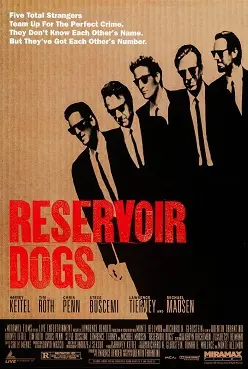
When Reservoir Dogs arrived in cinemas in 1992, few people imagined that this low-budget film would change the direction of independent cinema and introduce one of the greatest directors of all time to the world. Written and directed by Quentin Tarantino, the crime thriller introduced audiences to a filmmaker with a very distinctive style, defined by lengthy conversations, unforgettable characters, stylised violence and a non-linear narrative.
Even for people who already know Quentin Tarantino’s most famous films, Reservoir Dogs remains an incredible experience. It is a film that places its characters, dialogue and the gradual build-up of tension above the action that the budget clearly could not afford.
The clever narrative, the inspired cast and the confident direction make this one of the finest directorial debuts in cinema history. Although Tarantino went on to make larger and more visually ambitious productions, including Pulp Fiction, Kill Bill and Inglourious Basterds, many people still consider Reservoir Dogs to be his purest work.
At first glance, Reservoir Dogs looks like another crime thriller about a heist gone wrong. However, Tarantino completely overturns that idea by removing what would normally be the film’s biggest moment. The robbery is never shown. Instead, the entire story focuses on the aftermath of the crime and the growing distrust between the criminals.
Reservoir Dogs - Plot Overview
The story begins after a jewellery heist has gone horribly wrong. Curiously, the robbery itself is never shown to the audience. From that point onwards, the film follows the aftermath of the job as the gang gathers inside an abandoned warehouse to work out what happened. Convinced that there is an informant among them, any sense of trust quickly disappears, making way for paranoia and violence.
A Crime Story Without the Crime Scene
One of Reservoir Dogs’ greatest strengths is its narrative structure. Tarantino uses a fragmented timeline, moving between the present and flashbacks without following chronological order. Instead of handing over every answer straight away, he places information carefully throughout the film. Every flashback adds another layer to a particular character and slightly changes the way previous events are understood.
The missing heist also encourages the audience to picture something far bigger than any action sequence could probably have delivered. It is an excellent example of how implication can carry far more weight than actually showing everything. Although there is very little physical action, the tension never fades. Tarantino achieves this through the information shared between the characters and the feeling that they are slowly being cornered. Every conversation has the potential to completely change the relationships within the group.
The dialogue has a natural quality that is difficult to put into words. You really need to watch Tarantino’s films to understand it. Before the mission has even begun, the criminals chat about tips, music, fast food and popular culture. Another strength of the screenplay is that it avoids excessive explanations. Tarantino trusts the audience, allowing many ideas to come from the characters’ conversations and behaviour.
Reservoir Dogs' Restrained Direction
It is impressive to see how confident Tarantino already was with his very first film. The man clearly knew exactly what he was doing. Even though most of the story takes place inside a single warehouse, he constantly keeps the visuals fresh and the story moving without wearing out the audience.
The direction gives priority to lengthy conversations and performances while avoiding unnecessary cuts. This creates an almost theatrical feeling, allowing the cast to carry much of the tension themselves. Another memorable feature is the contrast between relaxed moments and sudden bursts of violence, a technique Tarantino would continue using throughout his career.
The cinematography by Andrzej Sekuła is actually very simple. There is nothing especially flashy or attention-grabbing, which is not a problem at all and fits the way Tarantino enjoys making films.
Unlike many crime thrillers from that period, and from the genre in general, Reservoir Dogs avoids highly stylised lighting. The warehouse has a raw, almost documentary-like appearance, strengthening the sense of realism. The colour palette also remains fairly neutral throughout most of the film.
The framing is fairly straightforward and, as usual, the camera often holds a shot for quite a while as the characters talk. One great example is the conversation between Mr Pink and Mr White, where the camera follows them for a short time before settling into a long uninterrupted shot while they continue talking. There is also the opening diner scene, which contains what is probably the film’s most famous conversation.
Another unforgettable moment is the agonising sequence involving Mr Blonde, played by Michael Madsen, with “Stuck in the Middle with” You playing while he finally carries out several horrific acts. Then there is the famous slow-motion shot of the gang walking together in black suits, a scene that helped define the film’s visual identity.
Wrapping Up
Reservoir Dogs is one of my personal references whenever the subject is crime cinema. It is a well-written screenplay that never relies on a plot twist or massive set pieces. Instead, it is driven by its dialogue and performances. Even with a modest budget and most of its story taking place in a single location, the film shows how an intelligent screenplay and well-written characters can overcome any technical limitation.
Quentin Tarantino’s debut already contained almost every element that would become associated with his career: sharp dialogue, a fragmented narrative, violence, dark humour and a carefully chosen soundtrack. Even so, it is impossible not to praise the cast, whose performances are perfectly balanced and make every moment feel tense and meaningful.
By choosing never to show the robbery that sets everything in motion, Tarantino places the suspense and the emotional highs and lows within the relationships between the characters instead of the action itself.
Reservoir Dogs became an important milestone for independent cinema, inspiring a generation of filmmakers to invest in bold stories where the screenplay mattered more than Hollywood’s ability to produce expensive action sequences.