Atomic New Age

Dagon by H.P. Lovecraft: Review & PDF

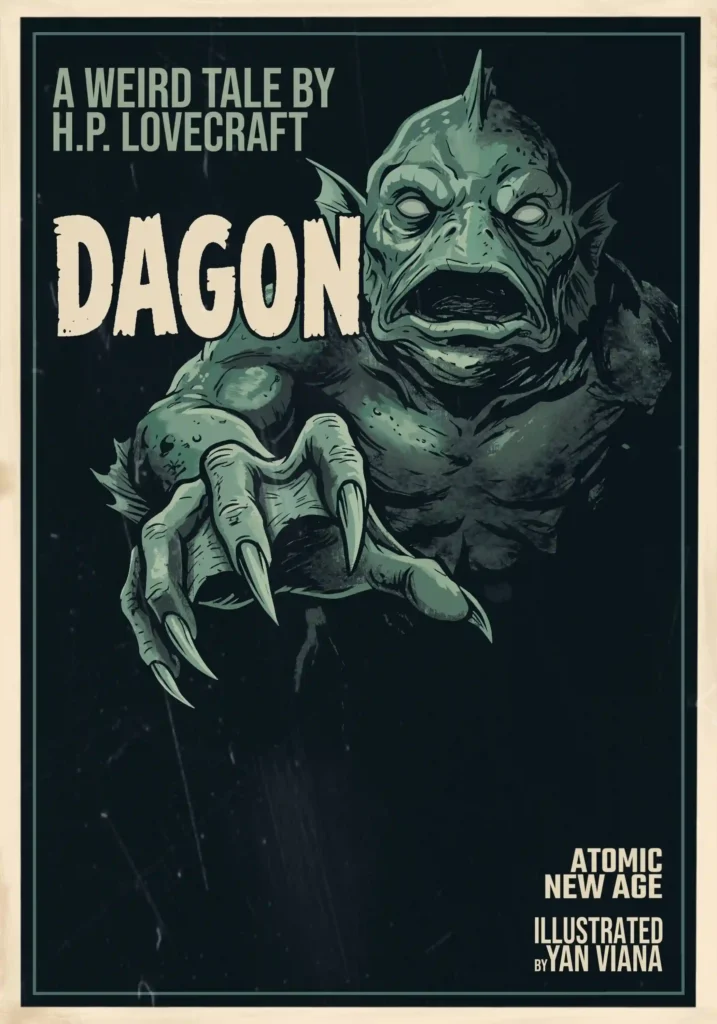
A cover poster of the short story Dragon by H.P. Lovecraft, depicting a sea creature Deep one Dagon

Title: Dagon


Author: H.P. Lovecraft


Original Publication: The Vagrant (Issue #11)


Release Date: November, 1919


Editor: W. Paul Cook


Publisher: 


Illustration: Yan Viana


Genre / Subgenres: Horror / Weird Fiction


Copyright Status: Public Domain (Free Download Available)


Format & Availability: Article Review + Complete PDF Edition


Affiliate Link: The Thing on the Doorstep and Other Weird Stories (Penguin Classics) (As an Amazon Associate, I earn from qualifying purchases)


The complete text of “Dagon” and its free PDF version are available at the bottom of this article. Click here to skip to the download section.

Dagon is a short story written by H.P. Lovecraft and published in The Vagrant (issue #11) in November 1919. It was later published in Weird Tales in October 1923. This was the first short story Lovecraft wrote as an adult and perhaps his most influential, as well as being considered an early milestone in what would later become known as the Cthulhu Mythos. It was also his first major professional publication. Here, we see the beginnings of a series of themes that would eventually become clichés in the author’s work. We are also introduced to Dagon, one of the most famous figures in the pantheon, who would return later through the cult of Dagon in Lovecraft’s story The Shadow over Innsmouth. Dagon is an excellent example of a short yet immensely powerful piece of writing.

Keep reading if you want a more detailed review with spoilers, or skip to the bottom of the page to download the full text and read it yourself.

Complete H.P. Lovecraft List of Stories by Releasing Date

Plot of "Dagon"

A troubled narrator, addicted to morphine and penniless, writes what he claims will be his final account before taking his own life. He recounts how, at the beginning of the First World War, he was captured by a German warship in the Pacific, escaped in a small boat and drifted at sea for days. After a night’s sleep, he wakes up in a place that will change his life forever.

Dagon and the Cthulhu Mythos

Dagon is Lovecraft’s first short story to introduce us to what would become the beginnings of his great mythology, a mythology shared with several of his fellow writers. This story already contains everything one would expect from Lovecraftian horror: a confessional narrative, a setting steeped in history and clues about ancient civilisations, the growing fear of something we cannot yet comprehend and, of course, the spectacular yet indescribable appearance of a gigantic, evil creature that calls into question everything we thought we knew about humanity and the universe.

An interesting detail about this story is that, despite being called Dagon, the creature itself is never named at any point. This raises questions about the identity of the real Dagon, who would only be named later in The Shadow over Innsmouth. It’s there that we learn about the Esoteric Order of Dagon, which worships a figure bearing that name. This could mean that the two are different creatures, which is certainly a possibility. The title of this story belongs to a group of works in which the author uses the name of one of his pantheon’s creatures, as he would later do with Azathoth and Nyarlathotep.

Some enthusiasts of the Mythos even believe there is a much closer connection between Dagon and Cthulhu, with some arguing that they are actually the same god, simply known by different names. Dagon would be an earthly name, derived from a Middle Eastern deity. In this case, the creature in this story could easily be one of the Deep Ones, rather than a specific god. Even so, some theories are difficult to establish. For instance, we know that a powerful creature lives beneath Devil’s Reef in Innsmouth, and that it isn’t Cthulhu.

The Ultimate Guide to Lovecraftian Gods and Cosmic Creatures

Character and Setting

Narrator: Here we have one of the characteristics that would become increasingly common in Lovecraft’s later stories: the unnamed narrator. Our narrator is someone confined to a hospital, tormented by his experiences, who feels compelled to recount what happened to him and brought him to this state.

Dagon: Dagon is one of the most famous creatures in the Mythos, although he is also one of its most mysterious and confusing figures. He is regarded as the father of the Deep Ones and the being worshipped by the Esoteric Order of Dagon, which established itself in Innsmouth.

Mysterious Island: The narrator is shipwrecked on a rocky, deserted island. Further exploration reveals signs that an ancient civilisation once inhabited the place and worshipped a fish-like god. The island’s main artefact is a monolith, a kind of effigy built in honour of this deity.

Lovecraft's Original Intentions

Despite everything, Dagon could simply be Lovecraft putting together a collection of interesting ideas inspired by a dream. Around the same time, he wrote another short story called The Tomb, which, to be honest, has absolutely nothing to do with the Mythos. It’s romantic to imagine that the author already had expectations for his future works. I imagine that Lovecraft, being well-versed in mythology, may have come across this Sumerian god and decided to write a horror story about him. An island inhabited by an ancient civilisation that worshipped a supposed fish god, only for that god to suddenly leap out of the sea, revealing itself to be an evil and monstrous creature. That sounds like an interesting premise to me. Others have argued that the author was inspired by Irvin S. Cobb’s “Fishhead”.

I believe what makes Dagon seem greater than Lovecraft originally intended is the language he used, which proved remarkably effective at creating a lasting sense of mystery and leaving an impression that stays with you. This is precisely the magical quality of the author’s writing: his ability to make you imagine things beyond what is happening on the page. When the author revisits some of his old ideas, we get the impression that everything had been there from the beginning. I tend to believe that Dagon is simply a collection of very successful ideas, with no expectation that they would open the doors to an entirely new world.

The Call of Cthulhu – H.P. Lovecraft | Review & PDF

Dagon PDF and Download

This work was originally published in 1919 and is in the public domain according to current legislation. However, the original authorship, magazine credits, and any associated illustrations remain the property of their respective creators, illustrators and publishers. This material is provided for informational and educational purposes only and may not be used for commercial sale.

A cover poster of the short story Dragon by H.P. Lovecraft, depicting a sea creature Deep one Dagon

Dagon – H.P. Lovecraft | Review & PDF

Dagon by H.P. Lovecraft: Review & PDF Title: DagonAuthor: H.P. LovecraftOriginal Publication: The Vagrant (Issue #11)Release Date: November, 1919Editor: W ...
/
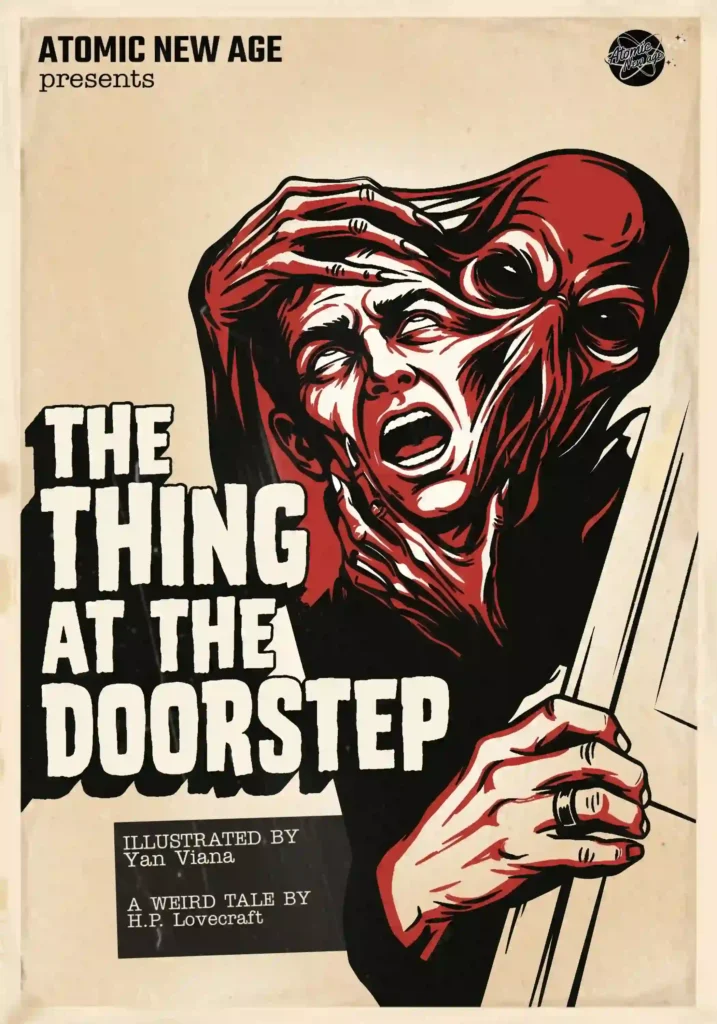
Cover of Thing at the doorstep by H.P. Lovecraft

The Thing at The Doorstep by H.P. Lovecraft

The Things at The Doorstep by H.P. Lovecraft: Review & PDF Title: The Thing at The Doorstep Author: H.P. LovecraftOriginal Publication: ...
/
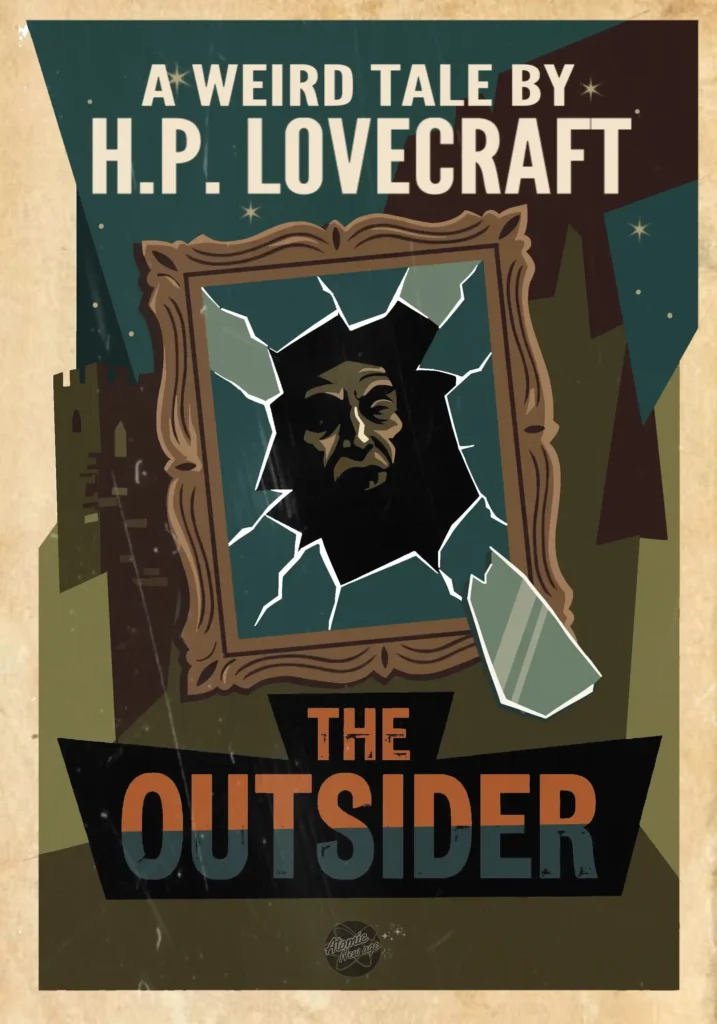
Cover of The Outsider by H.P. Lovecraft

The Outsider by H.P. Lovecraft: Review and PDF

The Outsider by H.P. Lovecraft: Review and PDF Title: The Outsider Author: H.P. LovecraftOriginal Publication: Weird Tales (Vol. 7, No. 4)Release ...
/
Cover of Cool Air by Lovecraft

Cool Air – H.P. Lovecraft | Review & PDF

Cool Air by H.P. Lovecraft: Review and PDF Title: Cool AirAuthor: H.P. LovecraftOriginal Publication: Tales of Magic and Mystery (Vol ...
/
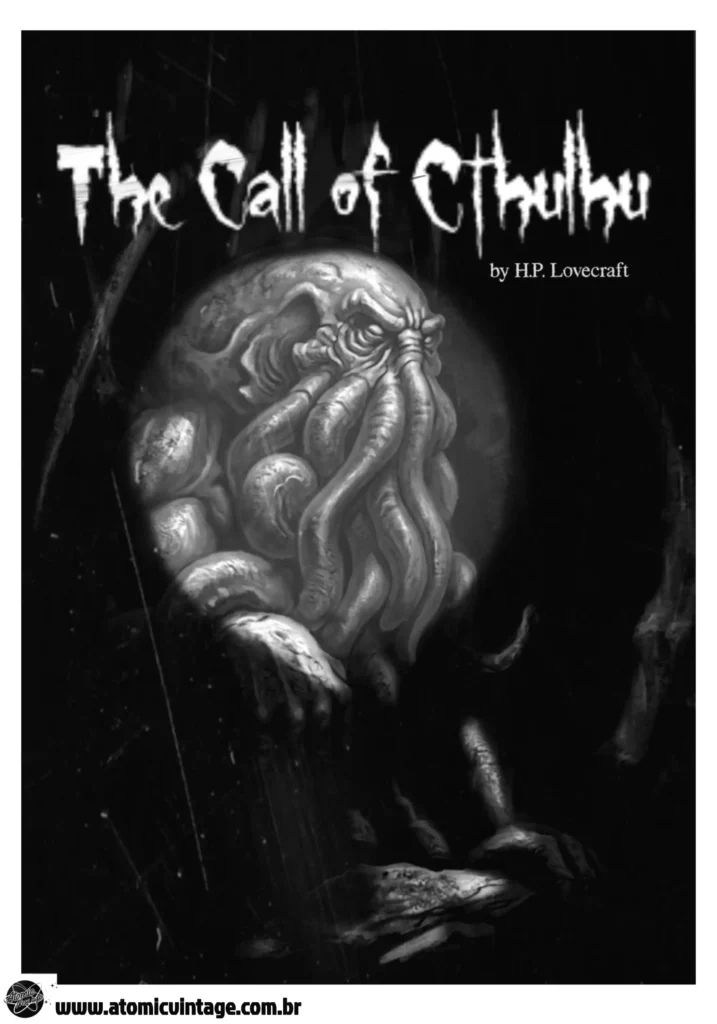
Cover of The Call of Cthulhu by H.P. Lovecraft, depicting the Cthulhu

The Call of Cthulhu – H.P. Lovecraft | Review & PDF

The Call of Cthulhu by H.P. Lovecraft: Free PDF & Review 6 min read | Free PDF Included  Title: The ...
/
Body Snatcher

The Body Snatcher – Robert Louis Stevenson

Robert Louis Stevenson's Gothic Chiller Robert Louis Stevenson truly cemented his name in Victorian literature, both with rousing adventures like ...
/
Scroll to Top