The Marble Virgin by Kennie McDowd
4 min read | Free PDF Included

Title: The Marble Virgin
Author: Kennie McDowd
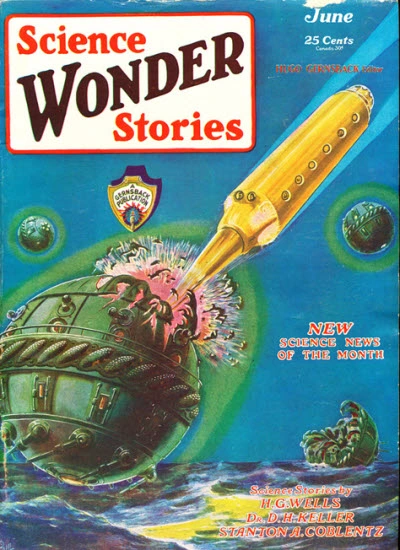
Original Publication: Science Wonder Stories (Vol. 01, No. 1)
Release Date: June 1929
Publisher / Editor: Hugo Gernsback (Stellar Publishing Corporation)
Illustration: Art is not credited
Genre / Subgenres: Pulp Science Fiction / Romance / Thriller
Copyright Status: Public Domain (Free Download Available)
Format & Availability: Article Review + Complete PDF Edition
The complete text of “The Marble Virgin” and its free PDF version are available at the bottom of this article. Click here to skip to the download section.
“The Marble Virgin”, written by Kennie McDowd and published in Science Wonder Stories volume 1, number 1 (June 1929), offers a poignant blend of science fiction, gothic horror, thriller and a romantic tragedy from the earliest days of dedicated genre magazines. Hugo Gernsback launched this title to promote scientifically plausible stories with educational value, yet McDowd’s tale leans heavily into some emotional melodrama while incorporating speculative technology.
Plot Summary of "The Marble Virgin"
“The Marble Virgin” presents the tragic tale of Wallace Land, a talented young sculptor who falls in love with his own creation—a marble statue he names Naomi. When his neighbour, the brilliant but morally questionable Professor Carl Huxhold, reveals a revolutionary scientific device capable of transforming matter at the atomic level, Wallace witnesses the impossible. His statue comes to life as a flesh-and-blood woman.
Spoilers Ahead!!!
A Confessional Melodrama
“The Marble Virgin” straddles multiple genre traditions. Most obviously, the story belongs to science fiction, with Huxhold’s electron-dissolver providing the speculative technological element. Yet it also draws on gothic horror—the mad scientist, the unnatural transformation, the tragic ending—and romance—the impossible love, the idealised beloved, the sacrifice for love.
The central theme explores the relationship between creator and creation. Wallace’s love for his statue inverts the typical Pygmalion dynamic. Rather than sculpting because he cannot find a worthy living woman, Wallace becomes emotionally bound to his own artistic achievement.
McDowd employs a confessional narrative structure that serves several purposes. The framing device of Wallace’s final written testimony creates urgency through its ticking-clock premise, with Wallace repeatedly noting his dwindling time. This approach therefore allows for direct emotional expression that might seem overwrought in traditional third-person narration. Wallace’s desperate declarations of love, his justifications for murder, and his final leap into the unknown gain poignancy from their context as literal last words.
The prose itself oscillates between workmanlike efficiency and purple passages of emotion. McDowd explains scientific concepts in clear, if somewhat oversimplified terms, making Huxhold’s electron theory accessible to pulp magazine readers. In contrast, Wallace’s descriptions of Naomi and his feelings for her reach for poetic heights, with mixed success.
Pacing accelerates as the story progresses. Early sections establishing Wallace’s character and his meeting with Huxhold unfold at a leisurely pace, allowing for character development and atmospheric detail. Once Naomi comes to life, however, events compress rapidly. Her education, Huxhold’s betrayal, and the violent conclusion tumble forth in quick succession.
Rewriting a Myth
Hugo Gernsback had founded Amazing Stories three years earlier, establishing the first magazine devoted entirely to “scientifiction”. Science Wonder Stories represented his attempt to emphasise scientific plausibility and educational value in the genre, though stories like McDowd’s suggest the publication still allowed considerable room for romantic melodrama.
The electron had been discovered in 1897, and by 1929 quantum mechanics was revolutionising the understanding of atomic structure. Popular science magazines regularly featured articles speculating about future applications of atomic theory. Huxhold’s electron-dissolver, while fantastical, therefore draws on contemporary interest in manipulating matter at the subatomic level.
The Pygmalion myth, which clearly influences this story, enjoyed renewed interest in the 1920s. George Bernard Shaw’s play Pygmalion premiered in 1913, and its 1938 film adaptation (preceding the famous My Fair Lady musical version) would further popularise the transformation narrative. McDowd’s science-fictional twist on the ancient tale reflects the era’s tendency to reimagine classical mythology through modern technological frameworks.
Author: Kenny McDowd
Little information survives about Kenny McDowd. “The Marble Virgin” appears to be his only published science fiction story, making him one of many one-hit contributors to early pulp magazines. The sophistication of the prose and narrative construction suggests someone with literary ambitions beyond pulp hackwork, yet McDowd never capitalised on this publication with further stories in Gernsback’s magazines or elsewhere.
This obscurity typifies the early science fiction landscape. Many contributors to these magazines were amateurs who sold one or two stories before returning to other pursuits. The low pay and limited prestige of pulp publication meant that writing for these magazines often served as a sideline rather than a career. McDowd may have been a professional writer in other fields who tried science fiction once, or an enthusiastic amateur who never followed through on this initial success.
My Thoughts
“The Marble Virgin” displays unsettling emotional honesty about creative obsession. Wallace’s love for his statue—before it comes to life—captures something profound about artistic creation: the way artists can become emotionally invested in their work to a degree that seems irrational to outsiders. By making this metaphorical relationship literal, McDowd therefore exposes both its beauty and its pathology.
Scientific versus artistic creation provides another thematic thread. Wallace works with his hands, slowly shaping beauty through traditional methods passed down through centuries. Huxhold manipulates invisible forces, transforming matter instantaneously through technological mastery. Yet Huxhold’s power proves destructive—he can create and destroy, but cannot truly understand or respect what he creates. On the other hand, Wallace’s slower, more reverent approach embodies a romantic resistance to cold scientific rationalism.
The story’s conclusion resists easy interpretation. Is Wallace’s decision to dissolve himself a romantic sacrifice or delusional auto-destruction? Does he join Naomi in some form of existence, or simply cease to be? This ambiguity elevates what could have been simple melodrama into something more thought-provoking.
Huxhold’s characterisation proves particularly effective despite—or perhaps because of—its simplicity. His progression from friendly neighbour to predatory villain occurs through small, believable steps. A more nuanced Huxhold might have elevated the story further.
The rushed pacing of the final third disappoints somewhat. The two weeks Wallace spends with Naomi receive only cursory treatment, with McDowd telling readers they were wonderful rather than showing their development. A longer story might have given their relationship time to breathe, making the tragedy more terrifying.
Wrapping Up
“The Marble Virgin” is an early example of science fiction grappling with timeless questions about creation and desire. Despite its pulp origins and occasionally overwrought prose, the story achieves genuine pathos in its portrait of impossible love and scientific hubris. Kenny McDowd may have vanished from literary history, but this single tale demonstrates real narrative skill and intelligence.
The story’s tragic view of scientific progress and romantic longing feels particularly resonant nearly a century later, as society continues wrestling with similar questions about artificial intelligence, synthetic biology, and the ethics of creation. Wallace’s final leap into dissolution—choosing uncertainty and possible oblivion over life without his beloved—captures something eternal about the human capacity for both love and folly.
"The Marble Virgin" PDF Download Free
This work was originally published in 1929 and is in the public domain according to current legislation. However, the original authorship, magazine credits, and any associated illustrations remain the property of their respective creators, illustrators and publishers. This material is provided for informational and educational purposes only and may not be used for commercial sale.
More of Science Wonder

The Making of The Misty Isle – Stanton A. Coblentz (Science Wonder Stories, Vol. 01, No. 1, 1929)
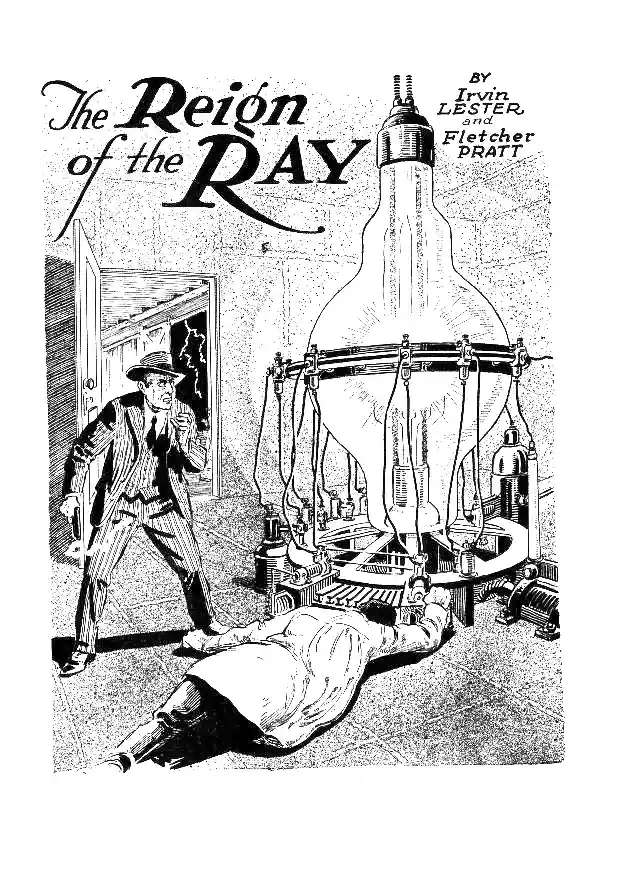
The Reign of the Ray (1929) – Irvin Lester and Fletcher Pratt | Science Wonder Stories
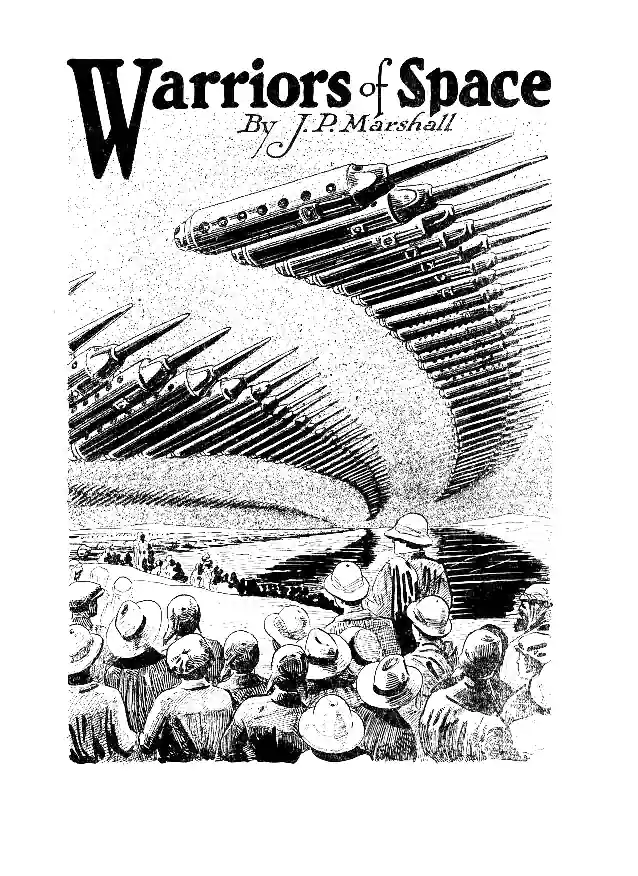
Warriors of Space – James P. Marshall (Science Wonder Stories, Vol. 01, No. 1, 1929)
The Marble Virgin – Kennie McDowd (Science Wonder Stories, Vol. 01, No. 1, 1929)

The Threat of the Robot – David H. Keller (Science Wonder Stories, Vol. 01, No. 1, 1929)