Carrie and Why Even Hollywood Doesn't Like Ugly People
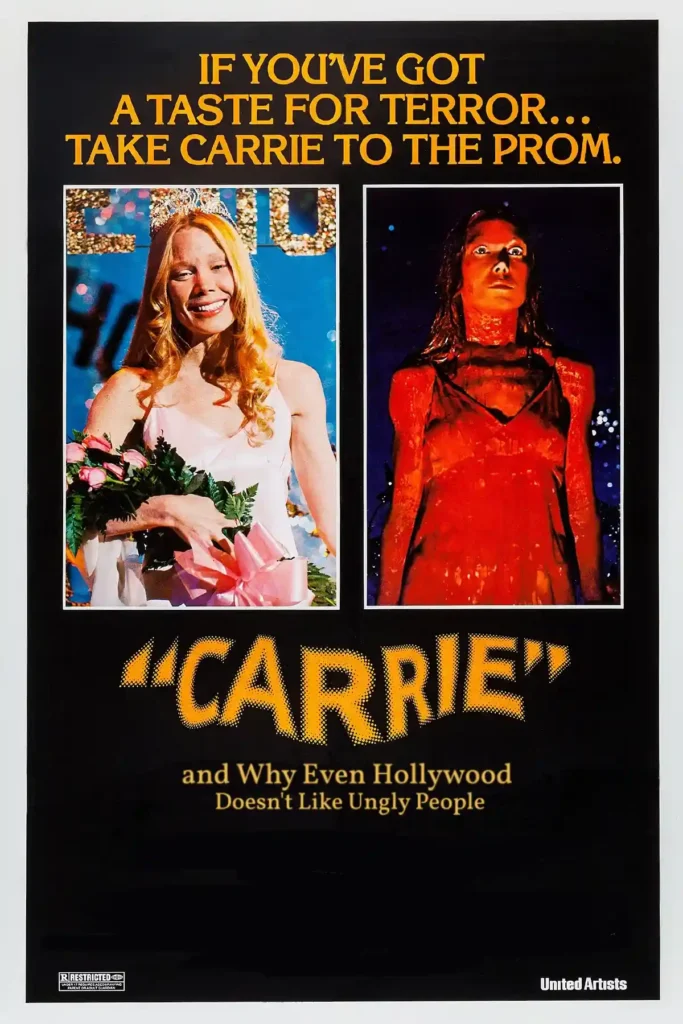
There are certain stories that the film industry seems determined to resurrect through endless adaptations, and Carrie appears to be one of the studios’ favourites, now reaching its fourth or fifth screen version in 2026. This time, it’s a TV series. Well, you might be wondering: hang on, does Carrie have enough material for a TV series? The answer is no, obviously not, but that hasn’t stopped them from ploughing ahead. And, to be honest, that’s the least of the problems with this series, conceived and directed by Mike Flanagan. Who, it must be said, is a brilliant director!
At first glance, we can say that this adaptation has divided audiences somewhat. On the one hand, we have Mike Flanagan, who knows perfectly well how to direct a horror series and has done so countless times before. Naturally, his signature style would leave a positive impression on several aspects of Carrie. However, prioritising teenage drama over the horror intended in the book has brought a few things to light about the film industry and how much it hates ugly people, just as much as… well, you do, perhaps. Who knows? It also has a foot in the world of aesthetic capitalism and the concept of pretty privilege.
The Case of Carrie White
The trope of the “ugly girl who just needed to take off her glasses and let her hair down” is one of cinema’s laziest crutches. How many times have you seen this story, in which a woman’s “ugliness” boils down to prescription glasses, braces and untidy hair? Think The Princess Diaries. You get the classic “glow-up” scene, where the girl discovers that all she needs to do is make a bit of an effort and… blimey, would you look at that! She was pretty all along! And, on top of being pretty, she also enjoys considerable social status (but that’s a conversation for another time).
The truth is that Hollywood suffers from a chronic fear of genuine ugliness. Usually, and I really do mean usually, when the industry adapts or tackles works about rejection and social and aesthetic marginalisation, as in Carrie, it sanitises the characters. I mean, do you really expect me to believe that girl gets bullied? That girl from the series? Seriously? I don’t know where you lot live, but at the school I went to, she’d have had at least five boys chasing after her, probably more.
I believe one of the most valid, significant and debatable criticisms from those familiar with Stephen King’s original work concerns Carrie’s appearance. It’s a fact that modern Hollywood has a habit of “beautifying” characters who are supposed to be genuinely uncomfortable to look at. Directors willing to work with less conventionally attractive actors are rare, and truly ugly actors seem even rarer these days. That’s also true. Carrie is an interesting case to me because it may represent the ultimate example of this makeover.
In the book, Carrie is a somewhat plump girl. She isn’t quite considered fat, but she needs to lose weight to fit into her prom dress. She’s described as having rather disgusting spots, unkempt hair and unfashionable clothes. She has a hunched posture and gives off a distinctly uncomfortable vibe. Carrie is visually unpleasant enough to bother her classmates and even her teachers. Yet, for some reason, they cast actresses who are clearly of fairly conventional attractiveness, dressing them in slightly old-fashioned or conservative clothes, with no make-up and untidy hair.
In other words, a stereotypical religious girl from rural America. I’ve used fairly broad terms here because this doesn’t happen only with Carrie, but with plenty of other characters as well.
By comparison, Carrie is weird, reactive and creepy. Her isolation and her mother’s abuse have turned her into someone who’s difficult to live with, not a “perfect little victim”. The series, however, portrays her as a sweet, intelligent, more or less “normal” girl (after all, she has powers) who is misunderstood, whose only “crime” is being an outsider or having a fanatical mother. Although the bullying she endures is vicious, the book makes it clear that the teenagers also feel an almost instinctive revulsion towards her presence.
The point, or the question we need to ask when dealing with this problem, is: what if she’s actually ugly? What do you do then, eh? By choosing certain actresses, or failing to do enough with the costumes and styling, the adaptation drains the criticism of its force and turns this horror story into a fable about self-esteem.
In the book, the tragedy lies really in watching someone utterly shattered by fanaticism and social rejection become a monster worse than those who tormented her. When the media turns Carrie into a “pretty, normal girl who gets bullied”, it strips away a great deal of the story’s tragic horror. Carrie is ugly, and that’s a fact about her character that the narrative needs to deal with. The production, however, knows that audiences would struggle to sympathise with her on those terms. They feel the need to make her “marketable” and aesthetically palatable so that viewers will root for her. If she’s merely a sweet, wronged girl from start to finish, the final massacre loses its psychological complexity and becomes little more than “pop revenge”. Carrie is a monster who has been wronged, but this is a monster’s story.
Stephen King's Metaphorical Revenge
Carrie (published in 1974) is, structurally speaking, one of the first major literary portrayals of a modern school massacre. Stephen King didn’t write a fairy tale about overcoming adversity. The book’s structure creates a fictional true-crime chronicle, using newspaper clippings, medical reports and survivor testimonies to document what happens when domestic abuse and schoolyard sadism create a human time bomb.
However, the metaphor of the “school shooting” frightens Hollywood.
Nowadays, the reality of school massacres, particularly in the US, is an open and extremely sensitive wound. If the studios made an adaptation faithful to the book, depicting a deeply troubled, ugly and isolated girl who suffers terrible abuse before deciding to commit an act of domestic terrorism against her own community, the film would be far too disturbing and uncomfortable to watch.
To avoid this direct and painful association with reality, the industry prefers to “romanticise” Carrie. They turn her into an unjustly treated power girl, allowing audiences to view the story as a dark superhero film. This tendency to make Carrie “commercially appealing” conceals the real problem at the heart of the story. If the main character is played by a Hollywood actress wearing a slightly dowdy outfit, the audience thinks: “God, she’s so sweet! Why would anyone do that to her?”
In the book, King challenges the reader in a far more uncomfortable way. He forces you to confront someone you would probably avoid or find weird in the school corridor.
The real truth is that Hollywood loves making a fortune from speeches about diversity and inclusion, yet flatly refuses to abandon conventional, commercially appealing beauty standards when it comes to the faces of its leading characters. The message we are left with is that bullying is tragic only because the victim is “beautiful and pure”, stripping away the criticism that every marginalised person deserves sympathy. The massacre becomes almost a moment of “turning your life around” (the famous bloody glow-up), in which the pretty girl finally gets revenge on those who rejected her.
Consider this bizarre distinction, which nevertheless feels all too real and worth questioning: would you feel the same way if Carrie had turned out to be the genuinely ugly girl she was meant to be?
The Pretty Privilege Phenomenon
There are all sorts of projects out there, and aesthetics matter enormously. The lack of beauty matters just as much. We cannot deny, however, that there is a dictatorship of visual appeal. What do I mean by that? Film studios and other media operate on the commercial logic that audiences need to identify with the protagonist or find them desirable, alongside other elements of the story. That’s why, in “dark romance”, for instance, the “abusive boyfriend or stalker” is immediately described as “a total hunk”. If he’s good-looking, it’s fine. The audience will sympathise with him regardless of what he does in the story.
There is a real, tangible commercial fear that a genuinely ugly or physically unconventional face will put audiences off, reducing a film’s marketing appeal and audience engagement. Think of it this way: if we put an attractive person next to an ugly one and asked the public which of them was the criminal, chances are the uglier one would be found guilty. After all, stealing is something “ugly people” do. This is actually a real psychological phenomenon. We tend to associate attractive people with certain qualities, such as greater morality, trustworthiness, health and intelligence, among others. This is known as the Halo Effect.
When we form a positive first impression of someone’s physical appearance, our brains automatically extend that positivity to their personality, without any actual evidence to support it. It’s no coincidence that the internet has a term for this: “rich-person skin”, referring to the range of qualities people expect someone to possess based on their appearance alone.
The problem with these “ugly girls” in cinema is that they aim to criticise a prejudice and end up shooting themselves in the foot. They end up reinforcing pretty privilege, whereby people who are conventionally attractive receive benefits and preferential treatment.
There was even a study showing that female students considered attractive receive lower marks in online courses, where they cannot be seen, than in face-to-face courses, where they can.
Aesthetic Capitalism
So, well, when cinema refuses to cast ugly people in roles meant for ugly characters, it validates the very prejudice it pretends to challenge through its narratives of personal triumph. This is where the problems with these adaptations and their sanitisation become apparent. The going is a watered-down narrative that offers no real confrontation, merely breathing new life into the genre’s oldest clichés without even scratching the surface of genuine suffering.
The industry is afraid to put a protagonist on screen who is visually and socially unpleasant. Carrie became ugly, awkward and creepy because her mother physically and psychologically abused her from birth. Her outward appearance reflects her trauma. These adaptations turn a tragedy about social rejection and psychological damage into a story of aesthetic capitalism, where you are your own brand, and if things are going badly, it’s because you aren’t selling yourself properly. Perhaps what you’re missing is a little beauty.