The Silver Key by H.P. Lovecraft: Review & PDF

Title: The Silver Key
Author: H.P. Lovecraft
Original Publication: Weird Tales (Vol. 13, No. 1)
Release Date: January, 1929
Editor: Farnsworth Wright
Publisher: (Popular Fiction Publishing)
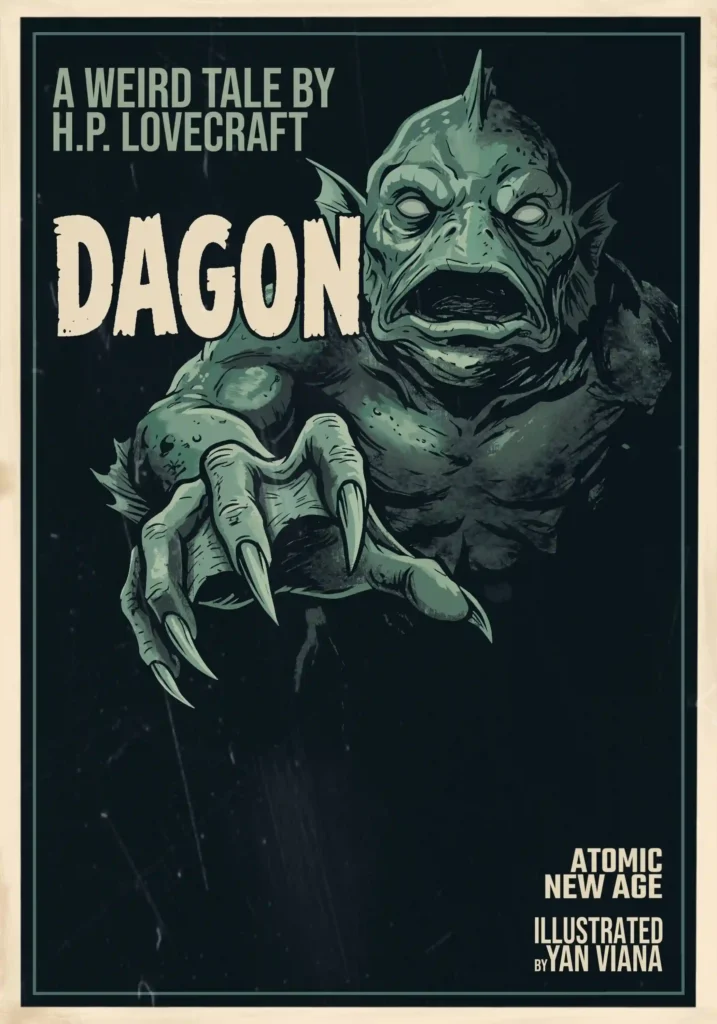
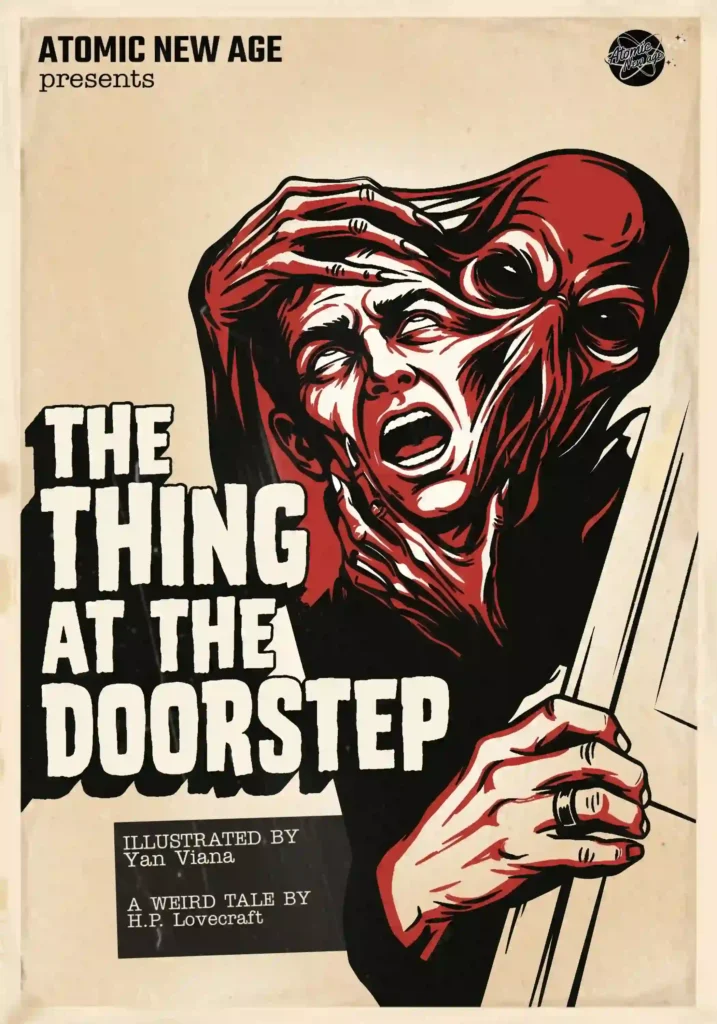
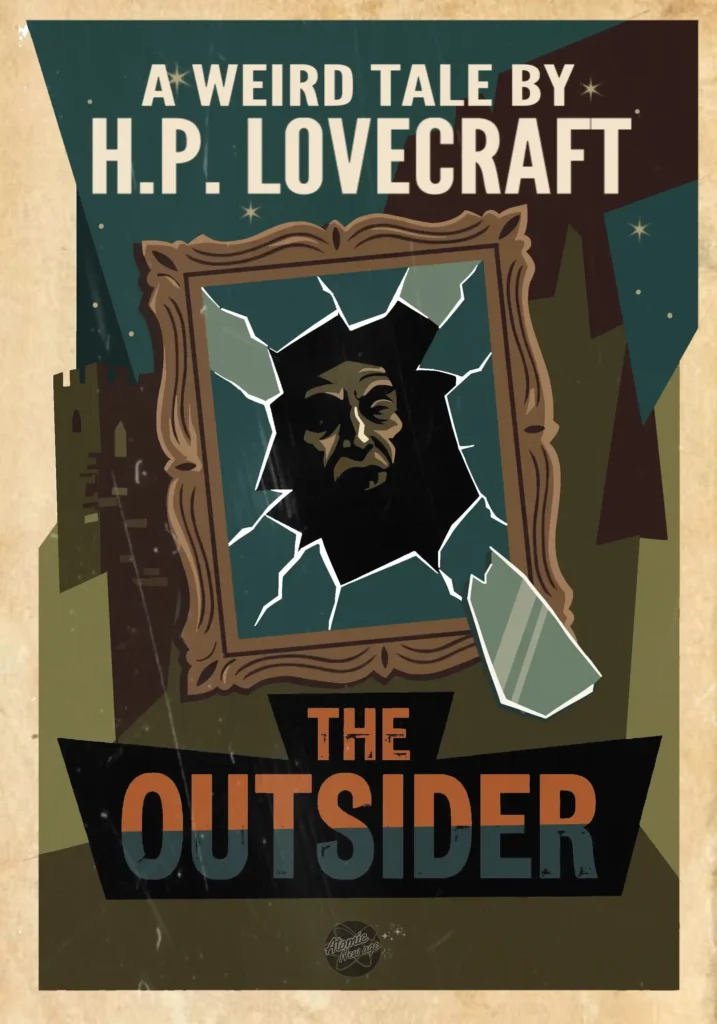
Illustration: Yan Viana
Genre / Subgenres: Horror / Dark Fantasy / Weird Fiction
Copyright Status: Public Domain (Free Download Available)
Format & Availability: Article Review + Complete PDF Edition
Affiliate Link: The Thing on the Doorstep and Other Weird Stories (Penguin Classics) (As an Amazon Associate, I earn from qualifying purchases)
The complete text of “The Silver Key” and its free PDF version are available at the bottom of this article. Click here to skip to the download section.
The Silver Key is a short story by H.P. Lovecraft, written in 1926 and published in Weird Tales in January 1929 (Vol. 13, No. 1). The story is part of the Dream Cycle and follows The Dream-Quest of Unknown Kadath (1926–27). Here, Lovecraft once again takes us into his mysterious world of dreams and brings back his character Randolph Carter. It’s quite rare to find recurring elements like these in his stories, aside from the gods, of course. The author continues with the melancholic tone usually found in this cycle, and this story feels more like a personal and philosophical meditation, with parallels to his own life and his development as an artist.
Keep reading if you want a more detailed review with spoilers, or skip to the bottom of the page to download the full text and read it yourself.
Plot of "The Silver Key"
At the age of thirty, Randolph Carter lost the “key to the gate of dreams”. Before that, he had escaped the banality of everyday life through nightly journeys to ancient cities and fantastic gardens. However, he finds himself trapped in a world that values only what is concrete and can be explained. He tries everything: religion, science, literature and the occult. Nothing can restore the sense of wonder he has lost. Now older and tired of life, he receives a clue from a long-dead relative and sets out on a journey back to his roots.
A Philosophical Reflection on Dreams and Reality
We could divide this story into two parts. The first is a sort of philosophical essay by the author, presented in narrative form. Lovecraft writes lengthy paragraphs about the emptiness of modern life and its cities of concrete and gold. He addresses science and its inability to provide meaning, religion, which also fails to satisfy our protagonist, and even scepticism itself. This is a life cut off from playfulness and far removed from the stories the author encountered during his formative years, such as those of Lord Dunsany.
The second half is a story in the more traditional sense, following the protagonist as he sets off on a journey back to the city of Arkham, where he makes a discovery, undergoes a transformation and eventually disappears. It is as if Lovecraft were reclaiming his childhood, with its fantastic stories and family connections. Randolph Carter is often considered Lovecraft’s alter ego: a dreamer from a distinguished family, hostile to the modern world and attached to his family’s past.
The Ultimate Guide to Lovecraftian Gods and Cosmic Creatures
As with any other story in the Dream Cycle, melancholy takes centre stage, along with that dreamlike state and its contrast with reality. The world of dreams, despite its mysteries, offers far more magic than the natural world could ever provide. Lovecraft continues to explore the unknown, a land beyond the threshold of reality, accessible through the dreams of certain people. It is a hidden and beautiful world, fascinating and therefore frightening as well.
We can also detect something of the literary atmosphere of the period, with post-war disillusionment, advances in science (relativity, atomic physics and psychoanalysis) and a crisis of “values”. These were the Roaring Twenties, when the wealthier classes were flaunting their fortunes and indulging in all sorts of luxuries, a subject frequently explored in the stories of F. Scott Fitzgerald.
Character and Setting
Randolph Carter: The protagonist, an educated man from a distinguished Boston family who feels out of place in the modern world. Carter is a recurring character in Lovecraft’s stories, first appearing in The Statement of Randolph Carter, one of the author’s most famous works. He would later become closely associated with the Dreamlands, starring in several stories set in this world. There is, indeed, a clear sense of identification between the author and his character.
Carter’s Grandfather: Appears in a dream, despite being long dead, and reminds Carter of his family’s lineage of visionaries.
Great-Uncle Christopher: Owned the house in Arkham and was one of the few people who understood Carter’s inner life.
Benijah Corey (“Old Benijy”): Worked for Uncle Christopher and speaks in a rural dialect.
Parks: Carter’s cockney servant, who has been with him since childhood and watches him leave before his disappearance.
The Southern Scholar: The man Carter visited and studied under for seven years. He disappeared in an ancient cemetery, and his parchment bears the same writing as the key. He provides a connection to the story The Statement of Randolph Carter.
Arkham and the Miskatonic Valley: Together, they form Carter’s ancestral homeland, a haunted rural region of New England. Along the way, we encounter the elm trees where one of his ancestors disappeared and the house of the witch Goody Fowler.
The Dreamlands: Only mentioned through names such as Oukranos, Thran, Kled, Narath, Ulthar, the River Skai and Ilek-Vad.
The Silver Key and Lovecraft's Cosmicism
The Silver Key makes references to other stories by the author and features Randolph Carter as its protagonist. Interestingly, we can also find several chronological timelines online. According to these, the order would be as follows: The Dream-Quest of Unknown Kadath, followed by The Statement of Randolph Carter, which is quite interesting to know, then The Unnamable. Finally, we have The Silver Key, followed by Through the Gates of the Silver Key. And so, we reach the end of Randolph Carter’s journey.
Lovecraft takes a somewhat different approach here and, in a rather rare move, softens his nihilism and his vision of a dangerous cosmos. Or perhaps he doesn’t, since the only apparent answer to all this is transcendence, with madness (or death) acting as the gateway.
Here, however, the ordinary world of men is the real torture, not the other way round, as Lovecraft usually portrays it. Carter is destroyed by those who teach him to doubt his dreams.
I like the elegance of the ending (the narrator who “hopes to find him”) and the idea that the key may symbolise “all the purposes and mysteries of a blindly impersonal cosmos”. It brings Lovecraftian cosmicism together with a sense of consolation.
The Silver Key PDF and Download
This work was originally published in 1926 and is in the public domain according to current legislation. However, the original authorship, magazine credits, and any associated illustrations remain the property of their respective creators, illustrators and publishers. This material is provided for informational and educational purposes only and may not be used for commercial sale.