He by H.P. Lovecraft: Review & PDF

Title: He
Author: H.P. Lovecraft
Original Publication: Weird Tales (Vol. 8, No. 3)
Release Date: September, 1926
Editor: Farnsworth Wright
Publisher: (Popular Fiction Publishing)
Illustration: Yan Viana
Genre / Subgenres: Horror / Weird Fiction
Copyright Status: Public Domain (Free Download Available)
Format & Availability: Article Review + Complete PDF Edition
Affiliate Link: The Thing on the Doorstep and Other Weird Stories (Penguin Classics) (As an Amazon Associate, I earn from qualifying purchases)
The complete text of “He” and its free PDF version are available at the bottom of this article. Click here to skip to the download section.
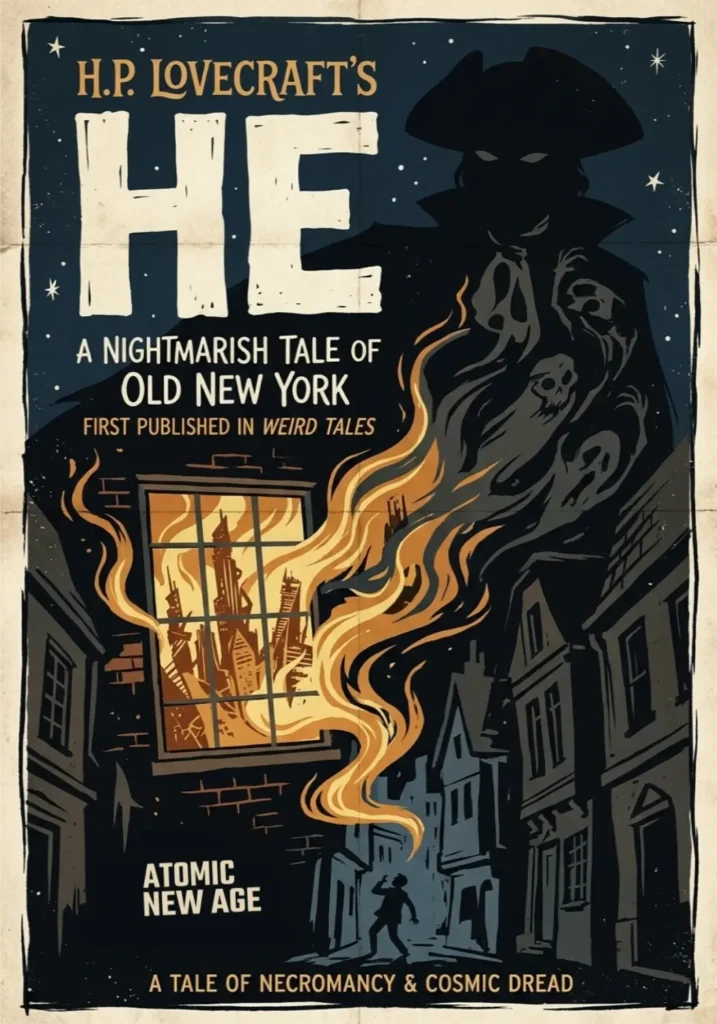
He is a short story written by H.P. Lovecraft and published in Weird Tales in 1926. It’s another of the author’s Gothic stories set in New York, like Cool Air and The Horror at Red Hook, in which a nostalgic outsider is led by a mysterious sorcerer to a hidden colonial house. It also shows some of the resentment Lovecraft felt towards the Big Apple. These New York stories are certainly among the most xenophobic works by the author.
Keep reading if you want a more detailed review with spoilers, or skip to the bottom of the page to download the full text and read it yourself.
Plot of "He"
A young New England poet moves to New York hoping to find inspiration, only to be crushed by the modern city, which seems cold and hostile to him. He finds relief only in night-time walks through the old streets of Greenwich Village. One August night, a slender man wearing a cloak and a wide-brimmed hat approaches him and offers to show him places that do not appear on any map.
Bad Nostalgia and New York
This story is another account from an unnamed narrator who, in an attempt to deal with his life and his frustrations, ends up stumbling upon evil and being drawn into an uncontrolled spiral of daydreams. This takes the form of a journey, with our character moving from a “modern” New York of the 1920s to a colonial New York.
The opening is long and almost reads like an essay about the city. The xenophobic passages (the narrator calls its inhabitants “dreamless foreigners” and describes the future city as having a people who are “yellow and narrow-eyed”) are not simply part of the setting. The author genuinely treated them as part of the mechanism of the horror.
The Ultimate Guide to Lovecraftian Gods and Cosmic Creatures
As far as we know, the author wrote this text in a notebook he bought while walking through Greenwich Village and, apparently, found himself pouring all his hatred and suffering over living in New York into it. The sorcerer may be the most curious and interesting part of the story, since we never learn who he really is. This strengthens the sense of mystery that runs through the author’s stories, with its unexplained evil that offers no easy answers. Apparently, he managed to achieve a form of immortality and has been alive since 1768. Interestingly, this is one of the few stories by Lovecraft in which the evil figure is “defeated”.
From a technical point of view, the pacing is excellent: the walk, the library, the visions and the catastrophe all fit together well.
Character and Setting
The Narrator: A New England poet with blue eyes, nostalgic and xenophobic. He looks for beauty in the past and feels out of place in the modern city.
“He” (the Host): A very thin man with a white, expressionless face, a soft and hollow voice and icy hands. He wears eighteenth-century clothing. He is the “squire” of 1768, a necromancer who prolongs his life through his art.
The Native Americans: Described as “half-breeds” and later as spirits wearing moccasins and carrying tomahawks. They hold the secret and eventually demand payment for what was taken from them.
New York: The story takes place in 1920s New York, in Greenwich Village, a maze of courtyards and narrow lanes leading to a walled estate with a cupola, a garden and a mid-eighteenth-century library.
Lovecraft's New York
Lovecraft married Sonia Greene in March 1924 and moved to New York, living in Brooklyn Heights, where he struggled to find work, experienced loneliness and suffered a severe cultural shock. The story is highly autobiographical. Lovecraft lived in the city between 1924 and 1926, during this period of loneliness and financial difficulties, and returned to Providence shortly before this story was published. The ending (“I returned home, to New England”) is, in practice, the decision he made himself.
The story treats Native peoples through Lovecraft’s colonial perspective, with terms such as “half-breeds” and references to “savages”. Yet the plot, perhaps unintentionally, shows the coloniser deceiving and exploiting the Native people and being punished for it. I can’t say what the author’s intention was, given his own prejudices.
The narrator despises the modern city and falls in love with the past, but it is the past that nearly kills him. The text does not seem fully aware of this contradiction, yet the ending shows that nostalgia taken to an extreme can be as dangerous as the city he rejects. The fact that the sorcerer, who “controls time”, is eventually defeated by an old debt is a good idea. But again, it is difficult to say how much of this perspective the author intended.
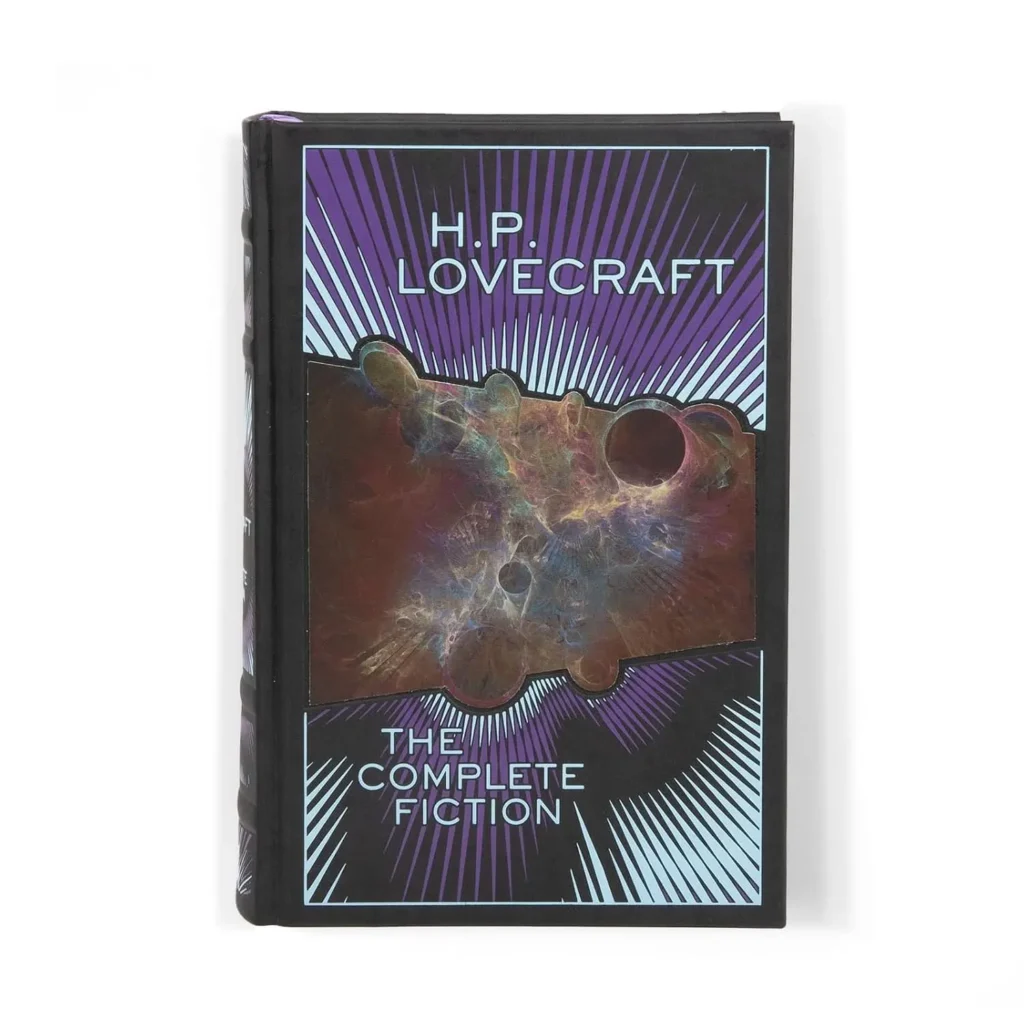
H.P. Lovecraft: The Complete Fiction
Add to Your Collection (Hardcover, Audiobook or Kindle Edition)
A massive hardcover volume spanning over 1,100 pages that gathers all of Lovecraft’s canonical fictional works in one place.
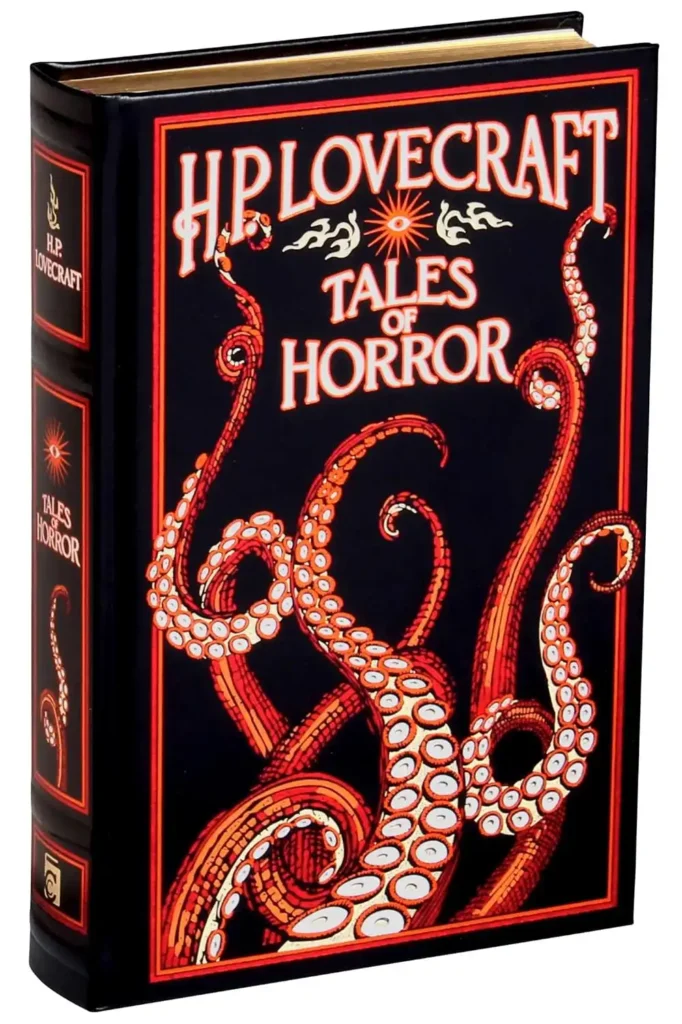
H. P. Lovecraft: Tales of Horror (Leather-Bound Classics)
Add to Your Collection (Hardcover or Kindle Edition)
If you love the feel of a real book or want a beautiful physical edition with exclusive cover art for your bookshelf:
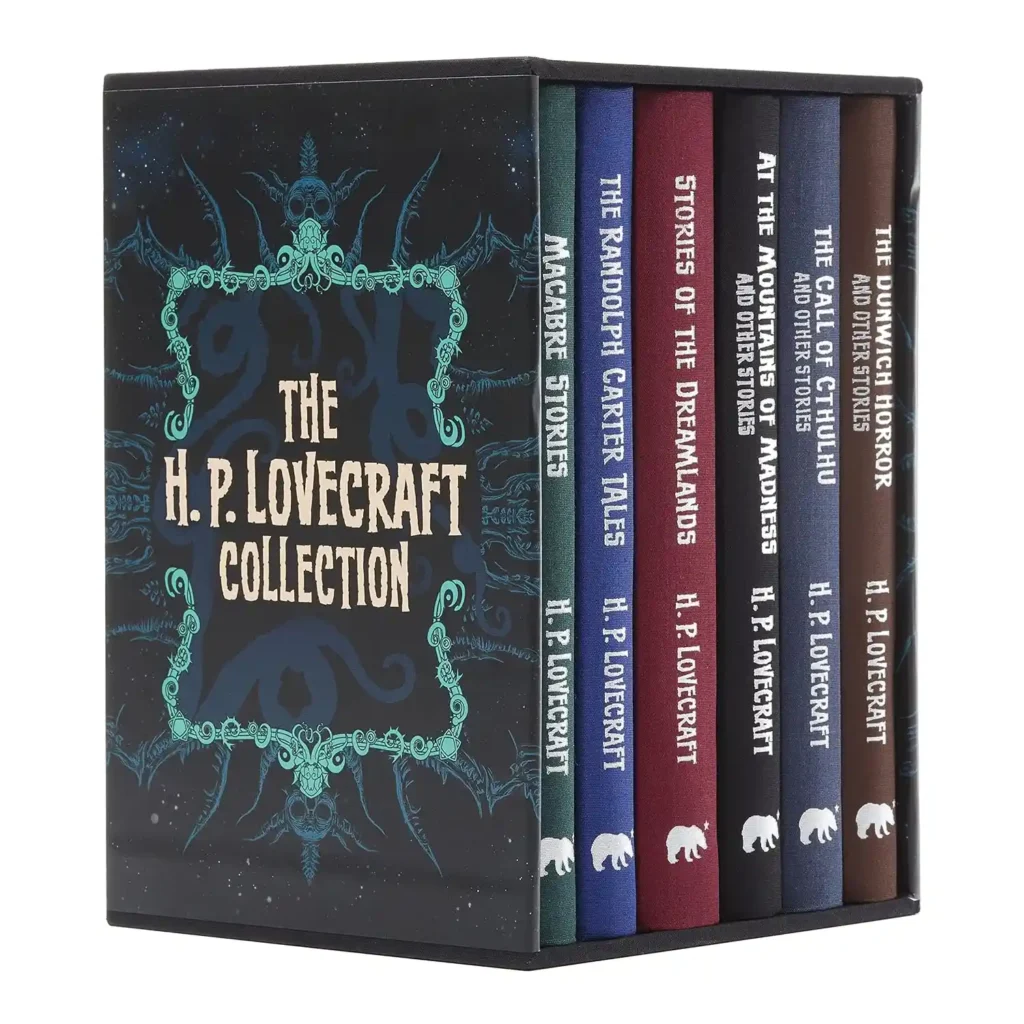
The H. P. Lovecraft Collection: Deluxe 6-Book Hardcover Boxed Set (Arcturus Collector’s Classics)
Add to Your Collection (Hardcover or Kindle Edition)
Multi-volume paperback or hardback boxed sets split the mythos into thematic chunks like Macabre Tales and Stories of the Dreamlands, making them easier to hold than a 1,000+ page brick.
(As an Amazon Associate, I earn from qualifying purchases)
"He" PDF and Download
This work was originally published in 1926 and is in the public domain according to current legislation. However, the original authorship, magazine credits, and any associated illustrations remain the property of their respective creators, illustrators and publishers. This material is provided for informational and educational purposes only and may not be used for commercial sale.