The Shadow Out of Time by H.P. Lovecraft: Review & PDF
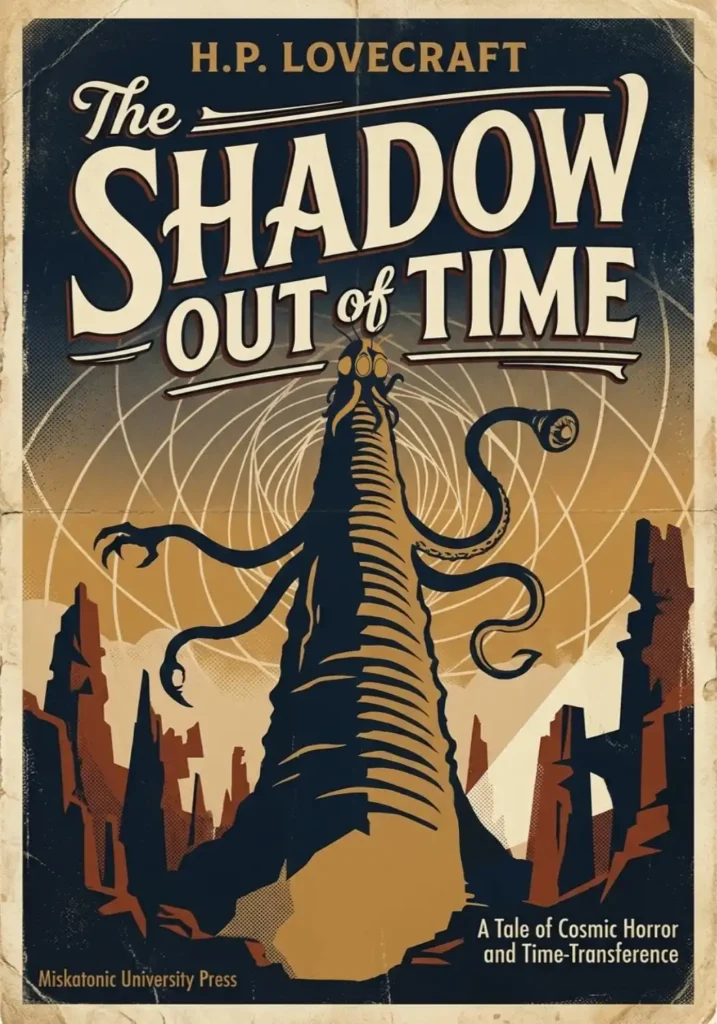
Title: The Shadow Out of Time
Author: H.P. Lovecraft
Original Publication: Astounding Stories (Vol. 17, No. 4)
Release Date: June, 1936
Editor: F. Orlin Tremaine
Publisher: Street & Smith Publications
Illustration: Yan Viana
Genre / Subgenres: Horror / Weird Fiction / Science Fiction
Copyright Status: Public Domain (Free Download Available)
Format & Availability: Article Review + Complete PDF Edition
Affiliate Link: The Thing on the Doorstep and Other Weird Stories (Penguin Classics) (As an Amazon Associate, I earn from qualifying purchases)
The complete text of “The Shadow Out of Time” and its free PDF version are available at the bottom of this article. Click here to skip to the download section.
The Shadow Out of Time is a short story by H.P. Lovecraft, published in 1936 in Astounding Stories of Super-Science. We are looking at one of the novellas the author wrote during his more “mature” period, combining psychological mystery, science fiction and cosmic horror. At the same time, it is an investigation (the professor treats his own case as research) and a journey to ancient ruins, ending with one of the author’s strongest finales. It also introduces the Great Race of Yith. It is certainly one of Lovecraft’s major works and one of his finest ideas, and it connects directly with At the Mountains of Madness (1931) and The Whisperer in Darkness (1930).
Keep reading if you want a more detailed review with spoilers, or skip to the bottom of the page to download the full text and read it yourself.
Plot of "The Shadow Out of Time"
In 1908, Nathaniel Wingate Peaslee, a professor of political economy at Miskatonic University, faints in the middle of a lecture. When he wakes up, he seems like a different person: he speaks strangely, knows things he should not know and frightens his own family. Five years later, he returns to normal with no memory of the period, but begins to be haunted by dreams of a gigantic city and impossible beings.
The Shadow Out of Time Structure and Science Fiction
This work does not stray far from Lovecraft’s usual approach to structuring his stories. The novella has three sections. The first (Chapters I–IV) is a dossier: biography, clinical case, dreams and mythology. The second (Chapter V) concerns the letter and the expedition. The third (Chapters VI–VII) is the descent and escape. It’s a structure in which information comes before action, much like The Call of Cthulhu and many of his other works.
This format is a remnant, or continuation, of earlier Gothic writers who presented their plots through an epistolary structure. We see it in Frankenstein, for example, or in the king of Gothic novels, Bram Stoker’s Dracula, and so on. One interesting feature of this story, however, is its scientific tone, which owes much to At the Mountains of Madness, the high point of science fiction in Lovecraft’s work.
The Ultimate Guide to Lovecraftian Gods and Cosmic Creatures
The scientific tone had already begun to appear in the second half of the 1920s and became firmly established in 1930 with The Colour Out of Space (1927), in which the threat is an extraterrestrial entity that contaminates the earth, described as a natural phenomenon and investigated by scientists. In The Whisperer in Darkness (1930), the Mi-Go are biological aliens with surgical technology that allows them to remove brains and transport them in cylinders. The story even mentions the discovery of Pluto, which took place that same year.
At the Mountains of Madness (written in 1931) is the high point of this development: a scientific expedition to Antarctica, with geologists and biologists, and ancient beings described with anatomical rigour. The race that created the shoggoths does so through biological engineering. The story was only published in 1936, in Astounding, a science fiction magazine.
Character and Setting
Nathaniel Wingate Peaslee: The narrator, a professor from Haverhill. Married, later divorced, and the father of three children. Rational, methodical and interested in psychology.
Wingate Peaslee: His second son, who remains at his father’s side. He becomes a professor of psychology and is the recipient of the account.
Alice Keezar (his wife) and the other children (Robert and Hannah): They abandon their father when they realise that he is “no longer himself”.
Robert B.F. Mackenzie: An Australian mining engineer, educated and amiable, who discovers the blocks and writes the letter.
Dr E.M. Boyle: A doctor from Perth who takes an interest in Peaslee’s papers.
William Dyer: One of the professors on the expedition, a geologist and the same character from At the Mountains of Madness.
Ferdinand Ashley: A professor of ancient history.
Tyler Freeborn: A professor of anthropology.
The Great Race of Yith: Enormous, iridescent cones with limbs ending in claws, red trumpets and heads with three eyes. They have an organised society, live for thousands of years, archive the history of the entire cosmos and travel through time with their minds.
The “Elder Things”: A prehistoric, semi-material race without sight, living in abysses and producing winds and whistles. They are the source of the Great Race’s fear. They should not be confused with the “Old Ones” from At the Mountains of Madness, who appear here as a neighbouring, plant-like race with star-shaped heads.
Arkham and Miskatonic: The house on Crane Street and the university.
The Pilbara Desert, Western Australia: The Great Sandy Desert in 1935, with a camp, tractor and aeroplane.
The Stone City: A metropolis from 150 million years ago, with gardens, ramps and wind owless basalt cylinders.
Lovecraft, Science and Cosmic Horror
In 1934–35, Lovecraft was living in Providence with limited resources and fragile health, during the Great Depression. He wrote the story shortly after The Shadow over Innsmouth and The Dreams in the Witch House, during a mature period of his writing, but also one marked by discouragement over magazine rejections. His work had developed a scientific quality that was not as well received by Weird Tales, but eventually found a home in Astounding. This story even appeared on one of the magazine’s covers, something Weird Tales never did for the author.
We get a portrait here of the author’s relationship with the world and with the discoveries of his time: the references to Einstein and relativity, his interest in palaeontology (the Permian, Triassic and dinosaurs), geology and the psychology of personality changes. The society of the Great Race is described as “fascistic socialism”, a reference to the political debates of the 1930s. Lovecraft had changed his political views during that decade, but the passage is somewhat ambiguous. The Pilbara region itself contains some of the oldest rocks on Earth, while the Aboriginal legends mentioned, such as that of Buddai, the sleeping giant, are used as a folkloric foundation. The characters use the term “blackfellows” and treat the native stories as superstition, a colonial perspective typical of the period and of the author.
One thing worth noting here is how cosmic horror manifests through recognition. This is not a horror story, at least not in the way we usually expect from Lovecraft, although it certainly contains horror. The madness surrounding the Yith and their abilities has deeply unsettling implications. This knowledge is so absurd that the Yith’s victim is left suspended between delusion and reality, and either possibility is terrible.
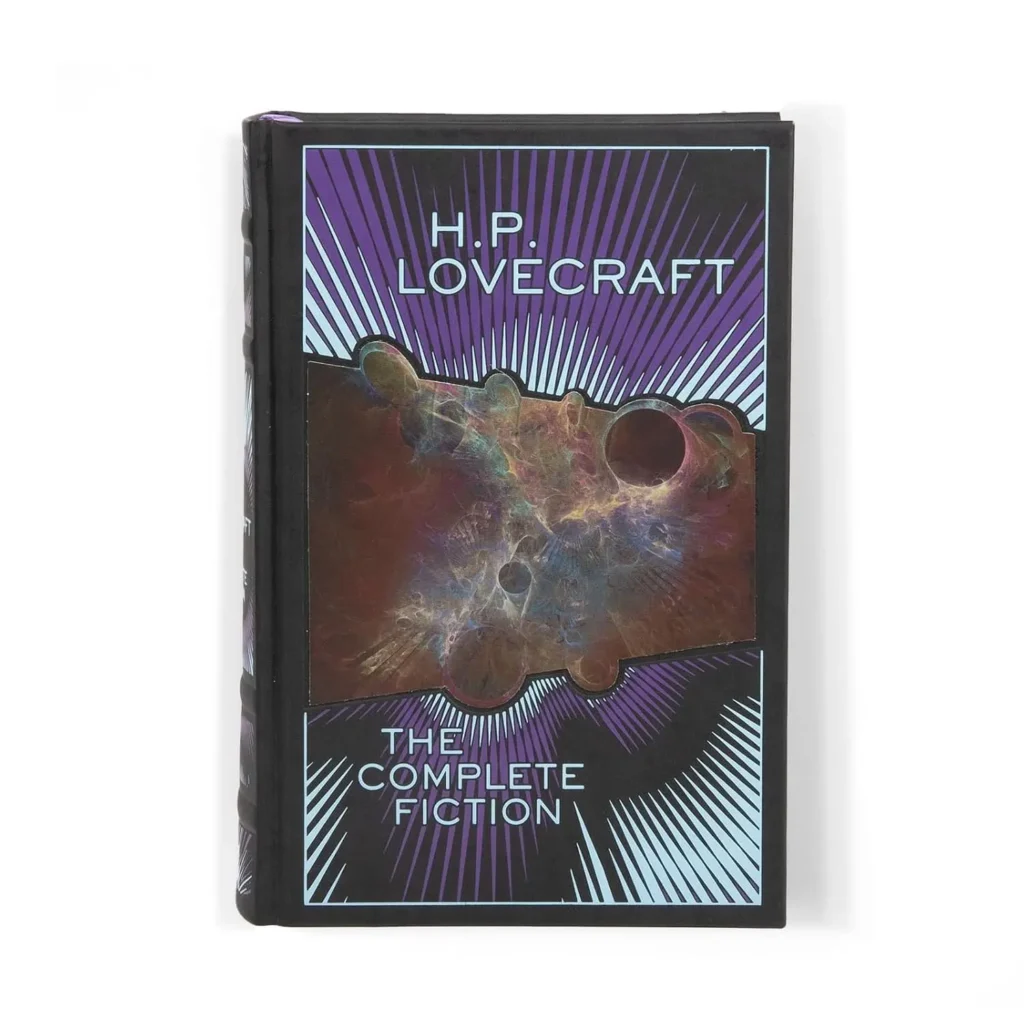
H.P. Lovecraft: The Complete Fiction
Add to Your Collection (Hardcover, Audiobook or Kindle Edition)
A massive hardcover volume spanning over 1,100 pages that gathers all of Lovecraft’s canonical fictional works in one place.
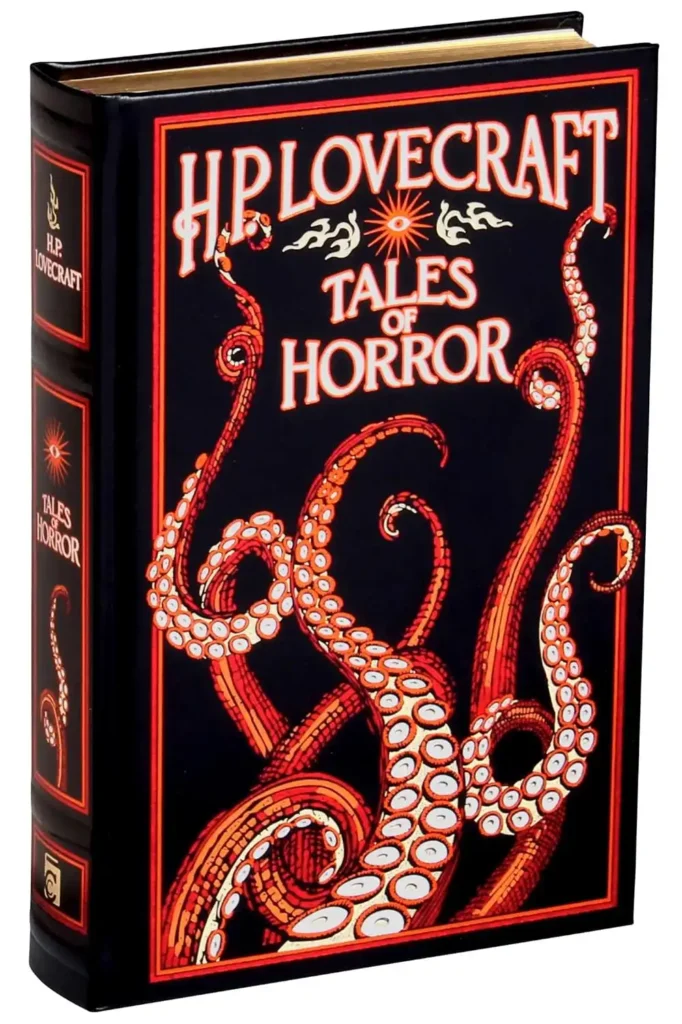
H. P. Lovecraft: Tales of Horror (Leather-Bound Classics)
Add to Your Collection (Hardcover or Kindle Edition)
If you love the feel of a real book or want a beautiful physical edition with exclusive cover art for your bookshelf:
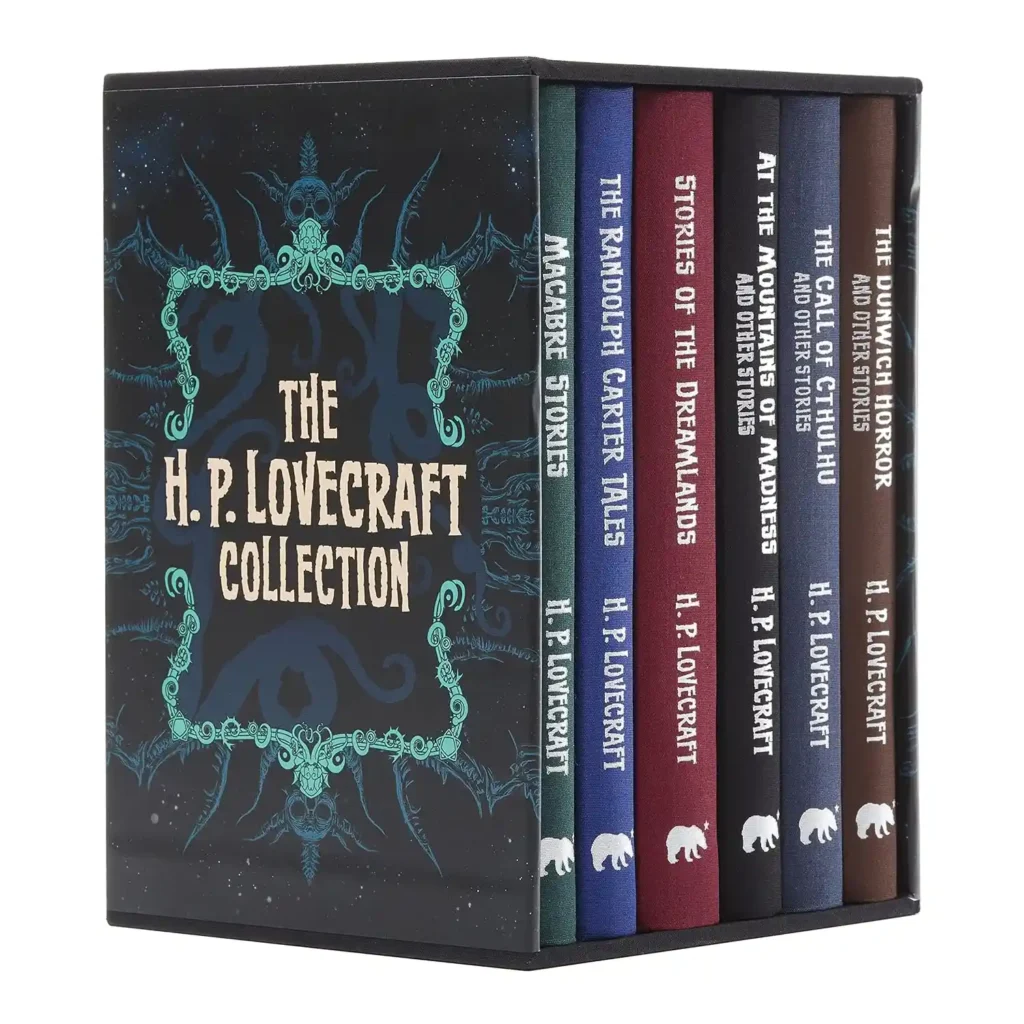
The H. P. Lovecraft Collection: Deluxe 6-Book Hardcover Boxed Set (Arcturus Collector’s Classics)
Add to Your Collection (Hardcover or Kindle Edition)
Multi-volume paperback or hardback boxed sets split the mythos into thematic chunks like Macabre Tales and Stories of the Dreamlands, making them easier to hold than a 1,000+ page brick.
(As an Amazon Associate, I earn from qualifying purchases)
The Shadow Out of Time PDF and Download
This work was originally published in 1936 and is in the public domain according to current legislation. However, the original authorship, magazine credits, and any associated illustrations remain the property of their respective creators, illustrators and publishers. This material is provided for informational and educational purposes only and may not be used for commercial sale.
The Shadow Out of Time – H.P. Lovecraft | Review & PDF
He – H.P. Lovecraft | Review & PDF
The Moon-Bog – H.P. Lovecraft | Review & PDF
The Evil Clergyman – H.P. Lovecraft | Review & PDF

The Silver Key – H.P. Lovecraft | Review & PDF