This morning I woke up transformed into an insect: The Metamorphosis by Franz Kafka
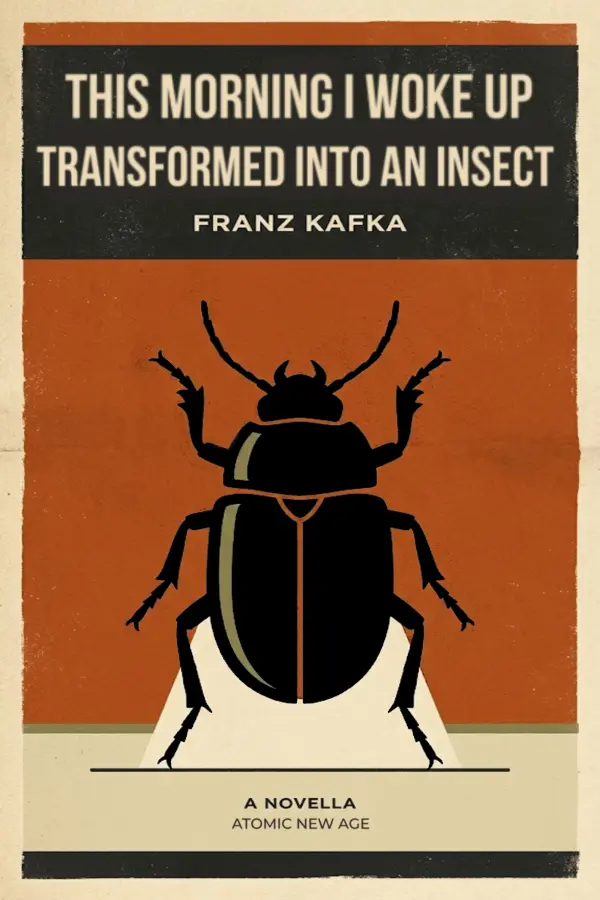
Have you ever imagined waking up and discovering you’ve turned into a revolting creature? Your limbs have become grotesque paws, and your body now bristles with a hard, insect-like shell. Imagine it as a physical horror of a nightmare; it’s the crushing reality of seeing yourself as something alien. Worse still, others perceive you the same way.
This morning, I awoke transformed into an insect.
Some days, even my own reflection seems foreign, and the stares of those around me only confirm this unsettling shift. Suddenly, the person I was yesterday no longer fits today. I’ve become other; or at least, people treat me as such. In this gap between who I am, how I appear, and what others expect, Franz Kafka’s “The Metamorphosis” still prods us with its invisible antennae.
Just like this, suddenly, without warning or explanation, Gregor Samsa woke up transformed in “The Metamorphosis”. An ordinary man, a travelling salesman and his family’s sole provider, he found himself turned into a monstrous vermin. Kafka gives us no reasons, no diagnoses, any causes; he confronts us with a single, ruthless fact: Gregor is now a hideous creature.
At first, Gregor frets more about missing work than his own twisted body. Yet soon, he realises his family, once reliant on him, now shuns him. They conceal him, recoil from him, and eventually despise him. His new form cuts him off from the world, and his worth in their eyes vanishes along with his humanity.
Spoiler Ahead!!!
Metamorphosis
How often have I felt something similar? Not with antennae or segmented legs, but with the crushing sense of being trapped in a failing body or a life that no longer fits. Kafka turns this sensation into flesh and blood: Gregor’s disgusting form merely plays a further truth—the isolation, the alienation, the slow erasure of humanity when the world decides you don’t belong here anymore.
What unnerves me most about Kafka is his refusal to label the absurd as “just fiction.” In “The Metamorphosis”, Gregor Samsa wakes as a giant insect, yet he fixates on mundane worries instead of panicking. No matter how you change, you still fret over trivialities, ones that, ironically, matter too much. It’s tragic and darkly comic: striving to meet expectations even when you’re utterly broken.
when you’re utterly broken.
Gregor’s body horrifies first, but soon, his presence discomforts his family. Their affection curdles into duty, then into disgust. This quiet alienation starts outwardly but seeps inward, poisoning everything.
Perhaps Kafka’s point is this: you needn’t wake with a shell and claws to vanish. World pushes you into corners, silences you, forces you into the role of a “creature.” By exaggerating Gregor’s form, Kafka exposes a truth far too human.
When I read “The Metamorphosis” today, I see Gregor’s grotesque body as a distorted mirror of our own inadequacies. You needn’t wake as a bug to feel alien; just enter a room where everyone speaks a language you don’t understand, or scroll through social media and watch the world move with effortless grace while you stumble to belong.
Gregor’s isolation reflects anyone trapped in a meaningless job, a hollow relationship, or the grip of self-doubt. Like him, they withdraw, hiding not just from others but from themselves. Over time, they start believing they deserve exile—that they should shrink, stay quiet, and disrupt nothing, just as Gregor does behind his closed door.
A Prose About Doom
Kafka’s prose disarms readers with its simplicity: direct, almost bland sentences that present the impossible as mundane. The effect is: you hesitate between laughter and unease as he merges the ordinary and surreal with the ease of someone checking the time. This creates a tone neither fully dreamlike nor nightmarish, but hovering in between. No dramatic explosions or catharsis punctuate his work; actually, the absurd seeps into daily life until it feels normal.
A feature in Kafka’s stories is how his characters accept their doom, as if they deserve it. They never rage heroically against fate but internalise their ruin, burdened by some invisible guilt. Gregor Samsa never fights his transformation; he submits, withdraws, as though his insect form were inevitable—even just.
Kafka’s world operates on a merciless logic: guilt precedes transgression. His characters aren’t “innocent”, they’re born guilty merely for existing.
This ambiguity is a torment: are they victims of pitiless systems, or complicit in their own erasure? By surrendering to isolation, do they feed their dehumanisation? Kafka offers no answers, only a fog of fear and resignation. Perhaps this is our own moments of exhaustion, when resistance fades and acceptance seems the only escape, even as it corrodes us from within.
The Relentless Logic
There comes a moment in “The Metamorphosis” when Gregor’s monstrous form ceases to shock him and becomes his undeniable reality. At first, he hesitates, he attempts to speak, struggles to rise from bed, frets about work. Yet as days pass, he grows into his shell as if born to it. Soon, Gregor hides to spare others discomfort, but, also because he believes himself unworthy of being seen.
He embraces silence as his only valid existence, concluding that disappearance might be kinder than taking up space. This second metamorphosis happens invisibly, yet proves as real as his insect body.
The system that traps Gregor—and countless other Kafkaesque souls—isn’t built of iron bars or roaring machinery. It consists of silent rules, unspoken expectations, and a logic so relentless it defies understanding. It’s a labyrinth of suffocating minutiae: the ticking clock, the soul-crushing job, the judging stares, the routine that devours identity.
What makes this system insidious is its disguise as normality. It masquerades as duty, as obligation—things we obey without thought. By the time we recognise our entrapment, escape routes have vanished. The cruelty lies in how it infiltrates unnoticed: through silent demands we internalise, through unchallenged expectations, through tiny surrenders that build an invisible cage around us.
The Value of Insect
One of “The Metamorphosis” most painful moment, aside the Gregor’s transformation, it’s watching his family’s humanity decay. At first, they show a fragile compassion: leaving food, tiptoeing around his room, clinging to normalcy. But patience curdles into irritation, then disgust, until love vanishes completely. By losing his human shape, Gregor loses his right to belong.
And who can blame them? Facing a giant insect in your home would test anyone’s empathy—I’d likely swat a cockroach without thinking. Yet Kafka’s true sadism lies beyond: he exposes how we measure worth by utility. While Gregor provided for his family, he mattered; as a “bug,” he’s relegated to darkness. The message here is clear like a water: your value depends on staying “normal”—useful, comprehensible, convenient.
This is how social reality treats those who deviate from life’s invisible script. This goes beyond looks or status, but failing to play your assigned role, whether by choice or circumstance.
First comes a concerned “help”, then avoidance, finally isolation. The rejection is quiet and bloodless, yet as final as Gregor’s family shutting his door. The unspoken verdict remains the following: you, in your imperfect state, no longer serve a purpose.
Perhaps we all wake up transformed one day. Kafka leads us to confront these awakenings (absurd, agonising, isolating) yet they compel us to face the stranger within.
Ours is a Kafkaesque era: algorithms decide our creditworthiness, systems punish us wordlessly, and we too crawl through life like Gregor—unable to make ourselves understood, living like an insect.